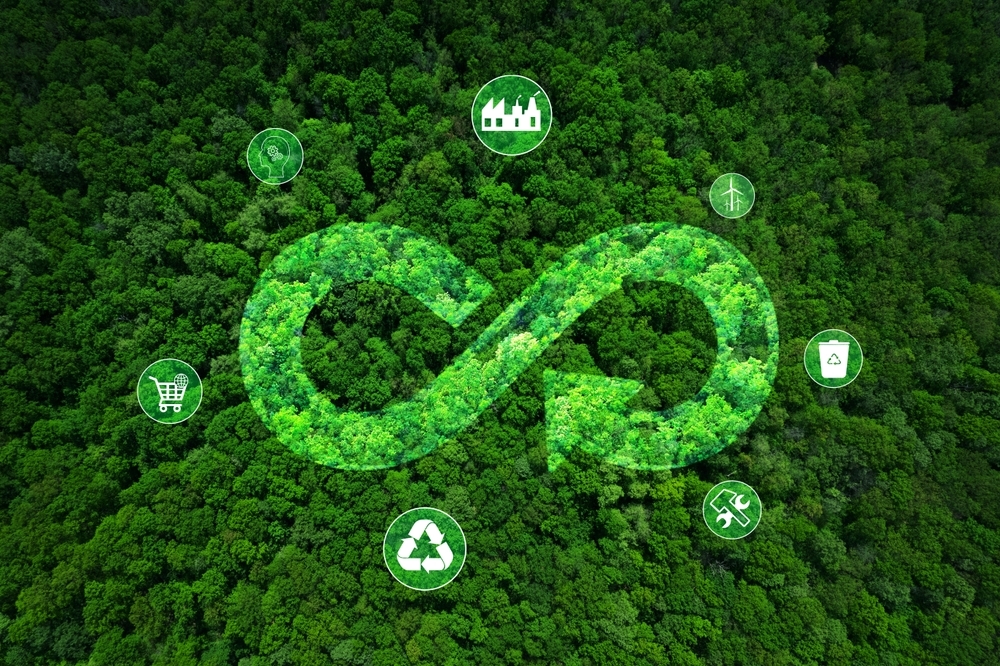
India stands at a pivotal juncture. On one hand, rapid growth, urbanisation and consumption are placing enormous pressure on resources. On the other hand, the vision of a circular economy offers a powerful answer: a system where materials are reused, waste is minimised and value is continuously extracted from what was once discarded. This is not just about regulatory compliance—it’s about embedding environmental sustainability in India, aligning with the sustainable development goals in India, and creating business opportunities out of what was once liability.
Why the Circular Economy Matters in India
In a conventional linear model—take, make, dispose—resources are consumed and waste accumulates. But the circular economy flips that narrative: design out waste, keep materials in use at their highest value, and regenerate natural systems.
For India, this shift holds enormous promise. Analyses estimate that adopting circular economy principles could deliver annual economic benefits of ₹40 lakh crore (≈US$624 billion) by 2050 and reduce greenhouse-gas emissions by around 44%.
The message is clear: transition from waste to resource is no longer optional—it’s strategic.
Sustainable Waste Management: The Core of the Shift
A cornerstone of circularity is transforming how waste is managed. In India, improving sustainable waste management means channelising waste streams previously ignored or handled informally, and turning them into value.
At Kar Parivartan, we see this in action: by building networks for collection, authorised recycling and traceability, we help businesses convert their waste-flows into compliant, measurable outputs.
This shift isn’t just about mitigation—it’s about unlocking value from waste streams that were previously marginalised.
Embedding Sustainable Business Practices
For businesses, sustainability is no longer a sidebar—it’s central. From sustainable manufacturing in India to sustainable packaging in India, companies are realising that long-term competitiveness depends on environmental stewardship and resource efficiency.
Consider:
- Sustainable consumption in India demands products that last longer, are easier to recycle or reuse.
- Sustainable product design in India means designing for circularity from the outset—thinking about end-of-life, reuse, and material recovery.
- Green business practices in India encompass everything from supply-chain transparency to resource recovery to embedding circular thinking.
These practices tie back into corporate social responsibility in India, and help organisations meet regulatory expectations and societal demands.
How Kar Parivartan Bridges the Gap
At Kar Parivartan we specialise in turning these ideas into operational reality. We support manufacturers, importers, assemblers and recyclers across India to adhere to regulatory frameworks—while embedding longer-term sustainability. Our services include:
- Registration and compliance under EPR and waste regulations
- End-to-end collection & channelisation of waste streams
- Transparent documentation, tracking and reporting
- Strategic sustainability consulting to align your ESG goals with operational execution
By providing this full spectrum, we help organisations move from being reactive (just meeting compliance) to being proactive—embedding circular economy practices into their core.
The Big Opportunity: Waste-to-Resource in India
When viewed through the lens of “waste-to-resource in India”, the opportunity becomes stark. Waste streams—plastics, e-waste, batteries, packaging—are not simply burdens to manage, they are materials to recover, re-introduce and monetise. In doing so, companies contribute to environmental sustainability in India and build long-term resilience.
What’s more: a structured, formal waste-channel system elevates informal collection and recycling into transparent, accountable models. This supports job creation, traceability and enterprise value.
Challenges and the Path Forward
Of course, the transition is not without obstacles. Research shows that India’s move to a circular economy is still fragmented, with implementation gaps across policy, infrastructure and consumer behaviour.
Key challenges include:
- Ensuring traceability and formal inclusion of all waste-streams
- Designing products and packaging upfront for recovery and reuse
- Aligning business models around circularity, rather than linear disposal
Yet these challenges are surmountable—with the right partners, technology, and mindset.
Why It Matters for Your Business
Embedding these themes isn’t just about compliance—it’s about strategy. By adopting circular economy principles and sustainable business practices, companies in India can:
- Reduce raw-material dependency and waste-related cost leakage
- Meet regulatory expectations and corporate social responsibility commitments
- Strengthen brand reputation and customer trust
- Position themselves for future-proof growth in a resource-constrained world
At Kar Parivartan we partner with you on that journey—helping you turn obligations into opportunities.
Conclusion
The future of business in India is circular. The transition from waste to resource is real, and companies that act now will gain first-mover advantage. Whether it’s through sustainable manufacturing, circular product design, or responsible waste channelisation, it all comes back to one thing: embedding sustainability into the heart of your operations.
We at Kar Parivartan are proud to be that trusted partner—supporting your compliance today and your circular economy success tomorrow.
Ready to turn your waste-streams into competitive advantage?
Connect with us to explore how you can embed sustainable practices, strengthen your circular economy footprint and lead the way in India’s green transformation.