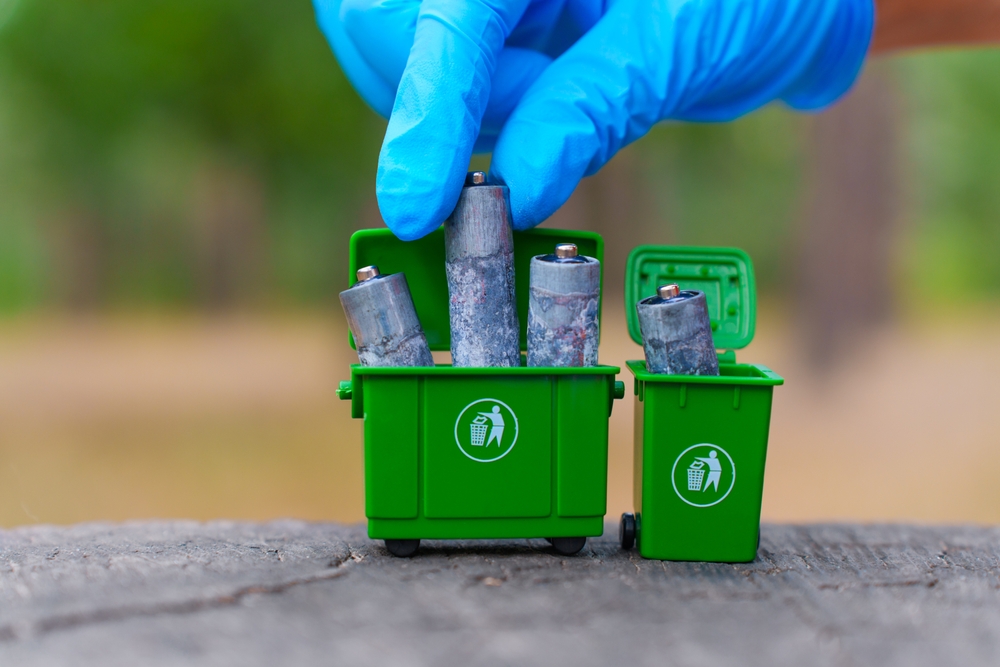
Essential insights on registration, collection targets, and recycling partnerships to stay ahead of upcoming compliance deadlines.
As India accelerates towards electric mobility and sustainable manufacturing, battery producers, importers, and recyclers stand at the center of a regulatory transformation — the Battery Waste Management Rules, 2022. These rules establish a clear Extended Producer Responsibility (EPR) framework that holds every player in the battery ecosystem accountable for the environmental impact of their products.
For battery producers, the 2026 deadline is a crucial milestone. Compliance isn’t optional — it’s the new normal. But with complex rules, multiple portals, and dynamic targets, the path to full EPR readiness can feel overwhelming.
That’s where Kar Parivartan helps producers turn compliance into opportunity.
What is EPR and Why It Matters for Battery Producers
Extended Producer Responsibility (EPR) means that producers are responsible for the collection, recycling, and safe disposal of the batteries they introduce into the market. The idea is simple — those who create and profit from products must also ensure their lifecycle ends responsibly.
Under India’s Battery Waste Management Rules, 2022, notified by the Ministry of Environment, Forest and Climate Change (MoEFCC), every battery — whether portable, automotive, industrial, or EV — must follow a circular economy model.
In practice, this means:
- Registering as a producer on the CPCB’s EPR Battery Portal
- Setting up collection systems for used batteries
- Partnering with authorized recyclers or refurbishers
- Meeting yearly collection and recycling targets
- Reporting performance and obtaining EPR certificates
These measures ensure batteries are properly collected and recycled — reducing landfill waste, preventing pollution, and recovering valuable materials like lithium, cobalt, and nickel.
For detailed official information, visit the CPCB EPR Battery Portal and MoEFCC website.
Step 1 – Registration: The Foundation of EPR Compliance
The first step for any battery producer or importer is registration on the CPCB’s EPR Battery Portal. Without this, you cannot legally operate or sell batteries in India.
Documents required:
- Company PAN and GST certificate
- CIN/Import-Export Code
- Authorized signatory details
- Battery product categories and quantities
Once registered, your organization receives a unique EPR authorization number, which must appear on invoices and product documentation.
👉 Kar Parivartan assists producers through the entire registration process — from documentation and data upload to approval tracking — ensuring you meet the CPCB’s technical and compliance requirements smoothly.
Visit Kar Parivartan – Battery EPR Services to learn more.
Step 2 – Collection and Channelization: Creating Reverse Flow
After registration, the next step is to build a collection network for used or end-of-life batteries. This is known as “channelization.”
Producers must ensure that waste batteries are collected from consumers or dealers and sent only to CPCB-authorized recyclers.
Ways to build your collection ecosystem:
- Implement buy-back or deposit-refund schemes
- Partner with retailers for in-store collection points
- Collaborate with logistics providers for return systems
- Educate customers about responsible disposal
At Kar Parivartan, we help design end-to-end collection systems, including logistics, partner selection, and awareness campaigns — enabling producers to meet their EPR collection targets effectively.
For more details on compliant channelization strategies, see Battery Waste Management Rules, 2022 – CPCB Guidelines.
Step 3 – Meeting Annual Collection & Recycling Targets
Each producer is assigned specific EPR targets based on the quantity of batteries placed on the market in previous years. These targets are set to increase gradually until FY 2026-27.
Example targets (as per CPCB notification):
- 70% collection for portable batteries by FY 2024-25
- 80% for EV and industrial batteries by FY 2025-26
- 90% collection for all battery categories by FY 2026-27
Meeting these targets requires a reliable data-tracking and reporting system. Producers must submit annual returns through the portal and provide evidence through EPR certificates issued by authorized recyclers.
To understand official targets, refer to Battery Waste Management Rules 2022 summary on IEA.
Step 4 – Partnering with Authorized Recyclers and Refurbishers
No EPR plan is complete without trustworthy recycling partners. Only CPCB-registered recyclers can issue valid EPR certificates, which are essential to demonstrate compliance.
Before choosing a partner, ensure they:
- Hold valid CPCB authorization
- Meet required recovery efficiency rates
- Maintain transparent waste-to-recovery records
- Provide traceable digital certificates
At Kar Parivartan, we have built strong alliances with authorized recyclers and refurbishers across India. This helps producers close the loop on their battery waste responsibly — from collection to certified recycling.
For official lists, visit CPCB’s list of authorized recyclers.
Step 5 – Reporting and Certification
Once the collection and recycling processes are in place, producers must report performance data annually through the CPCB portal.
Reporting includes:
- Quantity of new batteries placed on the market
- Quantity collected and recycled/refurbished
- EPR certificates purchased or generated
- Documentary evidence from recyclers
Missing deadlines or submitting incomplete reports can result in environmental compensation penalties and suspension of registration.
Kar Parivartan simplifies this step with automated compliance management, regular updates, and accurate certificate reconciliation — saving you time and ensuring zero regulatory lapses.
Step 6 – Analysis & Optimisation (The Smart Compliance Edge)
Beyond compliance, the most successful producers continuously analyze and improve their EPR performance.
Step 6: Analyse & Optimise — Review your EPR data to track compliance, spot gaps, and improve performance.
Kar Parivartan’s monitoring tools and expert consulting enable producers to transform EPR data into insights — identifying bottlenecks, improving recovery rates, and planning smarter collection logistics for future cycles.
Why EPR Compliance Is a Business Advantage
While many see EPR as a cost, forward-looking producers recognize it as a strategic opportunity.
Benefits include:
- Building a green brand image among customers and investors
- Meeting ESG (Environmental, Social, Governance) goals
- Accessing government incentives for sustainability
- Strengthening OEM and global supply-chain partnerships
Moreover, staying ahead of the 2026 compliance curve protects your business from fines, import restrictions, and reputational risks.
Your 6-Month Action Checklist
To stay ahead, here’s a quick roadmap for immediate action:
- Register on the CPCB EPR Battery Portal.
- Assess your past-year market volumes and define your EPR obligations.
- Set up collection channels and agreements with logistics providers.
- Partner with authorized recyclers for certificate generation.
- Report timely and maintain digital records.
- Analyse and optimize data for future compliance cycles.
Each step is critical — and Kar Parivartan provides hands-on support at every stage.
How Kar Parivartan Helps Battery Producers Stay Compliant
As one of India’s trusted sustainability solution providers, Kar Parivartan offers end-to-end Battery EPR management:
- CPCB registration and documentation support
- Collection network design and implementation
- Partnerships with verified recyclers
- EPR certificate procurement
- Annual reporting and dashboard tracking
- Compliance audits and analysis
Our mission is to make EPR compliance simple, transparent, and value-driven for every battery producer in India.
Learn more at www.gcdigital.in/Kp/ or contact us for a consultation.
Battery EPR Roadmap to 2026 Starts Now
The 2026 deadline is closer than it seems. Every month counts in building a compliant, efficient EPR framework. Battery producers who act early will not only avoid penalties but also lead India’s transition to a circular economy.
At Kar Parivartan, we’re here to make that transition seamless — helping you register, collect, recycle, report, and grow responsibly.
Ready to future-proof your business?
Let’s make your EPR compliance smooth and sustainable.
🔗 Visit Kar Parivartan Battery Waste Solutions
📧 Write to us at info@karparivartan.com