
India’s waste management framework has undergone a significant transformation with the implementation of the Solid Waste Management (SWM) Rules, 2026. The new rules replace the 2016 framework and introduce stricter compliance requirements, enhanced accountability, digital monitoring, and a stronger focus on circular economy principles.
For businesses, institutions, commercial establishments, residential complexes, and industrial facilities, the new rules are not just environmental regulations—they represent a shift towards Extended Bulk Waste Generator Responsibility (EBWGR) and greater responsibility for waste management at the source.
Organizations that generate significant quantities of waste must now reassess their compliance strategies to avoid regulatory risks and align with India’s sustainability goals.

Key Highlights of the SWM Rules, 2026
The Rules introduce several important changes, including:
- Mandatory source segregation of waste
- Extended Bulk Waste Generator Responsibility (EBWGR)
- Centralized digital registration and compliance reporting
- Promotion of waste processing and resource recovery
- Reduced dependence on landfills
- Increased accountability of waste generators
- Stronger monitoring and enforcement mechanisms
The overall objective is to shift from a “collect and dump” approach to a circular economy model focused on waste reduction, recycling, and resource recovery.
What is Extended Bulk Waste Generator Responsibility (EBWGR)?
One of the most important provisions under the new Rules is the introduction of Extended Bulk Waste Generator Responsibility (EBWGR).
Under this framework, bulk waste generators are responsible for ensuring environmentally sound management of the waste they generate.
This responsibility may include:
- Source segregation
- On-site processing of wet waste
- Engagement with authorized waste processors
- Compliance reporting
- Maintaining records and documentation
- Meeting regulatory obligations through approved mechanisms
The concept is similar to Extended Producer Responsibility (EPR), where responsibility is shifted closer to the source of waste generation.
Who Qualifies as a Bulk Waste Generator?
An entity is generally considered a Bulk Waste Generator if it meets any one of the following criteria:
- Built-up area of 20,000 square meters or more
- Water consumption of 40,000 litres per day or more
- Generation of 100 kg or more solid waste per day
This may include:
- Commercial complexes
- Shopping malls
- Hotels and resorts
- Hospitals
- Educational institutions
- Residential societies
- Industrial establishments
- Government offices
- IT parks and business campuses
Businesses falling under the Bulk Waste Generator category should focus on the following compliance measures:
1. Waste Segregation at Source
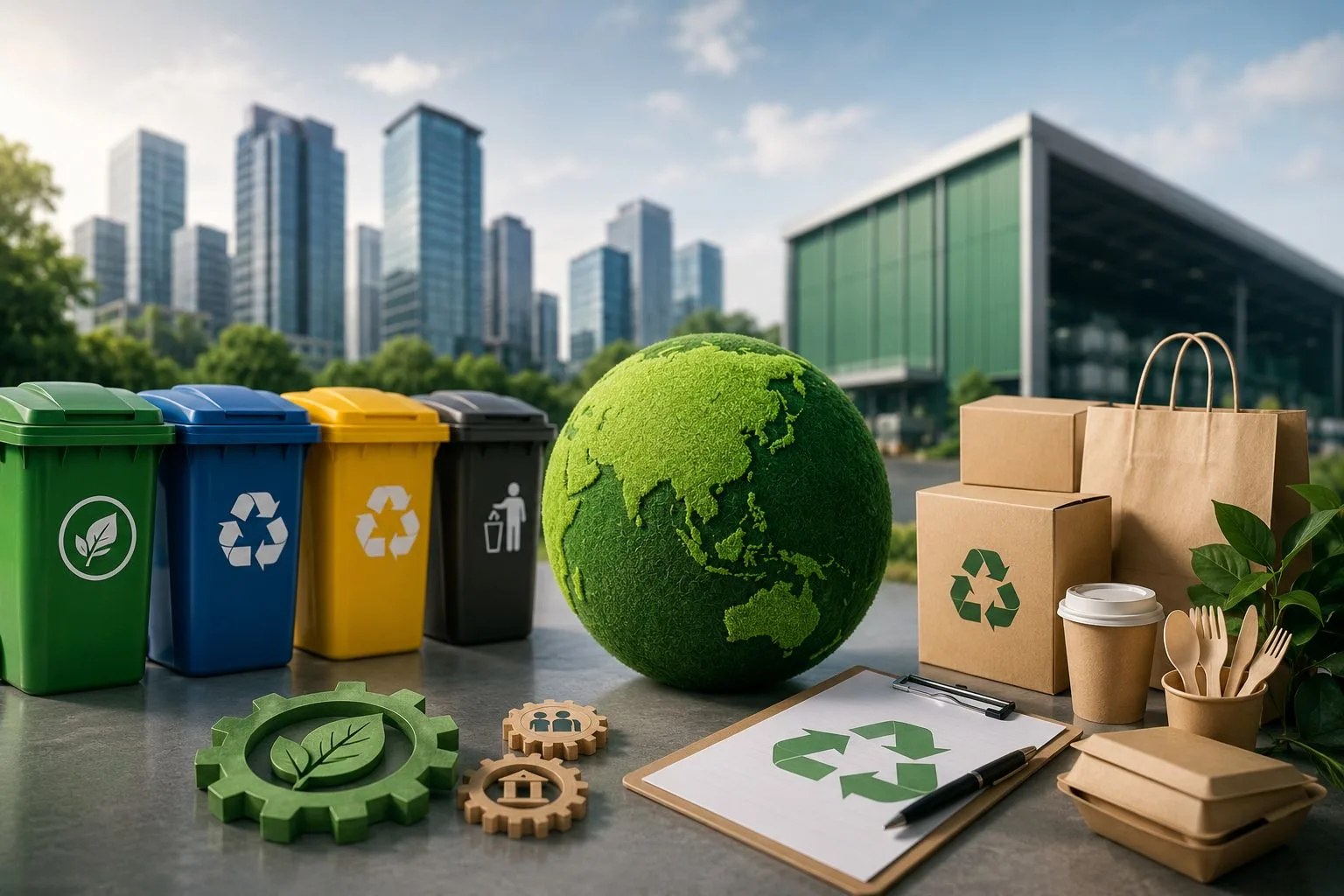
Waste must be segregated into 4 categories before collection and processing.

Proper segregation improves recycling efficiency and reduces landfill disposal.
2. Waste Processing and Resource Recovery
Organizations are encouraged to process waste at the source wherever feasible through:
- Composting
- Biomethanation
- Material recovery
- Recycling
3. Registration and Digital Compliance
The Rules introduce centralized digital systems for registration, reporting, monitoring, and compliance tracking, including the CPCB’s centralized Solid Waste Management (SWM) portal, where Bulk Waste Generators are required to register and submit compliance details.
Organizations should maintain accurate records of waste generation and disposal.
4. Authorized Waste Management Partners
Businesses should engage only authorized recyclers, processors, transporters, and waste management agencies.
5. Documentation and Audit Readiness
Maintaining compliance records, waste manifests, agreements, and disposal certificates will become increasingly important during inspections and audits.
Business Risks of Non-Compliance
Organizations that fail to comply with the SWM Rules, 2026 may face:
- Regulatory penalties
- Environmental compensation charges
- Compliance notices
- Reputational risks
- Operational disruptions
As environmental governance becomes increasingly data-driven, businesses should proactively address compliance requirements rather than waiting for enforcement actions.
Opportunities for Businesses
While compliance is mandatory, the Rules also create opportunities.
Organizations implementing effective waste management systems can benefit from:
- Reduced waste disposal costs
- Improved ESG performance
- Enhanced sustainability reporting
- Better resource efficiency
- Stronger stakeholder confidence
- Improved corporate reputation
For many businesses, waste management is evolving from a compliance obligation into a sustainability and resource efficiency strategy.
The Way Forward
The Solid Waste Management Rules, 2026 signal a major shift in India’s environmental regulatory landscape.
Businesses should begin preparing by:
- Assessing whether they qualify as Bulk Waste Generators
- Reviewing current waste management practices
- Implementing source segregation systems
- Identifying authorized waste management partners
- Developing internal compliance protocols
- Training employees and facility managers
Organizations that act early will be better positioned to achieve compliance while supporting India’s transition toward a circular economy.
Need Assistance with SWM Compliance?
At Kar Parivartan, we assist businesses, institutions, residential societies, industrial facilities, and bulk waste generators in achieving compliance through:
- SWM Rules, 2026 compliance assessment
- Bulk Waste Generator (BWG) compliance support
- Waste management strategy development
- Circular economy and sustainability advisory
- EPR and waste management compliance consulting
- Authorized recycler and waste processor linkage
- Documentation, reporting, and audit support
- Environmental compliance training and awareness programs
Our goal is to help organizations move beyond regulatory compliance and build sustainable waste management systems that support resource recovery, operational efficiency, and long-term environmental responsibility.
FAQs
What are the Solid Waste Management Rules, 2026?
The SWM Rules, 2026 are India’s updated regulatory framework for solid waste management, replacing the 2016 Rules and introducing stronger compliance and accountability requirements.
What is Extended Bulk Waste Generator Responsibility (EBWGR)?
EBWGR places responsibility on bulk waste generators to ensure proper collection, segregation, processing, and disposal of the waste they generate.
Who is considered a Bulk Waste Generator?
Entities meeting any of the following thresholds:
- 20,000 sq. m. built-up area or more
- 40,000 litres/day water consumption or more
- 100 kg/day solid waste generation or more
Are residential societies covered under the Rules?
Yes. Large residential complexes meeting the prescribed criteria may qualify as Bulk Waste Generators.
Is source segregation mandatory?
Yes. Segregation at source is one of the core requirements under the Rules.
Can businesses outsource waste management?
Yes, but only through authorized waste management agencies, recyclers, and processors while maintaining compliance responsibilities.
What records should businesses maintain?
Waste generation records, segregation details, processing records, transportation documents, and agreements with authorized waste management partners.
What are the consequences of non-compliance?
Non-compliance may result in penalties, environmental compensation, regulatory actions, and reputational risks.
How do the Rules support the circular economy?
The Rules promote waste reduction, recycling, resource recovery, composting, biomethanation, and reduced landfill dependency.
What should businesses do immediately?
Conduct a waste compliance assessment, determine whether they qualify as a Bulk Waste Generator, implement segregation systems, and establish partnerships with authorized waste management service providers.


