

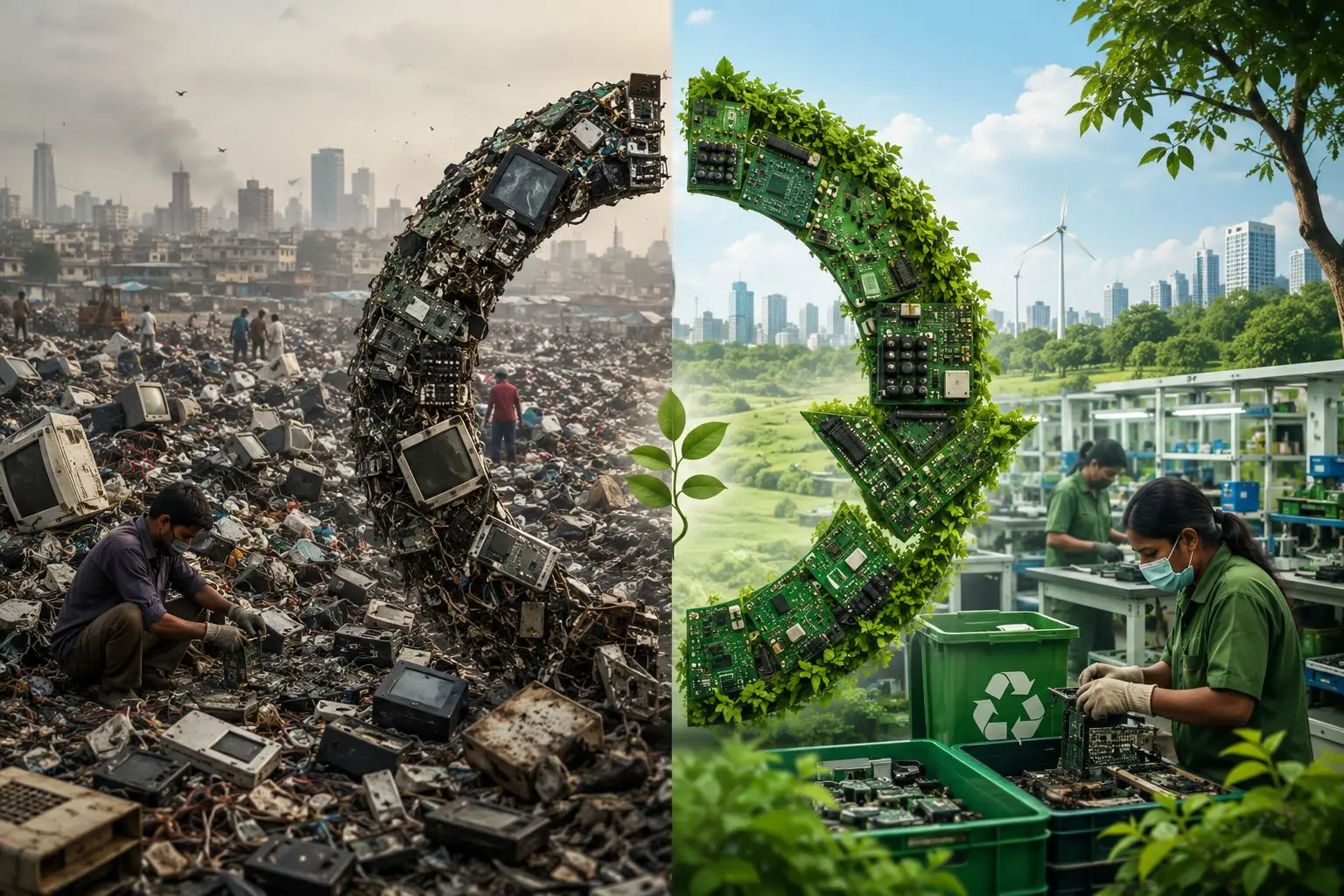
India has emerged as one of the world’s largest and fastest-growing generators of electronic waste (e-waste). Rapid digitalization, increasing consumer demand for electronics, shorter product life cycles, and technological advancements have significantly accelerated the generation of discarded electronic equipment across the country.
During FY 2025-26, India generated approximately 14.15 lakh metric tonnes (MT) of e-waste, out of which nearly 9.79 lakh MT was processed through formal recycling channels. While this reflects substantial progress, a significant portion of e-waste still remains outside the formal ecosystem, creating environmental risks while also leaving valuable resources unrecovered.
For authorized recyclers, producers, and sustainability-focused organizations, e-waste is no longer merely a waste management issue—it is a strategic business opportunity within India’s rapidly expanding circular economy.
What is E-Waste?
E-waste refers to discarded electrical and electronic equipment, including:
- Mobile phones and accessories
- Computers and laptops
- Servers and networking equipment
- Televisions and display units
- Refrigerators and air conditioners
- Consumer electronics
- Electrical appliances
- Batteries and energy storage systems
- IT and telecommunication equipment
The volume of e-waste generated in India continues to increase every year, highlighting the urgent need for efficient collection, recycling, and resource recovery systems.
Why E-Waste is a Growing Environmental Concern
Improper handling and disposal of electronic waste can have severe environmental and public health consequences.
Air Pollution
Informal recycling practices such as open burning of cables and electronic components release toxic fumes, heavy metals, and hazardous chemicals into the atmosphere.
Water Contamination
Hazardous substances including lead, mercury, cadmium, and lithium can leach into groundwater and nearby water bodies, impacting drinking water quality and aquatic ecosystems.
Soil Degradation
Persistent toxic compounds accumulate in soil, reducing fertility and eventually entering the food chain.
Human Health Risks
Workers exposed to unsafe dismantling and extraction methods may suffer from respiratory disorders, neurological damage, skin diseases, and other long-term health impacts.
Despite containing valuable recoverable materials such as copper, aluminium, gold, silver, palladium, plastics, and rare earth elements, a large portion of India’s e-waste remains improperly managed, resulting in significant economic losses every year.
The Importance of Formal Recycling
Although India has made significant progress in strengthening its formal recycling ecosystem, a substantial share of e-waste is still processed through informal channels using environmentally unsafe methods.
Authorized recycling facilities provide:
- Scientific dismantling and material recovery
- Environmentally compliant processing
- Pollution control and worker safety measures
- Traceability and transparent documentation
- Accurate reporting and regulatory compliance
- Generation of EPR Certificates through CPCB-approved systems
Formal recycling not only protects the environment but also ensures maximum recovery of valuable resources that can be reintroduced into the manufacturing cycle.
E-Waste Management Rules and Extended Producer Responsibility (EPR)
India’s regulatory framework has evolved significantly with the introduction of the E-Waste (Management) Rules, 2022, which strengthened the country’s Extended Producer Responsibility (EPR) mechanism.
Under the Rules:
- Producers, manufacturers, importers, refurbishers, and recyclers must register on the CPCB EPR Portal.
- Producers are required to meet annual recycling targets through registered recyclers.
- Recyclers generate EPR Certificates based on verified recycling activities.
- Digital tracking and compliance mechanisms improve transparency across the value chain.
Recent developments indicate:
- India’s formal e-waste recovery rate has steadily improved.
- Recycling targets continue to increase under the EPR framework.
- New compliance requirements are emerging for battery recycling and EV battery management.
- Significant capacity gaps still exist in several states, creating opportunities for investment and expansion in formal recycling infrastructure.
Business Opportunities for Authorized E-Waste Recyclers
The formal e-waste recycling sector is rapidly transforming into one of India’s most promising green industries.

Recovery of Valuable Materials
E-waste contains high-value materials such as:
- Copper
- Aluminium
- Gold
- Silver
- Palladium
- Plastics
- Rare earth metals
Efficient recovery and sale of these materials create substantial revenue opportunities.
EPR Certificate Generation
Under India’s EPR framework, authorized recyclers can generate EPR Certificates for eligible recycling activities. These certificates have become an important revenue stream while supporting producer compliance obligations.
Growing Demand from Producers
Thousands of producers, importers, and brand owners require compliant recycling partners to fulfill their EPR targets, creating a rapidly expanding market for authorized recyclers.
ESG and Sustainability Services
Organizations increasingly seek recycling partners that can support:
- ESG reporting
- Sustainability disclosures
- Circular economy initiatives
- Carbon reduction strategies
- Responsible resource management
Expansion into Collection and Channelization Networks
Developing collection centres, take-back programs, aggregation systems, and reverse logistics networks presents additional business opportunities across India.
Why Compliance Matters
Compliance is no longer optional—it is a business necessity.
Organizations that comply with E-Waste Rules and EPR obligations can:
- Avoid regulatory penalties and enforcement actions
- Improve sustainability and ESG performance
- Strengthen brand reputation and stakeholder trust
- Demonstrate environmental responsibility
- Access verified EPR certificate markets
- Build long-term resilience in a circular economy
As demand for EPR Certificates continues to grow, proactive compliance planning has become increasingly important for producers and recyclers alike.
How Kar Parivartan Supports the E-Waste Ecosystem
At Kar Parivartan, we work closely with recyclers, producers, manufacturers, importers, and sustainability leaders to navigate India’s evolving EPR landscape.
Our services include:
EPR Registration & Compliance Support
End-to-end assistance for registration, documentation, and regulatory compliance.
EPR Certificate Strategy
Guidance on certificate generation, procurement, utilization, and compliance planning.
Waste Channelization Support
Connecting waste generators with authorized recyclers to strengthen formal recycling networks.
Regulatory Intelligence
Regular updates on CPCB notifications, policy amendments, and compliance requirements.
Sustainability & Circular Economy Solutions
Helping organizations transform regulatory obligations into long-term business opportunities.
The Road Ahead
India’s e-waste challenge is simultaneously one of its greatest circular economy opportunities. With increasing regulatory enforcement, rising EPR targets, growing producer obligations and expanding recycling infrastructure, the sector is poised for significant growth.
For recyclers, this represents an opportunity to build sustainable businesses while contributing to resource conservation, environmental protection and India’s circular economy goals.
The future of e-waste management lies not in disposal but in recovery, recycling, and responsible resource utilization.
Partner with Kar Parivartan to unlock the full potential of the EPR ecosystem and build a more sustainable future.


