

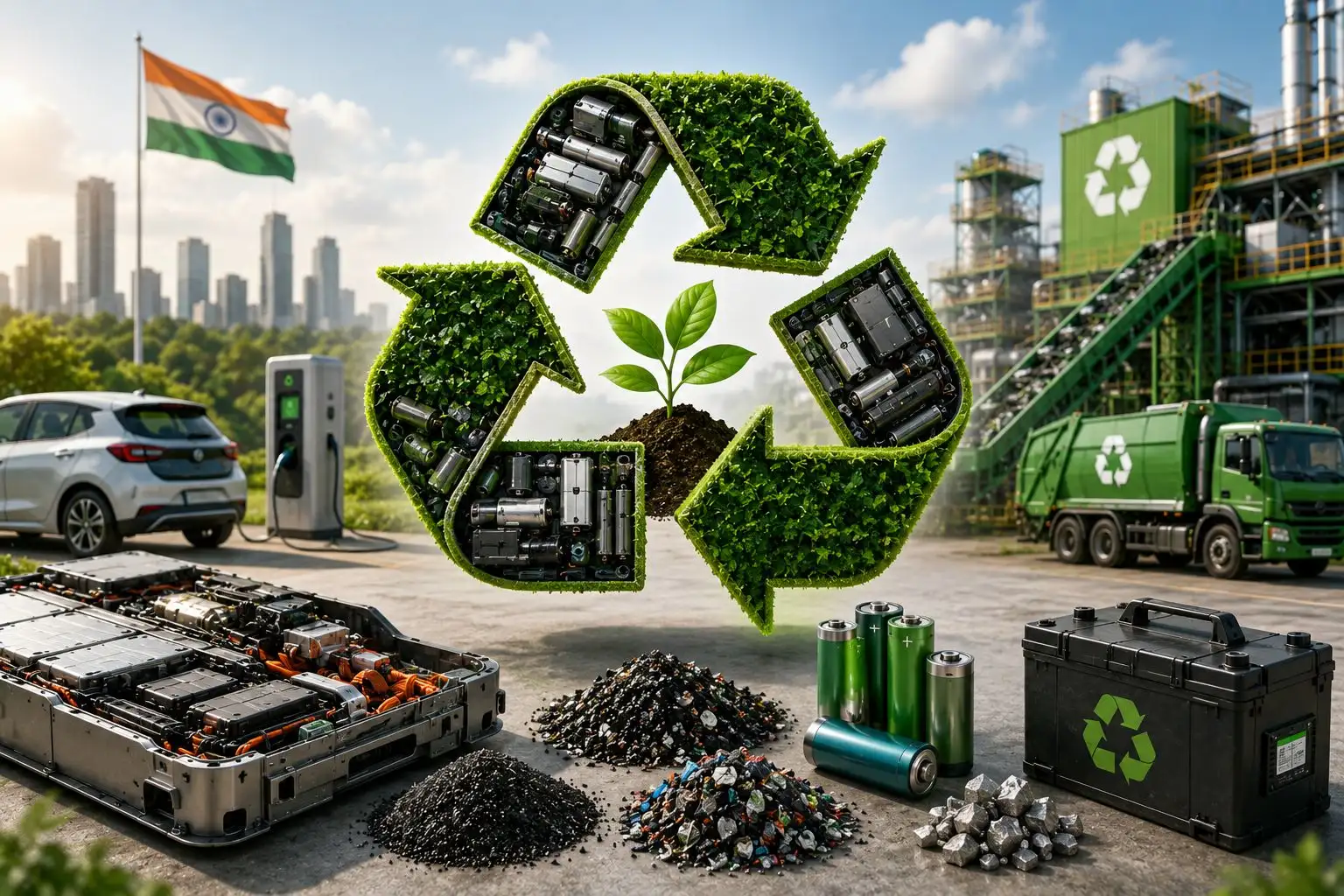
As India accelerates its transition toward electric mobility, renewable energy, and advanced energy storage systems, battery consumption is growing at an unprecedented pace. From electric vehicles (EVs) and solar energy storage systems to telecom towers and consumer electronics, batteries have become the backbone of India’s clean energy future.
However, this rapid growth also presents a significant challenge: What happens to batteries when they reach the end of their life?
The answer lies in building a robust circular economy through scientific battery waste management, recycling, refurbishment, and material recovery.
At Kar Parivartan, we believe battery waste is not merely a compliance issue—it is an economic opportunity capable of creating new industries, securing critical raw materials, and strengthening India’s sustainability goals.
Why Battery Recycling Matters More Than Ever
Lithium-ion batteries contain valuable resources such as:
- Lithium
- Cobalt
- Nickel
- Copper
- Manganese
- Aluminum
- Graphite
When batteries are improperly disposed of, these valuable materials are lost while creating environmental and safety risks such as:
- Soil contamination
- Groundwater pollution
- Fire hazards
- Toxic emissions
- Resource depletion
Battery recycling enables these materials to be recovered and reintroduced into the manufacturing cycle, reducing dependence on imports and supporting domestic supply chains.
Battery Waste Management Rules, 2022: Driving Circularity Through EPR
The Government of India introduced the Battery Waste Management Rules, 2022, establishing an Extended Producer Responsibility (EPR) framework for batteries.
The rules require producers, importers, manufacturers, recyclers, and refurbishers to ensure environmentally sound management of battery waste.
Key Features of the Rules
1. Extended Producer Responsibility (EPR)
Producers are responsible for collecting and recycling batteries equivalent to the quantity they place in the market.
2. Mandatory CPCB Registration
All stakeholders must register on the CPCB Battery EPR Portal.
3. Digital Traceability
QR codes, barcodes, and online documentation help ensure transparency throughout the battery lifecycle.
4. EPR Certificate Mechanism
Registered recyclers generate EPR certificates based on recovered materials, which producers can purchase to fulfill their statutory obligations.
5. Recycling and Refurbishment Targets
The Rules prescribe progressive targets to improve collection efficiency and resource recovery.
India’s Battery Recycling Market: A Multi-Billion Dollar Opportunity
India currently imports a significant portion of its critical battery minerals.
As EV adoption grows and battery energy storage systems become mainstream, end-of-life battery volumes are expected to increase exponentially.
Industry studies estimate that India’s lithium-ion battery recycling market could exceed ₹30,000 crore by 2030, creating substantial opportunities across the value chain.
Key market drivers include:
- Rapid EV adoption
- Renewable energy expansion
- Growing Battery Energy Storage Systems (BESS)
- Increasing consumer electronics usage
- Critical mineral security concerns
- Strengthening EPR enforcement
- Recycled-content requirements
The coming decade will witness the emergence of battery recycling as a strategic industry rather than a waste management activity.
Business Opportunities in India’s Battery Circular Economy
1. Battery Collection and Reverse Logistics
One of the biggest gaps in the current ecosystem is efficient collection.
Opportunities exist in:
- Collection centers
- Aggregation facilities
- Reverse logistics operations
- Take-back programs
- Authorized collection partnerships
Businesses that build organized collection networks will play a critical role in the circular economy.
2. Battery Recycling Facilities
Advanced recycling facilities recover valuable metals from spent batteries through technologies such as:
- Hydrometallurgical recycling
- Pyrometallurgical recycling
- Direct recycling
Recovered materials can be supplied back to battery manufacturers, creating a closed-loop supply chain.
3. Battery Refurbishment and Second-Life Applications
Many EV batteries retain up to 70–80% of their capacity after automotive use.
These batteries can be repurposed for:
- Solar energy storage
- Telecom tower backup
- Residential storage systems
- Industrial backup power
This emerging sector offers significant revenue opportunities while extending battery life.
4. EPR Compliance and Sustainability Consulting
As regulatory requirements become stricter, companies require expert support for:
- CPCB Portal Compliance
- EPR Target Fulfillment
- EPR Certificate Procurement
- Annual Returns Filing
- Documentation and Audits
This creates a growing market for specialized sustainability and compliance advisory services.
5. Digital Traceability and Technology Solutions
The future of battery waste management is data-driven.
Technology providers can develop:
- Battery tracking platforms
- Compliance management software
- QR code solutions
- Digital material passports
- EPR trading systems
- Supply chain traceability tools
These solutions will be essential for ensuring transparency and regulatory compliance.
Recent Regulatory Trends Strengthening Battery Recycling
India’s EPR ecosystem is becoming increasingly transparent and accountable.
Recent regulatory developments have emphasized:
- Enhanced verification of recycling operations
- Digital monitoring of transactions
- Traceability of recovered materials
- GST-linked documentation requirements
- Improved compliance verification systems
These measures are expected to strengthen confidence in EPR certificate markets and promote investment in formal recycling infrastructure.
Challenges Facing the Industry
Despite significant progress, the battery recycling ecosystem faces several challenges:
Informal Sector Dominance
A large volume of battery waste continues to flow through unorganized channels.
Consumer Awareness
Many consumers remain unaware of authorized disposal and collection mechanisms.
Infrastructure Gaps
Collection, transportation, and storage infrastructure require further expansion.
Technology and Investment Requirements
Advanced recycling technologies demand significant capital investment and technical expertise.
Traceability Challenges
Accurate tracking of batteries throughout their lifecycle remains a key implementation challenge.
How Kar Parivartan Supports Battery EPR Compliance
At Kar Parivartan, we help producers, importers, recyclers, and other stakeholders navigate India’s evolving battery EPR landscape through:
- Battery EPR Registration Support
- CPCB Portal Compliance Management
- EPR Certificate Procurement Assistance
- Regulatory Advisory Services
- Annual Return Filing Support
- Sustainability and Circular Economy Consulting
- Compliance Audits and Documentation Management
Our objective is to help businesses achieve compliance while unlocking value from circular economy opportunities.
The Future of Battery Recycling in India
Battery recycling will become a cornerstone of India’s energy transition strategy.
With increasing EV adoption, battery storage deployment, and regulatory enforcement, the industry is expected to witness rapid growth over the next decade.
Organizations that invest early in collection infrastructure, recycling technology, refurbishment, and EPR compliance systems will be best positioned to capitalize on this emerging market.
Battery waste is no longer a disposal challenge—it is a strategic resource that can power India’s circular economy.
India’s battery recycling sector sits at the intersection of sustainability, resource security, and economic growth. As EPR compliance becomes more stringent and battery volumes continue to rise, businesses must move beyond viewing battery waste as a liability.
By embracing circular economy principles and investing in responsible recycling systems, organizations can transform battery waste into a valuable resource while contributing to India’s sustainable development goals.
Kar Parivartan remains committed to supporting businesses in navigating this transition through expert EPR compliance, sustainability advisory, and circular economy solutions.


