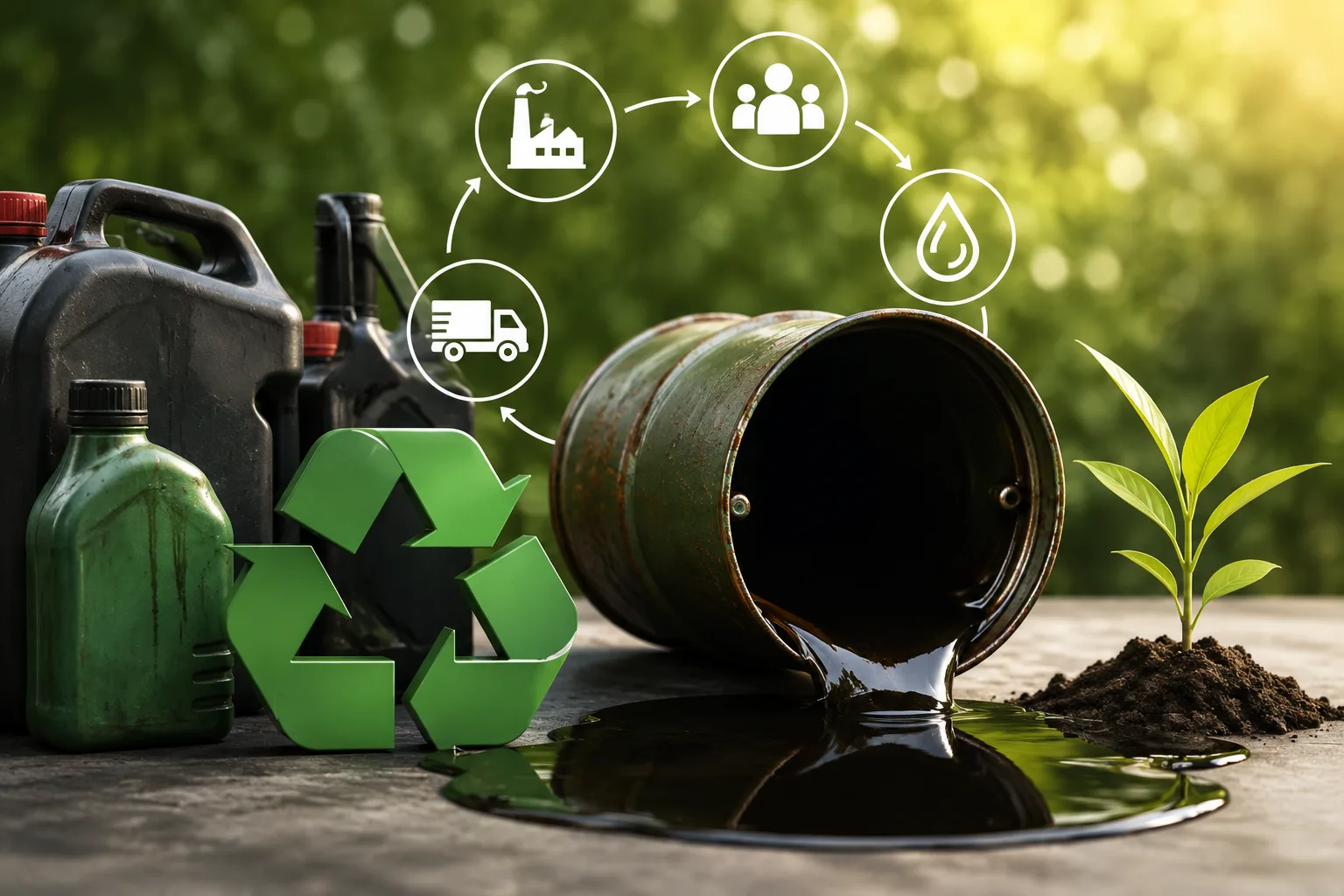
India generates large quantities of used oil from vehicles, industries, power plants, and machinery. If improperly disposed of, used oil can contaminate soil and water and pose serious environmental risks. To ensure its safe collection and recycling, the Government of India introduced the Extended Producer Responsibility (EPR) framework under the Hazardous and Other Wastes (Management and Transboundary Movement) Second Amendment Rules, 2023, effective from 1 April 2024. The framework assigns clear responsibilities to stakeholders and promotes environmentally sound recycling, resource conservation, and a circular economy.
Legal Framework
The Used Oil EPR system is governed by:
- Environment (Protection) Act, 1986
- Hazardous and Other Wastes (Management and Transboundary Movement) Rules, 2016
- Hazardous and Other Wastes (Management and Transboundary Movement) Second Amendment Rules, 2023
- Guidelines and Standard Operating Procedures (SOPs) issued by the Central Pollution Control Board (CPCB)
The Rules introduce Chapter VII – Extended Producer Responsibility for Used Oil, which provides the legal framework for registration, recycling targets, EPR certificates, stakeholder responsibilities, compliance monitoring, and environmental compensation.
Official Definitions
Understanding the terminology used in the Rules is essential for compliance.
Used Oil
The Rules refer to the definition of Used Oil under Rule 3(36) of the Hazardous Waste Rules. It generally means oil that has become unsuitable for its intended use because of contamination or degradation during use. Common examples include:
- Engine oil
- Hydraulic oil
- Gear oil
- Turbine oil
- Compressor oil
- Industrial lubricating oil
- Transformer oil (where applicable)
Although contaminated, used oil still contains recoverable base oil that can be recycled through re-refining.
Base Oil
Base oil means any oil used for the production of finished lubrication oil. It is the primary raw material used to manufacture lubricants.
Extended Producer Responsibility (EPR)
Under the Rules, Extended Producer Responsibility (EPR) means the responsibility of a producer of base oil or lubrication oil, or a used oil importer, to meet prescribed recycling targets only through registered recyclers to ensure environmentally sound management of used oil.
Recycling
Recycling refers to either:
- Re-refining used oil to produce base oil or lubricating oil, or
- Energy recovery from used oil that is not suitable for re-refining,
in accordance with CPCB guidelines and standard operating procedures.
Re-refining
Re-refining is the process of removing contaminants and undesirable impurities from used oil to produce reusable base oil or lubricating oil. It is the preferred method of used oil management under the EPR framework.
Who are the Key Stakeholders?
The Used Oil EPR framework defines specific stakeholders, each with clearly assigned responsibilities.
1. Producer
A Producer is any person or entity that:
| Code | Producer Category |
| P1 | Manufactures and sells Base Oil |
| P2 | Imports Base Oil |
| P3 | Manufactures Base Oil and sells Lubrication Oil under its own brand/co-brand |
| P4 | Imports Lubrication Oil |
| P5 | Procures Base Oil domestically and sells Base Oil and its products under its own brand/co-brand |
| P6 | Procures Lubrication Oil domestically and sells it under its own brand/co-brand |
| P7 | Procures Base Oil domestically and manufactures/sells Lubrication Oil under its own brand/co-brand |
| P8 | Procures Re-refined/Recycled Base Oil domestically and manufactures/sells Lubrication Oil under its own brand/co-brand |
| P9 | Manufactures and sells Re-refined/Recycled Base Oil under its own brand/co-brand |
Producers are responsible for meeting annual EPR obligations by purchasing EPR certificates generated by registered recyclers.
2. Collection Agent
A Collection Agent is any person or entity that collects used oil and supplies it to a registered recycler. The Rules also recognize the concept of a Collection Point, which is a facility where authorized collection agents collect and store used oil in accordance with CPCB guidelines.
Collection agents play a critical role in creating an organized collection network by channelizing used oil from generators to authorized recyclers while maintaining traceability.
3. Recycler
A Recycler is any person or entity engaged in recycling used oil through re-refining or approved energy recovery processes. Registered recyclers generate EPR certificates based on the quantity of eligible recycled output, which producers purchase to fulfil their obligations.
4. Used Oil Importer
A Used Oil Importer is any person or entity importing used oil into India. Under the Rules, imported used oil is permitted only for the purpose of re-refining, and importers are also required to fulfil EPR obligations.
5. Bulk Generator
A Bulk Generator includes entities such as automobile industries, railways, defence establishments, transport companies, industrial units, power transmission companies, hotels, restaurants, and other organizations that generate more than 100 metric tonnes of used oil annually. Bulk generators are required to establish collection points and ensure that used oil is handed over only to registered producers, collection agents, or recyclers.
Registration under the CPCB Used Oil EPR Portal
To participate in the Used Oil EPR framework, registration with the Central Pollution Control Board (CPCB) through the online Used Oil EPR Portal is mandatory.
The following entities are required to register:
- Producers
- Collection Agents
- Recyclers
- Used Oil Importers
If an entity falls under more than one category—for example, a producer who also imports used oil—it must obtain separate registration for each applicable category. No entity can carry out business under the Used Oil EPR framework without registration, and registered entities are prohibited from dealing with unregistered entities.
Registration Process
The registration process generally involves the following steps:
- Create an account on the CPCB Used Oil EPR Portal.
- Select the appropriate stakeholder category.
- Enter organizational details such as business name, address, PAN, GST, CIN (where applicable), and contact information.
- Upload the prescribed documents.
- Submit the application online.
- CPCB reviews the application and supporting documents.
- Upon approval, the registration certificate is issued electronically.
Applicants must ensure that all information submitted is accurate. Providing false information or concealing material facts may lead to revocation of registration for up to five years and the imposition of environmental compensation.
Documents Commonly Required
While document requirements may vary depending on the stakeholder category, applicants are generally required to furnish:
- GST Registration Certificate
- PAN Card
- Certificate of Incorporation or Business Registration
- CIN (for companies)
- Consent to Establish (CTE), where applicable
- Consent to Operate (CTO), where applicable
- Authorization under the Hazardous and Other Wastes Rules (for applicable entities)
- Import Export Code (for importers)
- Aadhaar and authorization details of the authorized signatory
- Plant or facility details (for recyclers)
- Storage and infrastructure details
- Process flow diagram (for recyclers)
- Bank account details and cancelled cheque
- Any additional documents specified by CPCB during registration
Preparing these documents in advance helps ensure a smooth and timely registration process.