- Introduction
A new BIS draft adopting ISO 21660-3:2021 proposes a standardised method for determining moisture content in Solid Recovered Fuels (SRF), strengthening the reliability and comparability of fuel-quality assessment.
Why is SRF gaining importance?
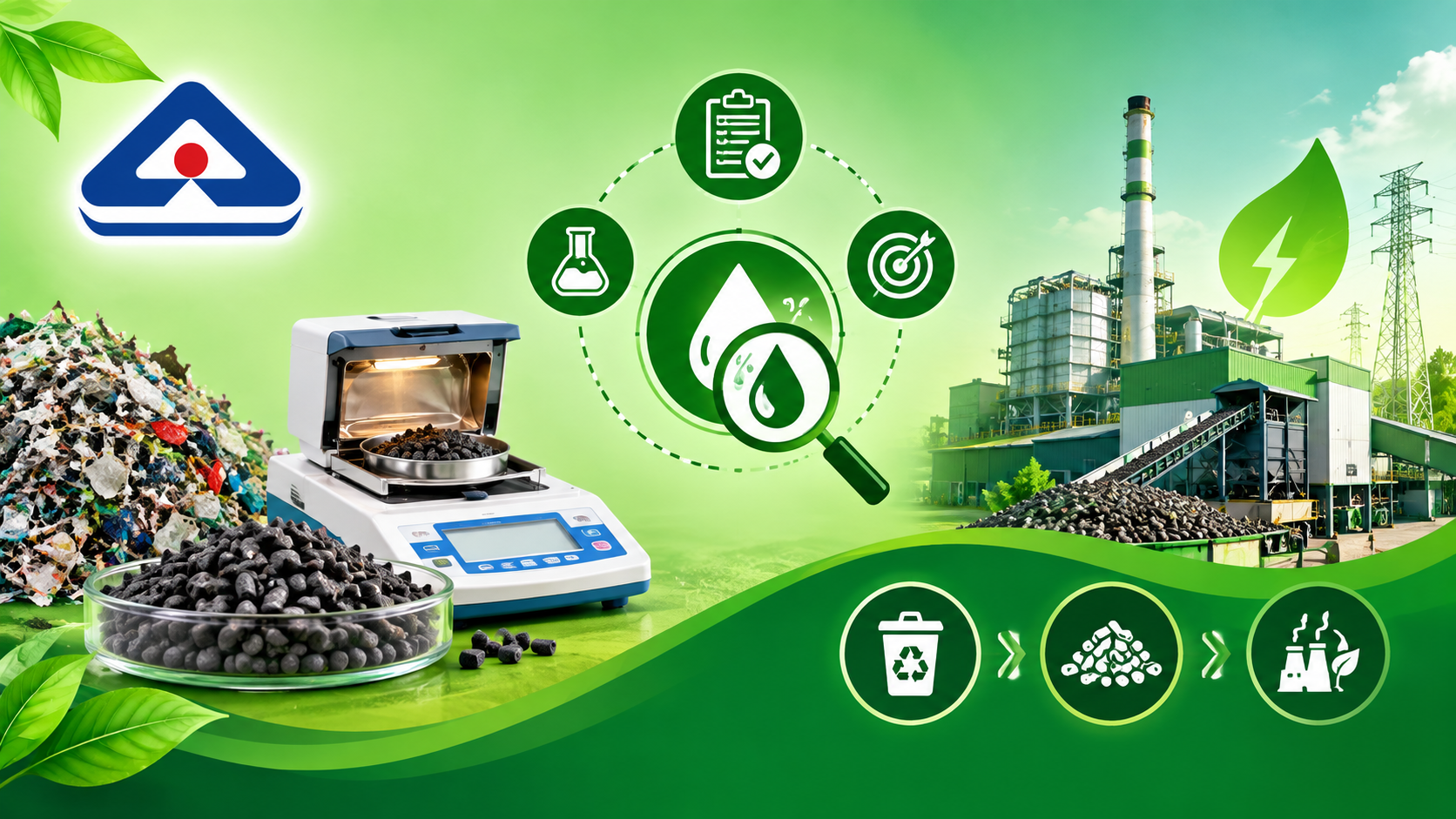
The use of Solid Recovered Fuel (SRF) is gaining importance as industries look for alternative fuels derived from treated non-hazardous waste. However, the quality and performance of SRF depend heavily on accurate characterisation of its properties. Among these, moisture content is a critical parameter because it directly influences important fuel characteristics, including calorific value and elemental composition.
Recognising this need, the Bureau of Indian Standards (BIS) has issued a Draft Indian Standard titled “Solid Recovered Fuels – Determination of Moisture Content using the oven dry method -Part 3: Moisture in general analysis sample” under the Waste Management Sectional Committee. The draft is identified as Doc. No. EED 08(35022) WC and proposes the adoption of ISO 21660-3:2021 as an Indian Standard.
- Why Moisture Content Matters in Solid Recovered Fuels ?
Moisture is not simply a laboratory measurement. For SRF, it can influence how the fuel performs during storage, handling and energy recovery.
According to the BIS draft, moisture content directly affects key fuel properties such as calorific value and elemental composition. Accurate determination is therefore important for obtaining reliable and reproducible analytical results.
For businesses using or producing SRF, inconsistent moisture measurement can create challenges in:
- Comparing fuel quality between suppliers or batches
- Assessing the energy potential of recovered fuel
- Interpreting laboratory test results
- Establishing consistent quality specifications
- Supporting quality assurance and process control
- Evaluating SRF characteristics for industrial and energy-recovery applications
A standardised testing approach can therefore provide a common technical basis for producers, laboratories, buyers and industrial end users.
- What Is BIS Proposing?
The proposed Indian Standard addresses the determination of moisture content in the general analysis sample of Solid Recovered Fuel using the oven-dry method.
Rather than developing a separate testing methodology, BIS has decided to identically adopt ISO 21660-3:2021 under dual numbering, with the objective of harmonising Indian practice with internationally accepted methods.
The draft states that the technical content of the ISO standard has been approved for publication as an Indian Standard without deviations. Certain conventions have been modified to align with Indian Standards, including terminology and the use of a decimal point rather than a comma as the decimal marker. BIS Certification Registration License Apply Online.
- What Does the Draft Mean for SRF Businesses?
The proposed standard is particularly relevant for organisations involved in the production, processing, testing, trading or utilisation of Solid Recovered Fuels.
1. Greater consistency in fuel-quality assessment
A standardised moisture-determination method can help laboratories and businesses generate results on a consistent basis, making test results more comparable across facilities.
This is particularly relevant where SRF quality is assessed by multiple laboratories or where fuel is supplied from different processing facilities.
2. Better assessment of fuel performance
Because moisture influences calorific value and other fuel properties, reliable moisture measurement supports more accurate evaluation of SRF characteristics and performance.
For industrial users, this can contribute to more informed assessment of alternative fuel quality.
3. Stronger quality-control practices
The oven-dry method described through the adopted ISO standard provides a recognised and standardised basis for determining moisture.
For SRF producers and testing laboratories, this can strengthen internal quality assurance, laboratory procedures and analytical consistency.
4. Improved comparability across laboratories
One of the stated objectives of reliable moisture determination is ensuring that results are reported on a consistent basis and are comparable across laboratories.
This can be particularly valuable for businesses that rely on third-party testing or supply SRF to industrial consumers.
- International Alignment Through ISO Adoption
A significant feature of the draft is its direct alignment with ISO 21660-3:2021.
BIS states that the Committee has chosen to adopt the ISO standard identically as an Indian Standard under dual numbering, thereby harmonising the proposed Indian standard with internationally accepted practices.
The draft also identifies ISO 21646 for sample preparation and notes the corresponding Indian Standard, Doc. No. EED 8 (35020), as an identical adoption under dual numbering. It additionally references ISO 21637 -Solid Recovered Fuels – Vocabulary.
This approach can help establish greater technical consistency across the SRF value chain.
- Indian Conditions Have Also Been Considered
The draft recognises that certain standard atmospheric conditions specified in international standards may not be directly applicable to tropical and subtropical countries.
For Indian conditions, the draft specifies applicable standard atmospheric conditions of:
- 27 ± 2 °C temperature
- 65 ± 5% relative humidity
These conditions may be observed while using the standard.
This is an important consideration for laboratories implementing the adopted methodology in India.
- Who Should Pay Attention to This Draft?
The proposed standard may be of particular interest to:
- SRF manufacturers and producers
- Waste-processing and resource-recovery facilities
- Waste-to-energy and energy-recovery operators
- Industrial users of alternative fuels
- Testing and analytical laboratories
- Environmental consultants
- Waste management companies
- Organisations involved in SRF quality assessment and procurement
- Researchers and technical institutions working on solid recovered fuels
For these stakeholders, the draft provides an indication of the direction towards more consistent and internationally aligned SRF testing practices.
- What Should Businesses Do Now?
Although this document is currently a Draft Indian Standard, organisations operating in the SRF ecosystem should not wait until a standard is finalised before understanding its implications.
Businesses can begin by:
Reviewing existing testing practices:
- Compare current moisture-determination procedures with the proposed methodology and identify potential differences.
- Assessing laboratory capabilities:
- Determine whether internal or third-party laboratories have the necessary procedures, equipment and controls to implement the proposed approach.
Reviewing quality specifications:
- Businesses purchasing or supplying SRF can evaluate how moisture content is currently incorporated into fuel-quality specifications and contracts.
- Strengthening documentation:
- Maintain clear records of sampling, testing and analytical results to support traceability and quality assurance.
Monitoring BIS developments:
Track subsequent changes, stakeholder comments and the eventual status of the proposed Indian Standard.
- How Kar Parivartan Can Help
Regulatory developments affecting waste management and resource recovery can have implications beyond legal compliance. For businesses, the challenge is often understanding what a proposed standard means operationally and what needs to change.
Kar Parivartan can support organisations in navigating such developments through:
- Regulatory interpretation: Understanding the technical and regulatory implications of proposed standards.
- Applicability assessment: Evaluating whether and how a proposed requirement may affect a particular business or operation.
- Gap assessment: Reviewing existing practices against emerging regulatory and standardisation requirements.
- Compliance planning: Supporting organisations in identifying actions required to align processes, documentation and operational practices.
- Regulatory monitoring: Tracking developments in BIS and other relevant regulatory frameworks affecting waste management and resource recovery.
- Stakeholder preparedness: Helping businesses understand emerging requirements before they become operationally significant.
For organisations involved in SRF production, testing, procurement or utilisation, early assessment can help reduce compliance uncertainty and support a smoother transition if the proposed standard is subsequently finalised.
- The Bigger Picture: Standardising the SRF Value Chain
The development of a dedicated Indian Standard for moisture determination reflects a broader need for reliable, consistent and comparable characterisation of Solid Recovered Fuels.
As treated non-hazardous waste is increasingly considered as a resource for industrial and energy-recovery applications, fuel-quality assessment becomes increasingly important. The BIS draft specifically recognises accurate moisture determination as essential for reliable characterisation, consistent analytical results and evaluation of SRF performance.
For businesses, the message is clear: SRF quality cannot be assessed effectively without reliable testing practices.
The proposed adoption of ISO 21660-3:2021 provides a common technical reference for moisture determination and may help strengthen consistency across the Indian SRF ecosystem.
Frequently Asked Questions (FAQs)
1. What is the new BIS draft about?
The draft concerns the determination of moisture content in the general analysis sample of Solid Recovered Fuels using the oven-dry method. It proposes adoption of ISO 21660-3:2021 as an Indian Standard.
2. What are Solid Recovered Fuels?
The BIS draft describes SRF as fuel derived from treated non-hazardous waste, which is increasingly used as an alternative fuel in industrial and energy-recovery applications.
3. Why is moisture testing important for SRF?
Moisture content directly affects important fuel properties such as calorific value and elemental composition. Accurate measurement therefore supports reliable and reproducible analytical results.
4. Which international standard is being adopted?
The draft proposes the identical adoption of ISO 21660-3:2021 -Solid Recovered Fuels -Determination of Moisture Content using the oven dry method -Part 3: Moisture in general analysis sample.
5. Will the Indian Standard contain technical deviations from the ISO standard?
The draft states that the ISO text has been approved as suitable for publication as an Indian Standard without deviations. Certain conventions and terminology have been adjusted to align with Indian Standards.
6. What atmospheric conditions are specified for India?
The draft specifies standard atmospheric conditions of 27 ± 2 °C and 65 ± 5% relative humidity for Indian conditions.
7. Is the proposed standard currently mandatory?
No. The uploaded document is explicitly marked “Draft for Comments Only” and states that it is not to be used as an Indian Standard in its draft form.
8. Where can stakeholders obtain the complete technical document?
The draft states that the complete technical text has not been enclosed because it is identical to the corresponding ISO standard and directs readers to ISO 21660-3:2021 for the complete text.
9. Who should review this development?
SRF producers, waste-processing facilities, industrial fuel users, testing laboratories, waste-management companies, environmental consultants and other organisations involved in SRF quality assessment should consider reviewing the proposed standard.
10. How can Kar Parivartan help?
Kar Parivartan can assist organisations in understanding emerging regulatory and standards-related developments, assessing their potential implications, identifying gaps in existing practices and preparing for future compliance requirements.
Contact Kar Parivartan
Our experts are ready to help you achieve BIS compliance and all BIS related works with a smooth and efficient certification process.
Mobile: 7428718855
Email: bis.sales@karparivartan.com
Kar Parivartan – Your Trusted Partner for BIS Certification & Regulatory Compliance.