Hurry Up, the last date for annual return filing for FY 2025-2026 is 30th June for Battery & Plastic Waste. | The Bureau of Indian Standards (BIS) has revised the License Validity under Scheme-II, with both Grant of License and Renewal now valid for up to 5 years. | Hurry Up, the last date for annual return filing for FY 2025-2026 is 30th June for Battery & Plastic Waste. | The Bureau of Indian Standards (BIS) has revised the License Validity under Scheme-II, with both Grant of License and Renewal now valid for up to 5 years.

BIS Registration for Indian Manufacturers – Complete CRS Registration Guide

There are various regulatory criteria to be complied with to manufacture electronic and electrical items for the Indian market, out of which one of the most essential is the BIS Certification under the Compulsory Registration Scheme (CRS). The CRS system, launched by the Bureau of Indian Standards (BIS) in partnership with the Ministry of Electronics and Information Technology (MeitY), assures that the electronic devices marketed in India satisfy the laid down Indian Standards and meet the requisite safety and quality parameters.

BIS License is a regulatory requirement for many recognized products and a promise of providing safe, reliable and quality assured products to consumers for Indian manufacturers. Manufacturers are prohibited from manufacturing, storing, distributing or selling products included in the obligatory CRS product list unless they have a valid BIS Registration Certificate.

If you are manufacturing LED lighting products, mobile phones, laptops, televisions, power adapters, smart watches, batteries, CCTV cameras, UPS systems or any other electronic product notified under the CRS scheme, it is important that you understand the registration process to ensure smooth running of your business and compliance with regulations.
This comprehensive guide contains all the information Indian manufacturers need to know about BIS Licence under the Compulsory Registration Scheme including eligibility criteria, products covered, registration process, documentation, testing requirements, validity, renewal, compliance requirements, timelines, costs and common challenges.
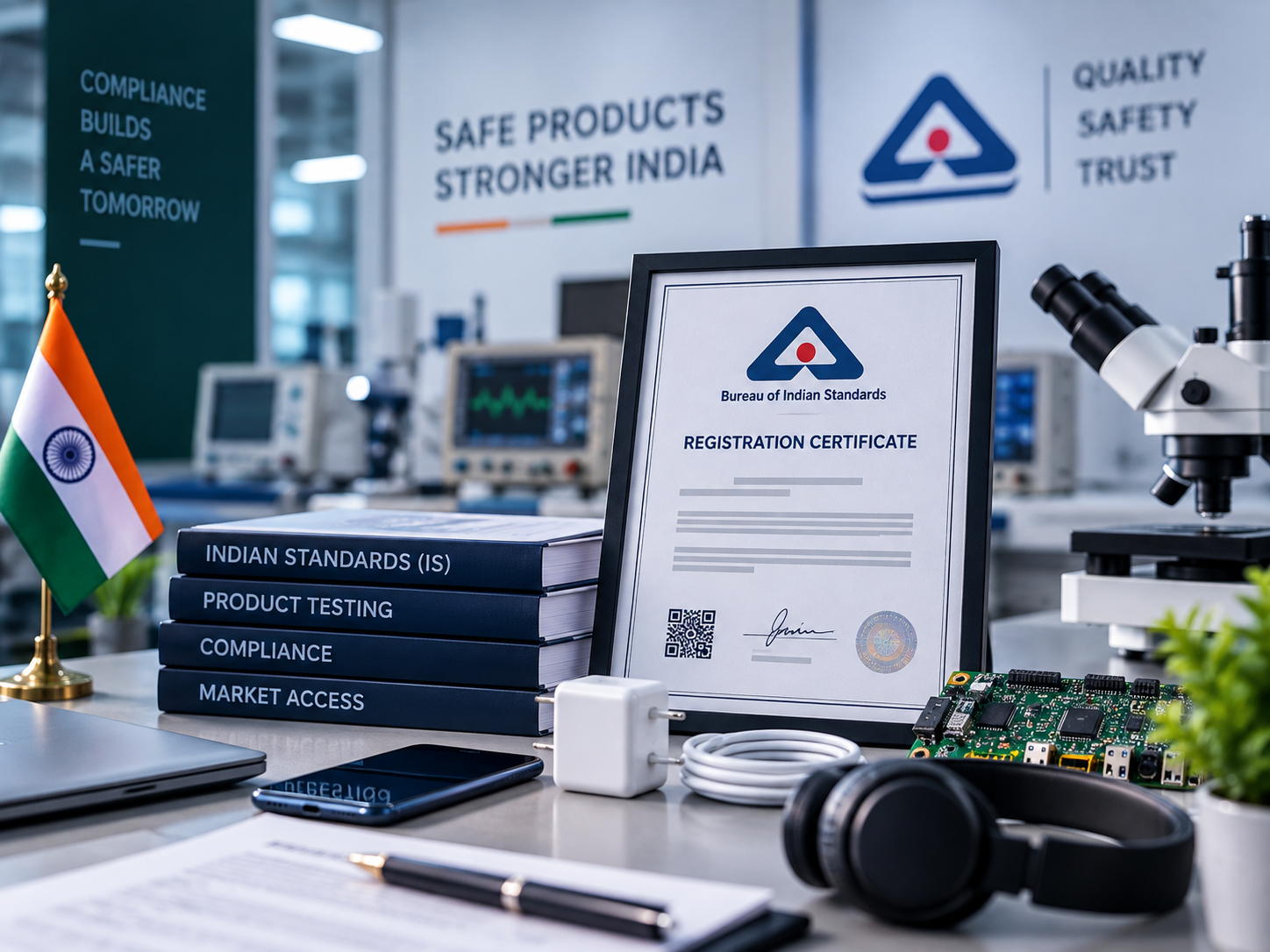
What Is BIS Certification?

BIS Registration is a product certification scheme carried out by Bureau of Indian Standards (BIS) under Compulsory Registration Scheme (CRS). It is applicable to electrical and IT products notified by Government of India for mandatory conformity with applicable Indian Standards.

Unlike the traditional ISI Certification Scheme where the factory assessment is done before the grant of a licence, the CRS scheme is mainly based on product testing in BIS recognised laboratories and verification of the manufacturer’s application and supporting documents before grant of registration.
On approval, the manufacturer is issued a BIS Registration Certificate and is allowed to use the specified Standard Mark with Registration Number on the registered product or its packaging to indicate conformity with the standard.

It is vital to know that the BIS Registration is issued solely to the producer. Traders, distributors, retailers, importers and brand owners cannot get BIS Registration in their name unless they are also the real maker of the goods.

What is the Compulsory Registration Scheme (CRS)?

The Compulsory Registration Scheme (CRS) is one of the certification schemes run by the Bureau of Indian Standards for electronic and information technology devices.

The system has been introduced by the Government of India to ensure that the items entering the Indian market conform to the mandated safety and quality requirements before they reach the consumers. As per CRS, firms have to get their products tested in BIS accredited laboratories against the relevant Indian Standard (IS). After successful testing and verification of the application, BIS issues Registration Certificate to the manufacturer for use of the Standard Mark.

Why is BIS Registration Mandatory for Indian Manufacturers?

The Indian manufacturers manufacturing notified products need to take BIS Certificate before marketing those products. Manufacturing or selling applicable products without valid registration may lead to regulatory action such as seizure of products, penalties, termination of sales permits and other legal repercussions under the relevant laws and regulations.

Who Needs BIS Registration?

All Indian manufacturers manufacturing products listed under the specified list of electronic and IT goods are required to get registered under the CRS scheme. Generally, the following entities are necessary to get BIS Licence:-

In case of numerous manufacturing units of the same product, separate registration would normally be required for each manufacturing location as per applicable BIS regulations.In the subsequent sections we shall elaborate on the eligibility criteria, list of items covered under CRS, registration process, papers required, laboratory testing, costs, timetables, renewal process and compliance requirements in detail so that the Indian manufacturers can successfully receive BIS Registration.

Eligibility Criteria for BIS Registration for Indian Manufacturers

Indian manufacturers should check whether they satisfy the eligibility criteria specified by the Bureau of Indian Standards (BIS) before filing for BIS Certificate under Compulsory Registration Scheme (CRS). As the registration is provided to the manufacturer and not to the trader or distributor only eligible manufacturing organizations can apply for a BIS Registration Certificate.

The Indian manufacturer must meet the following conditions to be eligible for BIS Registration:

Applicant Must Be a Manufacturer

BIS CRS Certificate is awarded only to the real maker of the notified goods. The manufacturing unit shall possess the required infrastructure, production facilities, quality control procedure and technical capabilities to manufacture the product according to the applicable Indian Standard (IS).

The producer could be: 

Distributors, distributors, merchants, retailers and marketing companies cannot get CRS License in their own name unless they are the manufacturer of the goods.

The product should be part of the list of electronic and IT products announced under Compulsory Registration Scheme (CRS) by the Ministry of Electronics and Information Technology (MeitY).
If the product is not included under CRS system, BIS Registration is not necessary typically unless notified by the Government through future notifications or Quality Control Orders (QCOs).

The product shall be tested in a BIS approved laboratory against the applicable Indian Standard before application.
The laboratory delivers a test report certifying the compliance of the product with the relevant safety and performance standards. This report is one of the most crucial documents in the registration procedure.

The manufacturing unit should be fully functional and should be capable of manufacturing the product for which registration is requested.

BIS may require information concerning:

BIS use the information to check that the applicant is the real maker of the registered goods.

Step-by-Step BIS Registration Process for Indian Manufacturers

The process of getting BIS Registration under Compulsory Registration Scheme has several steps starting from determining the relevant standard to getting the Registration Certificate. Doing it the right way will help you prevent delays and lower the odds of an application being rejected.

BIS CRS Certificate is awarded only to the real maker of the notified goods. The manufacturing unit shall possess the required infrastructure, production facilities, quality control procedure and technical capabilities to manufacture the product according to the applicable Indian Standard (IS).

The producer could be: 

Distributors, distributors, merchants, retailers and marketing companies cannot get CRS License in their own name unless they are the manufacturer of the goods.

The maker must gather all technical and legal documentation necessary for the application.These usually include:

Samples of the product are tested in a BIS approved laboratory. The product is tested in the laboratory as per the relevant Indian Standard and on successful compliance, a complete Test Report is issued. Testing is one of the most important stages because BIS relies on the laboratory results while reviewing the application.

The manufacturer shall submit the online application through the BIS portal together with the Test Report received:

BIS reviews the application and verifies:

If clarification is requested, BIS may request additional information or supporting documentation.

Upon satisfactory verification of the application and supporting papers, BIS issues the Registration Certificate.A unique Registration Number is assigned to the manufacturer. The product which has been registered can thereafter bear the Standard Mark. Upon registration, the manufacturer is legally permitted to manufacture, market, distribute and sell the registered product in India subject to continued compliance with applicable BIS regulations.

TIMELINE TO GET BIS LICENCE

In case you have already tested your product and you wish to use the prior test reports for BIS CRS Certification, then the test reports should not be older than 90 days from the date of receiving the online application. If you wish to submit a supplementary test report from a brand whose product has previously been tested and accepted by BIS, the report should not be older than 90 days from the date of application.

If all documentation supplied are in order, BIS will process the CRS registration. In the surveillance process, independent samples are collected exclusively. BIS CRS Licence will be issued within 20 working days if all the documents and test reports submitted are in order. If the documentation and conformance is not adequate in the first instance and the shortfall is not addressed within 30 days, then the BIS officer will issue you a rejection notice.

Documents Required for BIS FMCS Registration

One of the most important steps in obtaining a BIS FMCS Certificate is the preparation of the correct documents. The Foreign Manufacturer BIS Registration Process is usually delayed because of incomplete or inconsistent papers. BIS assesses the product, the producer's manufacturing capabilities, quality management system, testing facilities, and legal authority.

Documents of Business Registration

One of the most important steps in obtaining a BIS FMCS Certificate is the preparation of the correct documents. The Foreign Manufacturer BIS Registration Process is usually delayed because of incomplete or inconsistent papers. BIS assesses the product, the producer's manufacturing capabilities, quality management system, testing facilities, and legal authority.

BIS demands full information on the production plant, including: • Location of Factory • Manufacturing Facility Layout

This information helps to prove that the applicant is the true manufacturer of the product

Technical documentation is a key element in assessing product conformity. The following documents are often needed:

The information given should be consistent with the product examined by the BIS certified laboratory.

A valid Test Report from a BIS-recognized laboratory is one of the most crucial documents required for the registration process.

The applicant may be required to submit: Where the product is offered under a registered brand name,

During registration, the manufacturer shall name an authorized representative for communication with BIS

Documents usually contain:

Technical documentation is a key element in assessing product conformity. The following documents are often needed:

Products Covered Under BIS Registration (CRS)


S.No
Product
Indian Standard number( IS No.)
1.
AMPLIFIERS WITH INPUT POWER 2000W AND ABOVE
IS 616:2017
2.
AUTOMATIC DATA PROCESSING MACHINE
IS 13252(Part 1):2010
3.
ELECTRONIC CLOCKS WITH MAINS POWER
IS 302-2-26:2014
4.
ELECTRONIC GAMES (VIDEO)
IS 616:2017
5.
ELECTRONIC MUSICAL SYSTEMS WITH INPUT POWER 200W AND ABOVE
IS 616:2017
6.
LAPTOP/NOTEBOOK/TABLET
IS 13252(Part 1):2010
7.
MICROWAVE OVENS
IS 302-2-25:2014
8.
OPTICAL DISC PLAYERS WITH BUILT IN AMPLIFIERS OF INPUT POWER 200W AND ABOVE
IS 616:2017
9.
PLASMA/LCD/LED TELEVISIONS OF SCREEN SIZE 32"; AND ABOVE
IS 616 :2017 OR IS 616:2017 & IS 18112:2025
10.
PRINTERS, PLOTTERS
IS 13252(Part 1):2010
11.
SCANNERS
IS 13252(Part 1):2010
12.
SET TOP BOX
IS 13252(Part 1):2010
13.
TELEPHONE ANSWERING MACHINES
IS 13252(Part 1):2010
14.
VISUAL DISPLAY UNITS, VIDEOS MONITORS OF
SCREEN SIZE 32" AND ABOVE
IS 13252(Part 1):2010
15.
WIRELESS KEYBOARDS
IS 13252(Part 1):2010
16.
CASH REGISTERS
IS 13252(Part 1):2010
17.
COPYING MACHINES/DUPLICATORS
IS 13252(Part 1):2010
18.
PASSPORT READER
IS 13252(Part 1):2010
19.
POINT OF SALE TERMINALS
IS 13252(Part 1):2010
20.
MAIL PROCESSING MACHINES/POSTAGE MACHINES/
FRANKING MACHINES
IS 13252(Part 1):2010
21.
POWER BANKS FOR USE IN PORTABLE APPLICATIONS
IS 13252(Part 1):2010
22.
SMART CARD READER
IS 13252(Part 1):2010
23.
MOBILE PHONES
IS 13252(Part 1):2010
24.
SELF-BALLASTED LED LAMPS FOR GENERAL LIGHTING SERVICES
IS 13252(Part 1):2010
25.
DC OR AC SUPPLIED ELECTRONIC CONTROLGEAR FOR LED MODULES
IS 15885(Part 2/Sec 13):2012
26.
POWER ADAPTORS FOR AUDIO,VIDEO & SIMILAR
ELECTRONIC APPARATUS
S 616:2010
27.
POWER ADAPTORS FOR IT EQUIPMENTS
IS 13252(Part 1):2010
28.
FIXED GENERAL PURPOSE LED LUMINAIRES
IS 10322(Part 5/Sec 1):2012
29.
UPS/INVERTORS OF RATING <= 5KVA
IS 16242(Part 1):2014
30.
SEALED SECONDARY CELLS/BATTERIES CONTAINING
ALKALINE OR OTHER NON-ACID ELECTROLYTES FOR USE IN PORTABLE APPLICATIONS PART 1 NICKEL SYSTEMS
SEALED SECONDARY CELLS/BATTERIES CONTAINING
ALKALINE OR OTHER NON-ACID ELECTROLYTES FOR USE IN PORTABLE APPLICATIONS PART 2 LITHIUM SYSTEMS
IS 16046(Part 1): 2018
IS 16046(Part 2): 2018
31.
INDIAN LANGUAGE SUPPORT FOR MOBILE PHONE HANDSETS
IS 16333 (Part 3) : 2022
32.
Recessed LED Luminaries
IS 10322 (Part 5/Section 2) : 2012
33.
LED Luminaires for Road and Street lighting
IS 10322 (Part 5/Section 3) : 2012
34.
LED Flood Lights
IS 10322 (Part 5/Section 5) : 2013
35.
LED Hand lamps
IS 10322 (Part 5/Section 6) : 2013
36.
LED Lighting Chains
IS 10322 (Part 5/Section 7) : 2017
37.
LED Luminaires for Emergency Lighting
IS 10322 (Part 5/Section 8) : 2013
38.
UPS/Inverters of rating <= 10kVA
IS 16242 (Part 1) : 2014/
IS 16242 (Part 1): 2025 /IEC 62040-1: 2017 +AMD1: 2021 +AMD2: 2022 CSV
39.
Plasma/ LCD/LED Television of screen size upto 32
IS 616 :2017 OR IS 616:2017 & IS 18112:2025
40.
Visual Display Units
IS 13252 (Part 1) : 2010
41.
CCTV Cameras/CCTV Recorders
IS 13252 (Part 1) : 2010, Essential Requirement(s) for Security of CCTV
42.
Adapters for household and similar electrical appliances
IS 302 (Part 1) : 2008/
IS 302 (Part 1): 2024/IEC 60335-1:2020
43.
USB driven Barcode readers, barcode scanners, Iris scanners, Optical fingerprint scanners
IS 13252 (Part 1) : 2010
44.
Smart watches
IS 13252 (Part 1) : 2010
45.
Crystalline Silicon Terrestrial Photovoltaic (PV) modules
(Si wafer based)
IS 14286 (Part 1/Sec 1):2023/IEC 61215-1-1: 2021,
IS/IEC 61730-1 : 2016,
IS/IEC 61730-2 : 2016
OR
IS 14286 (Part 1/Sec 1):2023/IEC 61215-1-1: 2021,
IS/IEC 61730-1 : 2023,
IS/IEC 61730-2 : 2023
46.
Thin-Film Terrestrial Photovoltaic (PV) Modules (a-Si, CiGs
and CdTe)
IS 14286 (Part1/Sec 2): 2023/ IEC 61215-1-2:2021 + Amd-1:2022 & IS/IEC 61730-1: 2016,IS/IEC 61730-2: 2016 /
IS 14286 (Part 1/Sec 3 ): 2023/ IEC 61215-1-3 :2021 + Amd-1:2022 & IS/IEC 61730-1: 2016,IS/IEC 61730-2: 2016/
IS 14286 (Part 1/Sec 4): 2023/ IEC 61215-1-4: 2021 + Amd-1:2022 & IS/IEC 61730-1: 2016,IS/IEC 61730-2: 2016,
OR
IS 14286 (Part1/Sec 2): 2023/ IEC 61215-1-2:2021 + Amd-1:2022 & IS/IEC 61730-1: 2023,IS/IEC 61730-2: 2023/
IS 14286 (Part 1/Sec 3 ): 2023/ IEC 61215-1-3 :2021 + Amd-1:2022 & IS/IEC 61730-1: 2023,IS/IEC 61730-2: 2023/
IS 14286 (Part 1/Sec 4): 2023/ IEC 61215-1-4: 2021 + Amd-1:2022 & IS/IEC 61730-1: 2023,IS/IEC 61730-2: 2023
47.
Power converters for use in photovoltaic power system
IS 16221 (Part 2):2015/ IEC 62109-2: 2011,
IS/IEC 61683: 1999
48.
Utility-Interconnected Photovoltaic inverters
IS 16221 (Part 2):2015/ IEC 62109-2: 2011,
IS 16169: 2019/ IEC 62116: 2014,
IS 17980: 2022/IEC 62891:2020
49.
Storage battery
IS 16270: 2023
50.
Independent LED Modules for General Lighting
IS 16103 (Part 1) : 2012/
IS 16103 (Part 1):2025 /IEC 62031: 2018
51.
Lighting Chain (Rope Lights)
IS 10322 (Part 5/Sec 9) : 2017
52.
Keyboard
IS 13252 (Part 1) : 2010
53.
Induction Stove
IS 302-2-6 : 2009
54.
Automatic Teller Cash Dispensing Machines
IS 13252 (Part 1) : 2010
55.
Standalone Hard Disk Drives
IS 13252 (Part 1) : 2010
56.
Wireless Headphone and Earphone
IS 616 : 2017
57.
USB Type External Solid-State Storage Devices (above 256 GB capacity)
IS 13252 (Part 1) : 2010
58.
Electronic Musical System with input power below 200 Watts
IS 616 : 2017
59.
Standalone Switch Mode Power Supplies (SMPS) with output voltage 48V (max)
IS 13252 (Part 1) : 2010
60.
Television other than Plasma/ LCD/LED TVs
IS 616 :2017 OR IS 616:2017 & IS 18112:2025
61.
Rice Cooker
IS 302-2-15 : 2009
62.
Wireless Microphone
IS 616 : 2017
63.
Digital Camera
IS 13252 (Part 1) : 2010
64.
Video Camera
IS 616 : 2017
65.
Webcam (Finished Product)
IS 616 : 2017
66.
Smart Speakers (with and without Display)
IS 616 : 2017
67.
Dimmers for LED products
IS 60669-2-1: 2008
68.
Bluetooth Speakers
IS 616 : 2017
69.
Ortho Phosphoric Acid
IS 798 : 2020
70.
Polyphosphoric Acid
IS 17439:2020
71.
Trimethyl Phosphite Technical Grade
IS 17412:2020
72.
Television Sets
IS 18112:2025
73.
Extended Reality Products (Augmented Reality, Virtual Reality, Mixed Reality etc.)
IS/IEC 62368: Part 1: 2023

BIS Requirements for Product Testing

Testing is mandatory for all products under the Compulsory Registration Scheme before a CRS Registration Certificate may be granted. Testing shall be carried out only in a BIS approved laboratory against the relevant Indian Standard.

Laboratory tests different safety, building, electrical, thermal and performance characteristics as per the relevant Indian Standard.


Testing may involve, depending on the product category:

The laboratory will issue the Test Report required for the BIS application only after the successful completion of the testing.

Complete Guide for:- BIS Certification for Foreign Manufacturers

BIS Registration Cost for Indian Manufacturers


Min 2 year registration fee & processing fee is needed. The aforesaid amount is for one test report. Additional test report will be charged with additional processing fee of Rs. 20,000/- for the New Application and inclusion.

The cost for BIS registration of electronic items will depend on the following elements:

Fee Type
New Application
Renewal Fee
Inclusion Fee
Application Fee
INR 1,000
INR 1,000
-
Processing Fee
INR 25,000x2 = 50,000
25,000x2 = 50,000
15,000x2 = 30,000
Registration Fee
INR 1,000x2 = 2,000
INR 1000x2 = 2000
-
Total
INR 53,000
INR 53,000
INR 30,000

Validity of BIS Registration

Generally, a CRS Registration Certificate is provided for a specific validity period as laid down in the relevant BIS rules and regulations.
The makers shall assure continual conformity of the registered product to the relevant Indian Standard and maintenance of the quality of the registered product during the validity term. The registration will remain valid as long as the manufacturer adheres to the criteria and conditions of the Compulsory Registration Scheme.

Any material change in the product design, manufacturing process, vital components, manufacturing site or brand ownership shall be suitably notified to BIS before implementation wherever applicable.

Renewal of BIS Registration

Manufacturers are required to apply for renewal of their CRS Certificate before expiry of the certificate so that there is no interruption in the manufacturing and selling of their products. The renewal process often involves: 

Timely renewal helps manufacturers prevent delays in production, supply chains and product availability in the marketplace.
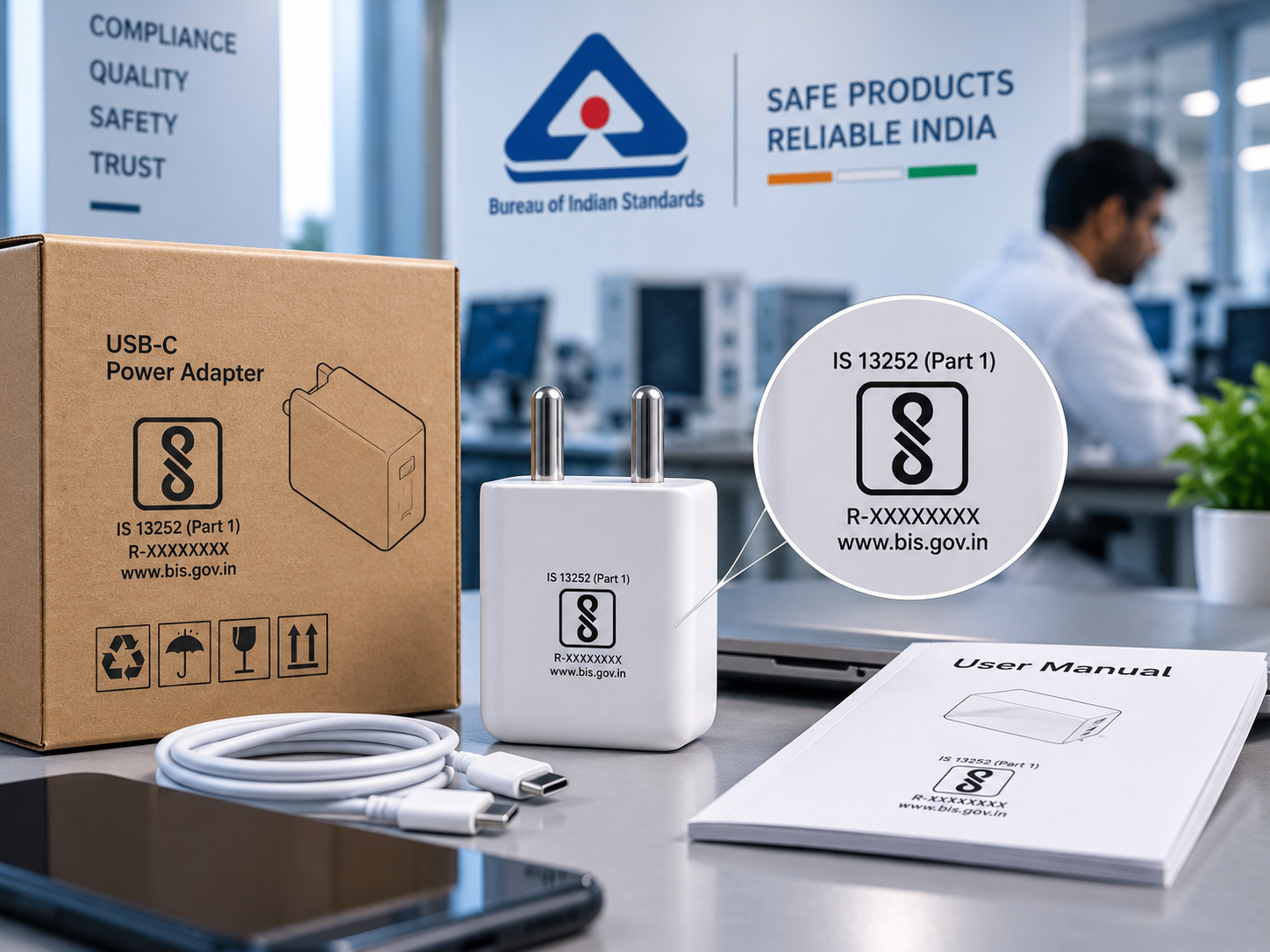
Marking and Labelling Requirements

The makers are allowed to use the Standard Mark along with allotted Registration Number on the registered product after grant of CRS License. '

The marking shall be as per the BIS rules for:

The use of the BIS Standard Mark in any manner which is incorrect, misleading or unauthorized may attract regulatory action by BIS.

Responsibilities of Indian Manufacturers After Getting CRS Registration

Getting CRS Licence is not the end of compliance process. Manufacturers are expected to be in continuous compliance during the registration period. The primary responsibilities are: 

Benefits of BIS Registration for Indian Manufacturers

Getting CRS Licence is not the end of compliance process. Manufacturers are expected to be in continuous compliance during the registration period. The primary responsibilities are: 

Complete Guide for:- ISI Mark Certification for India Manufacturers
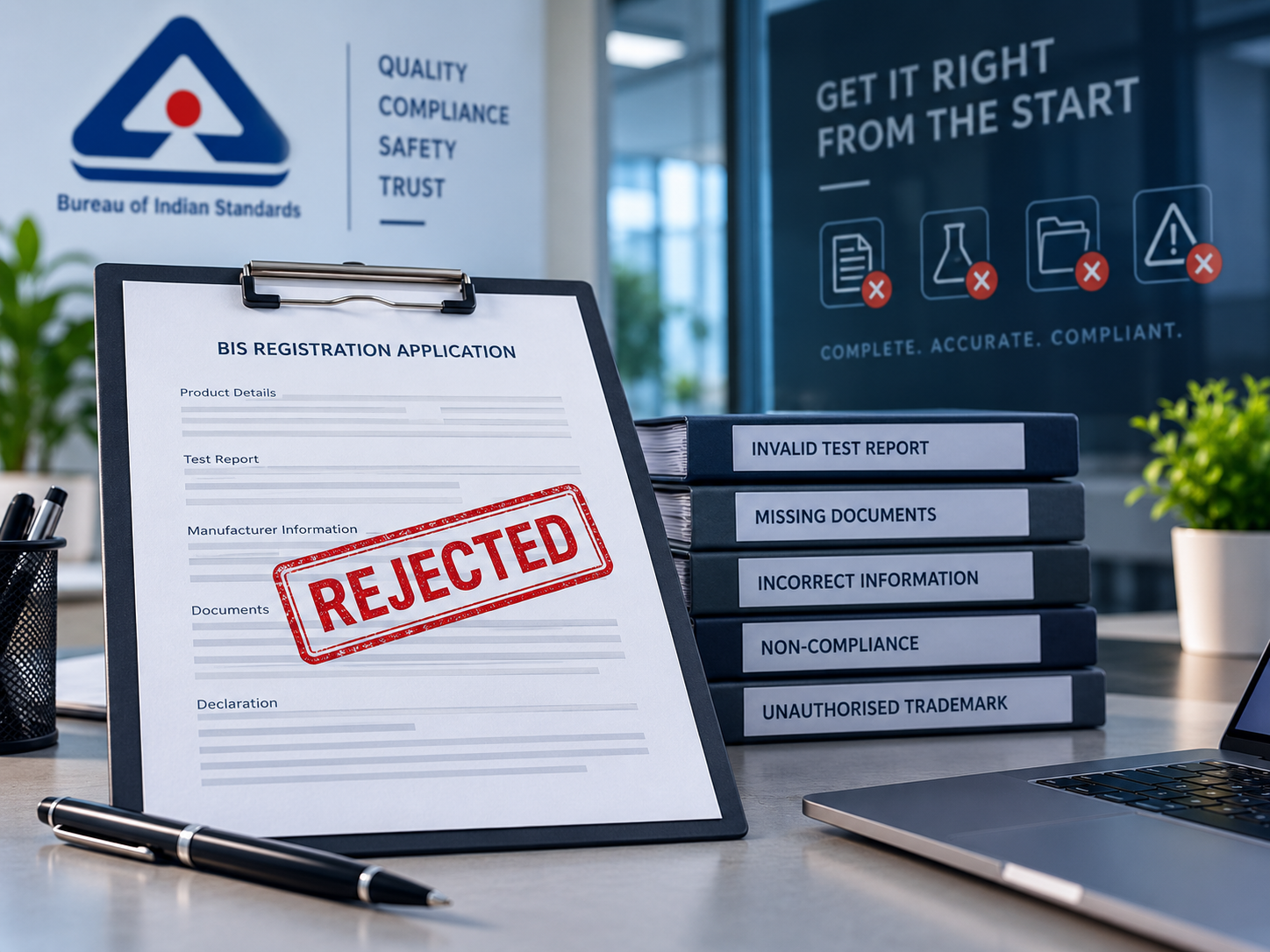
Common Reasons for Rejection of BIS Registration Applications

Why Choose Kar Parivartan?

BIS Registration needs technical know-how, extensive documentation, co-ordination with BIS accredited laboratories and regular communication with Bureau of Indian Standards. Manufacturers can benefit from using an experienced consultancy to guide them more efficiently through the process and to avoid unnecessary delays.

At Kar Parivartan, we offer complete end to end support for BIS Registration under the Compulsory Registration Scheme for Indian manufacturers on various electronic and electrical products.

We present: 

We work together with manufacturers to streamline the registration process so they may achieve regulatory compliance with confidence to our team that emphasizes accuracy, transparency and swift response.

Conclusion

BIS registration is a compulsory requirement for introducing Electronics and IT items included under Compulsory registration scheme in the market. All makers of electronic products must obtain BIS registration for their products to use the BIS Standard Mark along with the R-number.

Get in touch with Kar Parivartan for BIS Registration. Kar Parivartan BIS Registration Consultant helps manufacturers and importers to acquire BIS registration for their products in a timely way by giving important insights and guidance at every stage of the BIS Registration Process.

Kar Parivartan is a worldwide consulting organization providing advise and consulting services to several sectors in India and around the world to ensure regulatory compliance and fulfill industry standards for smooth business operations. Kar Parivartan provides a one-stop solution for manufacturers and importers to obtain all kinds of product certification, testing, training, auditing and other compliance services to achieve improved production efficiency and quality standards.

Frequently Asked Questions (FAQs) on BIS Registration for Indian Manufacturers

1. What is BIS Registration?

BIS Registration is a product certification provided by the Bureau of Indian Standards (BIS) under the Compulsory Registration Scheme (CRS). Mandatory for some electronic and IT devices before they are made, stored, disseminated and sold in India.

BIS is responsible for administering the Compulsory Registration Scheme (CRS) for recognized electronic and electrical products. Under the system, the products should conform to the relevant Indian Standard and be tested in a BIS recognised laboratory prior to issue of registration.

Only the producer of the product can apply for BIS registration. For this site, the applicant should be an Indian manufacturer having a manufacturing unit based in India.

Yes . BIS Registration is compulsory for products specified under Compulsory Registration Scheme . Manufacture or sale of such products without registration may invite regulatory action.

BIS Registration is required for several electronic and electrical devices such as mobile phones, laptops, televisions, LED lighting products, power banks, batteries, UPS, CCTV cameras, printers, scanners, and many other products notified by MeitY.

Before applying, you should check if your product is covered by the latest list of products issued under Compulsory Registration Scheme and find out the applicable Indian Standard.

Bureau of Indian Standards provides the CRS Registration Certificate

No, there is no factory inspection in CRS Certification.

Yes. All the products coming under CRS should be tested in a BIS recognised laboratory before submission of the application.

No. Registration is normally awarded for a certain product falling under a particular Indian Standard.

Yes, you can register multiple models in a single registration.

Paperwork typically would be business registration paperwork, details of production unit, product specifications, test reports, trademark documents (if any), authorization letters and technical information.

Overall timeline will depend on laboratory testing, documents, examination of application and time taken to answer to BIS queries.

Validity will be as per the applicable BIS regulations. Manufacturers should take care to renew in time to avoid expiration and to preserve compliance.

Yes. You can apply for renewal of registration before the due date of expiration of the certificate.

16. What if there are changes in the product specifications?

If there is any major change in product design, manufacturing process, etc.it shall be communicated to BIS.

No. BIS Registration certificate is only granted to manufacturer and a particular location and cannot be transferred.

No, BIS Registration is granted only to the manufacturer.

Yes. Start-ups manufacturing products which falls under CRS product list are entitled to apply for CRS Registration.

If the product belongs to the mandatory CRS product list, the BIS Registration is a must whether it is offered online or offline.

The BIS Standard Mark is the mandated conformity mark for the registered items indicating conformance with the application Indian Standard under the CRS scheme.

Applications might be denied on account of poor documentation, non-compliance of test reports, wrong product information, mismatch of requirements or no response to BIS queries.

Manufacturers shall ensure compliance with the appropriate legal requirements prior to the manufacture or placing on the market of notified products.

Testing requirements depend on the relevant Indian Standard.

CRS registration under BIS is mainly for certain electrical and IT items whereas ISI Certification is for the products covered under BIS Product Certification Scheme with various certification methods.

Yes, provided that the finished article meets the requirements of the relevant Indian Standard and all other relevant BIS requirements.

Trademark paperwork are usually necessary when the product is offered under a registered brand name.

Manufacturers shall ensure the product quality, continue compliance to the relevant Indian Standard, use the BIS Standard Mark correctly, maintain records and renew the registration before expiry.

Experienced consultants may help in product applicability evaluation, documentation, laboratory coordination, application filing, compliance assistance and responding to BIS queries, helping to cut down delays and improving application quality.

Kar Parivartan India provides end to end consultation services for BIS Registration to Indian manufacturers. The services include product appraisal, paperwork assistance, coordination with BIS accredited laboratories, application filing, assistance in complying with the requirements and post-registration support.

Contact Us

Important Links

Copyright © 2026 Kar Parivartan LLP . All Rights Reserved.

Send Us a Message