

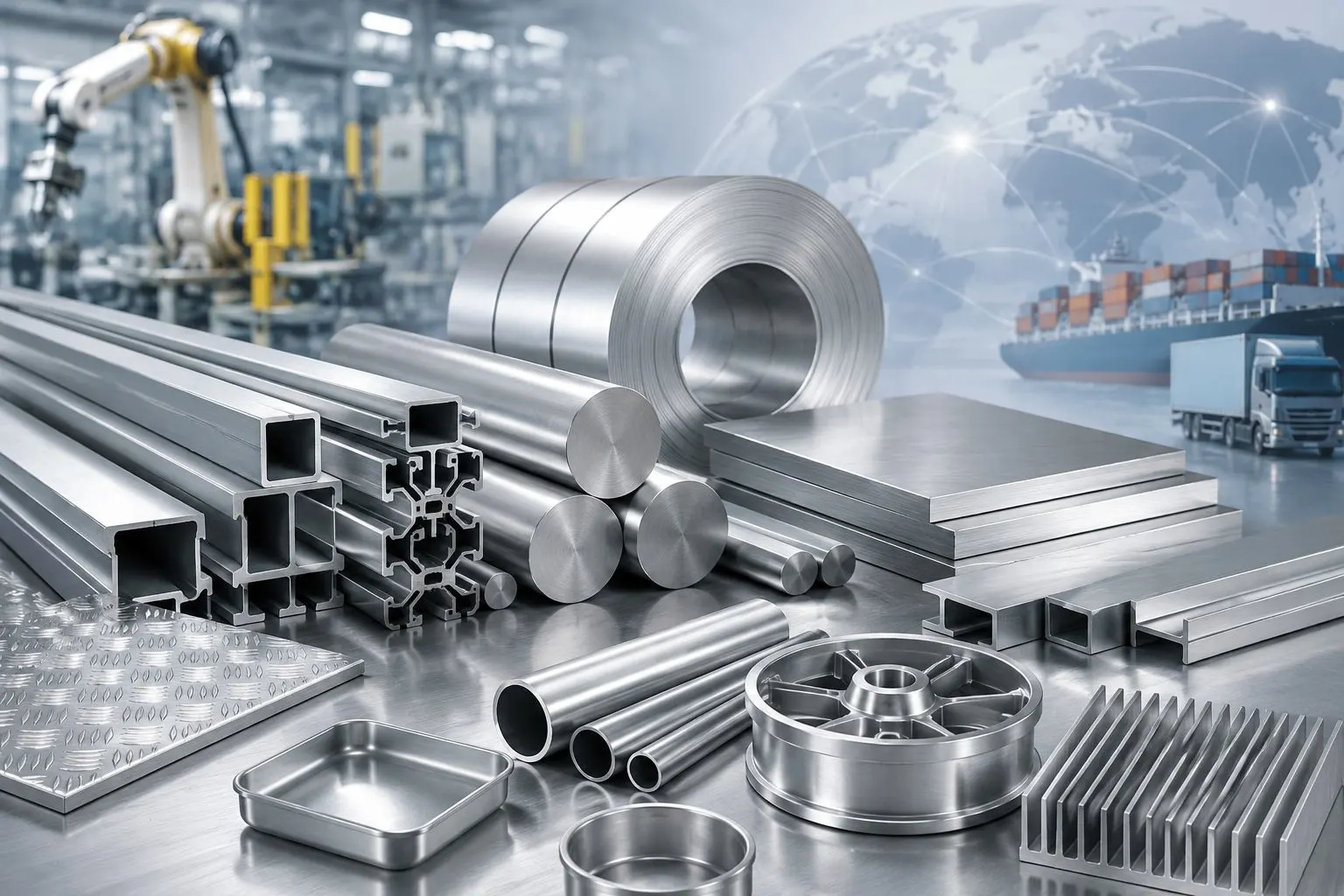
The Government of India has notified the Aluminium and Aluminium Alloy Products (Quality Control) Order, 2026, making BIS certification mandatory for specified aluminium and aluminium alloy products. Under this Quality Control Order (QCO), manufacturers must obtain a BIS license and use the Standard Mark before selling covered products in the Indian market. The objective is to ensure product quality, consumer safety, and uniform standards across the aluminium industry.
What is the Aluminium & Aluminium Alloy Products QCO, 2026?
The Ministry of Commerce and Industry, Department for Promotion of Industry and Internal Trade (DPIIT), issued the Aluminium and Aluminium Alloy Products (Quality Control) Order, 2026 on 11 March 2026. The Order came into force upon its publication in the Official Gazette and mandates compliance with specified Indian Standards along with BIS certification under Scheme-I.
Under this QCO, covered products must conform to the applicable Indian Standard and bear the BIS Standard Mark under a valid BIS license. Non-compliance can attract penalties under the Bureau of Indian Standards Act, 2016.
Who is Required to Obtain BIS Certification?
The following entities are required to obtain BIS certification:
- Indian manufacturers produce covered aluminium and aluminium alloy products.
- Foreign manufacturers exporting covered aluminium products to India.
- Brand owners importing products manufactured overseas.
- Businesses supplying aluminium products in the Indian market.
Exemptions
The QCO does not apply to:
- Products manufactured in India exclusively for export.
- Up to 200 kg of imported products per year used for research and development purposes, subject to prescribed conditions.
Products Covered Under the QCO
Some major products covered under the Order include:
| Indian Standard | Product Description |
| IS 7092 (Part 1):1992 | Aluminium Alloy Welded Tubes for Irrigation |
| IS 7092 (Part 2):1987 | Aluminium Alloy Extruded Tubes for Irrigation |
| IS 5484:1997 | EC Grade Aluminium Rod |
| IS 16011:2012 | Aluminium & Aluminium Alloy Foil for Pharmaceutical Packaging |
| IS 17682:2021 | Aluminium Composite Panel (ACP) |
| IS 1254:2007 | Corrugated Aluminium Sheet |
| IS 733:1983 | Wrought Aluminium & Aluminium Alloy Bars, Rods and Sections |
| IS 734:1975 | Wrought Aluminium Alloy Forgings |
| IS 736:1986 | Wrought Aluminium Alloy Plates |
| IS 737:2008 | Wrought Aluminium Alloy Sheets and Strips |
| IS 739:1992 | Wrought Aluminium Alloy Wire |
| IS 740:1977 | Wrought Aluminium Alloy Rivet Stock |
| IS 1285:2002 | Extruded Round Tubes and Hollow Sections |
| IS 2067:1975 | Wrought Aluminium Wire for Electrical Purposes |
| IS 21:1992 | Aluminium for Manufacture of Utensils |
| IS 5082:1998 | Aluminium Alloy Products for Electrical Applications |
| IS 7902:2001 | Aluminium Alloy Forgings for Aerospace Applications |
Implementation Dates
Immediate Implementation
The following products require compliance with immediate effect:
- IS 7092 (Part 1):1992
- IS 7092 (Part 2):1987
- IS 5484:1997
- IS 16011:2012
- IS 17682:2021
- IS 1254:2007
- IS 7902:2001
Deferred Implementation
For the remaining standards (IS 733, IS 734, IS 736, IS 737, IS 739, IS 740, IS 1285, IS 2067, IS 21 and IS 5082):
| Enterprise Category | Implementation Date |
| Large & Medium Enterprises | 01 December 2026 |
| Small Enterprises | 01 March 2027 |
| Micro Enterprises | 01 June 2027 |
BIS Certification Procedure
Step 1: Product Identification
Identify the applicable Indian Standard (IS) based on the product category.
Step 2: Documentation Preparation
Prepare all required documents including:
- Manufacturing license
- Factory registration
- GST registration
- Quality control documents
- Process flow chart
- Testing equipment details
- Authorized signatory documents
Step 3: Product Testing
Testing of product samples is conducted in BIS-recognized laboratories as per the applicable Indian Standard.
Step 4: BIS Application Submission
Submit the application through the BIS portal along with test reports and supporting documents.
Step 5: Factory Inspection
BIS officials conduct a factory audit to verify:
- Manufacturing infrastructure
- Quality control systems
- In-house testing facilities
- Production capability
Step 6: Grant of License
Upon satisfactory assessment and compliance verification, BIS grants the license and permission to use the Standard Mark.
Timeline for Obtaining BIS License
For Indian Manufacturers
| Activity | Estimated Timeline |
| Documentation Preparation | 1–2 Weeks |
| Product Testing | 1–2 Weeks |
| Application Review | 1–2 Weeks |
| Factory Inspection | 2–4 Weeks |
| Grant of License | 1–2 Weeks |
Expected Total Timeline: 6–8 Weeks
For Foreign Manufacturers (FMCS)
| Activity | Estimated Timeline |
| Documentation & Nominee Appointment | 2–4 Weeks |
| Factory Inspection | 1-2 Days |
| BIS Audit Planning | 2–4 Weeks |
| Sample Testing | 3–6 Weeks |
| License Approval | 2–4 Weeks |
Expected Total Timeline: 10–16 Weeks
Consequences of Non-Compliance
Manufacturers, importers, and sellers of covered products who fail to comply with the QCO may face:
- Seizure of non-compliant products
- Market restrictions
- Legal action under the BIS Act, 2016
- Monetary penalties
- Suspension of business operations related to covered products
The BIS has been designated as the certification and enforcement authority under this Order.
How Kar Parivartan Can Help
Kar Parivartan provides end-to-end BIS certification support for both Indian and foreign manufacturers, including:
✔ Product applicability assessment
✔ Documentation preparation
✔ Testing coordination with BIS-recognized laboratories
✔ BIS application filing
✔ Factory audit support
✔ Foreign Manufacturer Certification Scheme (FMCS) assistance
✔ Post-license compliance support
Our team ensures a smooth and timely certification process, helping manufacturers achieve market access in India without compliance delays.
FAQs
Is BIS certification mandatory for aluminium products?
Yes. Products covered under the Aluminium and Aluminium Alloy Products (Quality Control) Order, 2026 must obtain BIS certification before being sold in India.
Can imported aluminium products be sold without BIS certification?
No. Foreign manufacturers and importers must obtain BIS certification for covered products before importing and selling them in India.
Are exports covered under this QCO?
No. Products manufactured exclusively for export are exempt from this Order.
Which BIS scheme is applicable?
Certification is granted under BIS Scheme-I (ISI Mark Scheme).
How long does BIS certification take?
Typically 6–10 weeks for Indian manufacturers and 10–16 weeks for foreign manufacturers, subject to testing and inspection schedules.
What happens if a manufacturer does not comply?
Non-compliance may result in penalties, product seizure, market restrictions, and legal action under the BIS Act, 2016.


