


Extended Producer Responsibility (EPR) has rightly become the backbone of India’s push toward a circular economy. On paper, it’s straightforward: brands must take responsibility for the waste their products generate, ensuring it’s collected and recycled in an environmentally sound manner. But if you’re a producer, importer, or brand owner trying to implement extended producer responsibility in India beyond ticking a compliance box, you know: it’s not just about “sending your waste for recycling.” It’s about navigating a maze of hidden costs, supply chain obstacles, and delivery headaches that can derail even the most well-intentioned sustainability plan. In this article, let’s look beneath the surface — and understand what really makes EPR so challenging for businesses. 1. The Hidden Costs Few Talk About Many brands underestimate the true cost of compliance. It’s not just the fee for sourcing CPCB EPR credits — it’s the entire lifecycle cost: In the end, prevention costs less than correction — especially when it comes to EPR compliance. 2. Supplier & Recycler Hurdles Recycling supply chains in India are still evolving — and that creates real risks for brands: Finding the right producer responsibility organization and recycler partners isn’t just a procurement decision — it’s a critical compliance safeguard. 3. Delivery Dilemmas: From Plan to Proof Even if you lock in budgets and partners, many businesses stumble on the final mile: delivery and documentation. So, How Can Brands Overcome This? Brands ready to move from “tick box” compliance to true circularity need partners who offer more than just credits. They need an integrated approach that covers: ✔️ End-to-end traceability — from registration through the CPCB EPR Portal to final reporting.✔️ Verified supplier networks — to avoid the risk of fake credits or informal channels.✔️ Transparent pricing — with clarity on all hidden costs.✔️ Robust reverse logistics — to move waste back through authorized channels efficiently.✔️ Automated EPR compliance — so filings, certificates, and audit trails are always ready. Conclusion Extended producer responsibility India is not just about sending your waste to a recycler. It’s about building a system that makes sustainability real, measurable, and credible. At Kar Parivarthan, we help businesses navigate this journey with our Source-to-Pay (S2P) model — managing everything from sourcing authentic CPCB EPR credits to verified recycling and real-time compliance reporting. Because in today’s regulatory landscape, responsibility can’t stop at good intentions — it must deliver results.Ready to make your EPR truly traceable, sustainable, and audit-proof? Let’s talk.Visit our website or call: +91-8527952225

Kar Parivartan at TERI SAS Alumni Connect 2025: Driving the Future of EPR & Circular Economy
As conversations flowed, one theme kept returning to center stage—Extended Producer Responsibility (EPR). Once seen as just a regulatory checkbox, EPR is rapidly transforming into a strategic enabler of the circular economy. And the Alumni Connect event made it clear: the future of waste management, sustainability, and corporate accountability lies in how we shape and implement these evolving EPR frameworks. What is EPR—and Why Is It So Important Today? Extended Producer Responsibility is a policy approach where producers take responsibility for the entire lifecycle of the products they manufacture—from design to disposal. It’s a bold shift in mindset: from “make, use, dispose” to “design, reuse, recover.” But EPR isn’t just about managing waste—it’s about closing the loop. When done right, it nudges industries toward innovation in product design, encourages recyclability, promotes reverse logistics, and ultimately supports a circular economy where resources are reused instead of discarded. Key Conversations at the Event At TERI SAS, discussions dove deep into the upcoming EPR guidelines in India, especially in sectors like Plastics, e-waste, Batteries, Tires, Oil, vehicles, construction & Demolition and Non-Ferrous. With new draft policies on the horizon, the event became a sounding board for concerns, challenges, and opportunities that industry players are grappling with. Some of the critical challenges highlighted: Despite these hurdles, the energy in the room was optimistic. Everyone agreed that while EPR compliance today can feel complex, the long-term environmental and economic benefits far outweigh the costs. EPR: The Circular Economy Catalyst What stood out most during the event was the growing consensus that EPR isn’t just a policy—it’s a tool for transformation. When effectively implemented, EPR can: Kar Parivartan’s own experience working on-ground with waste aggregators and corporate partners has shown that impact scales best when responsibility is shared. It’s not just about cleaning up the mess—it’s about preventing the mess in the first place. Looking Ahead: The Future of EPR in India India’s EPR landscape is evolving rapidly. With upcoming rules being framed for new sectors (like textiles and packaging), and digitization becoming a backbone of compliance through online EPR portals, the future is both exciting and demanding. What’s needed now is: Final Thoughts The TERI SAS Alumni Connect was more than just a networking event—it was a reminder of the powerful role that academia, industry, and civil society can play together in rewriting the story of waste and responsibility. At Kar Parivartan, we came away inspired—and even more committed—to playing our part in India’s sustainability journey. As EPR becomes a cornerstone of environmental policy, we’re excited to help shape solutions that are circular, inclusive, and future-ready. Because real change doesn’t happen in isolation—it happens when communities connect, collaborate, and commit. 🌍

Recycle Today Sustainable Tomorrow
Kar Parivartan’s Journey to Sustainability Introduction We started in 2020 with a mission: to reduce, reuse and recycle waste. We Assist to deliver EPR (Extended Producer Responsibility) obligations for our customers through aggregated network of recyclers in e-Waste, Battery Waste, Tyre Waste and Plastic Waste. Our Vision is to reduce waste to landfills, to protect our environment and minimize carbon emissions by practicing principals of circular economy for sustainable development. Our Journey Kar Parivartan’s focus has been on managing waste streams, that ends up in landfills. We started with e-Waste, diversified further in Battery Waste, Tyre Waste and Plastic Waste. So far, we have channelized more than 2.7 lakh Metric Tons of waste for recycling to conserve useful resources and reduce environmental impact. e-waste Enabled the recycling of more than 52000 metric tons, extracting various useful elements like Plastic, ferrous and non- ferrous metals along side reduction in carbon footprint. Tyre Waste Ethical recycling of more than 213000 MT of Tyre waste enabled recovery of rubber and metals to be used in re-manufacturing of usable elements to demonstrate the circular Economy. Battery Waste Enabled the collection, channelization and recycling of more than 20000 metric tons of Battery, reducing the hazardous impact of elements and recovery of usable resources plastic-bottle Plastic Waste Recycling over 268 million tons MT of plastic waste has reduced the impact on landfills and helped protect the environment. Challenges & Solutions Our Offerings We offer a range of services designed to support businesses in their sustainability efforts and compliance with environmental regulations. Our commitment is to drive environmental responsibility while optimizing operational efficiency, ensuring both regulatory compliance and sustainable growth. Message from Leaders Mr. Ajay Sohanvi Founder Mr. Amit Pachauri Chief Growth Officer Our vision is to foster a sustainable future by revolutionizing waste management practices and advancing the principles of a circular economy. Understanding that the actions we take today will shape the world of tomorrow, we are steadfast in our commitment to ensuring that our work not only addresses the needs of the present but also preserves the environment for the future. In the journey of last 4 years, we have created our footprints at a PAN India level by collaborating with Recyclers & Brand Owners and have been successful in bridging the gap between them under the EPR Regime. Aligned with global sustainability goals, we prioritize Environmental, Social, and Governance (ESG) principles. We strive to create a future where waste is minimized, resources are conserved, and the environment is protected. Technological Advancement We have expanded our operations by introducing a technology- driven initiative aiming at- Streamlining consumer buy-back program Automated scheduling ensuring prompt and responsible collection Formalizing waste management practices by eliminating informal disposal methods and ensuring regulatory compliance. Enabling companies to meet sustainability goals and adhere to environmental regulations Our Nationwide Footprint With a PAN India presence, our network with recyclers helps foster collaboration, supports the growth of sustainable practices, and contributes to a circular economy.
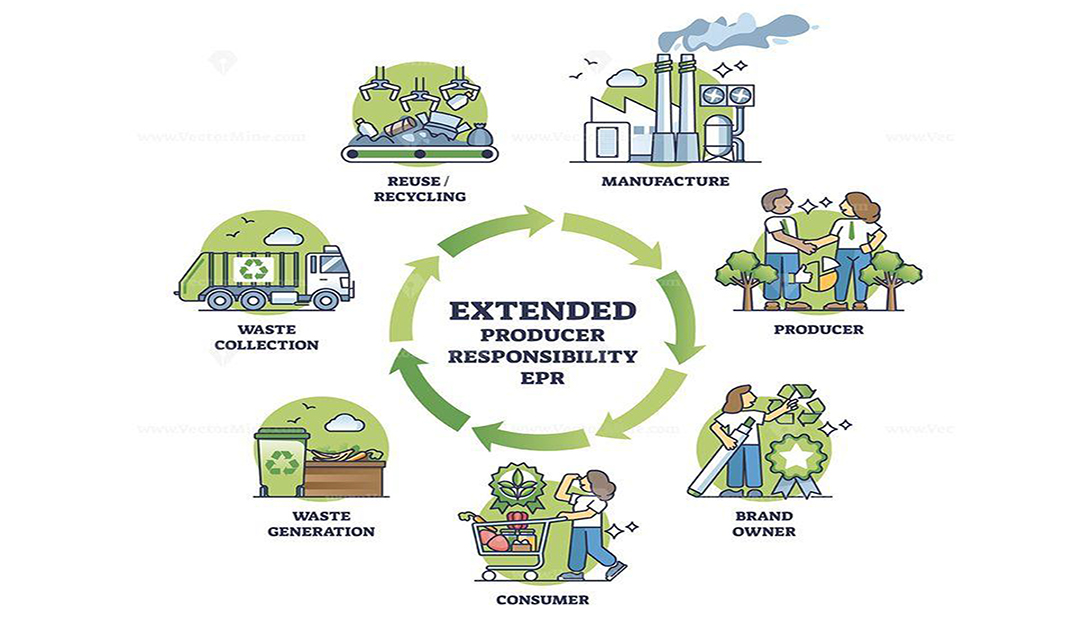
How will EPR change the dynamics of waste management in India?
Extended Producer Responsibility (EPR) is poised to transform waste management in India by making producers responsible for the entire lifecycle of their Products, fundamentally altering how waste is handled across the country. With India facing the challenge of handling over 62 million tonnes of waste annually, inadequate waste management has led to significant environmental and health concerns. EPR aims to tackle this issue by making producers accountable for their products throughout their entire lifecycle, including the post-consumer waste phase. This strategy not only incentivizes companies to create more sustainable products but also requires them to implement systems for the collection, recycling, and disposal of their goods once they’ve been used. Consequently, EPR is Expected to drive significant progress in recycling and reuse, decrease the overall volume of waste generated, and lessen the environmental impact of discarded products. As EPR gains traction in India, its impact is expected to extend well beyond the producers. The policy is expected to spur innovation in product design, as manufacturers work to minimize the environmental impact of their products to meet regulatory requirements. This move towards eco-friendly designs can open the door for a circular economy, where materials are reused, recycled, and repurposed, reducing waste and conserving natural resources. Additionally, EPR can significantly alter consumer behavior, as there could be increased demand for products that are easier to recycle or have longer shelf lives. This shift in consumer demand could drive manufacturers to embrace sustainable practices, resulting in fewer single-use products and a greater focus on producing biodegradable or recyclable materials. The adoption of EPR might accelerate the development of a more efficient waste management infrastructure in India, encompassing advanced recycling facilities, and enhanced waste segregation methods. These advancements could generate new economic opportunities, including job creation in the waste management and recycling sectors. To sum up, EPR can help revolutionize waste management in India by responding to the urgent need for waste management and encouraging sustainable practices by making companies responsible for the full lifecycle of their products. Moreover, by promoting the use of biodegradable and recyclable materials, EPR can contribute to environmental sustainability and support India’s growth toward a cleaner and greener future.

Sustaining Environment: Deforestation & Solutions
Sustaining Environment: Deforestation & Solutions Sustaining Environment: Deforestation, Solutions and Circular Economy Climate change has continued to reveal itself through extreme weather events such as intense heat waves, wildfires, and flooding, impacting communities worldwide. These changes are primarily due to human activities such as deforestation and burning fossil fuels. Forests are instrumental in biodiversity conservation, climate regulation, and providing essential resources and ecosystem services. Deforestation disrupts both the ecosystem and the circular economy by destroying habitats, increasing greenhouse gas emissions, and reducing the availability of natural resources crucial for sustainable production and consumption. It affects the climate by releasing stored carbon dioxide into the atmosphere, contributing to global warming and climate change, which disrupts weather patterns, leading to altered rainfall and increased temperatures Carbon credits, a certificate that lets companies emit a certain amount of carbon dioxide, encourage businesses to adopt cleaner technologies and promote the circular economy by incentivizing sustainable practices that reduce emissions. It stimulates businesses to implement cleaner technologies, reduce waste and efficiently reuse resources, fostering a healthier and more sustainable environment. Furthermore, recycling contributes to forest preservation by decreasing the demand for virgin materials and reducing the need to harvest new trees, thereby alleviating pressures on deforestation. A circular economy seeks to retain resources within productive cycles, minimize waste generation, and safeguard natural capital. Therefore, addressing deforestation is crucial not only for environmental conservation but also for sustaining a resilient and balanced circular economy that promotes long-term prosperity and well-being for current and future generations. Kar Parivartan, operating as a PRO, actively supports the transition towards a circular economy and is dedicated to enhancing the circular economy through effective recycling practices. Our mission revolves around sustainability and environmental preservation. By encouraging the recycling of various items, we aim to reduce waste and promote resource efficiency. Kar Parivartan contributes to creating a greener future where recycling is embraced as a fundamental pillar of sustainable development, paving the way for a cleaner and healthier environment for generations to come.
Tackling the Climate Crisis
Tackling the Climate Crisis Addressing Waste Management for a Sustainable Future with Kar Parivartan Global temperatures are on an alarming rise, driven primarily by human activities such as burning fossil fuels, deforestation and inappropriate disposal of waste. Global warming, has severe repercussions on our planet. Extreme weather events, including heatwaves, hurricanes, and droughts are becoming more frequent and intense. The urgency to mitigate these effects through sustainable practices has never been greater. In India, the climate crisis is intensifying and the significant cause for the same is improper waste management practices Rapid urbanization and industrialization have led to a staggering increase in waste production, much of which ends up in landfills or is improperly disposed. Improper waste disposal has been contributing to global warming and climate instability for a long time now. The consequences are severe: rising temperatures, intense heatwaves, erratic monsoons and increased vulnerability to flooding. India faces a multifaceted challenge in managing e-Waste, plastic, battery and tyre waste due to infrastructural, regulatory and societal issues. The rapid pace of technological growth and consumerism results in large volumes of e-Waste, which is often processed by informal sectors lacking proper recycling facilities, leading to environmental and health hazards. Similarly, the substantial volume of plastic production and consumption generates enormous amounts of waste. Inadequate waste segregation and collection infrastructure exacerbates the problem, leading to high levels of plastic litter in landfills, streets and water bodies. Batteries contain hazardous materials such as lead, cadmium, and mercury, necessitating careful handling to prevent contamination of soil and water sources. The primary issue is the deficient infrastructure for collecting, segregating, and recycling batteries, where facilities are sparse. Moreover, a substantial portion of battery recycling is conducted by the informal sector, often under unsafe conditions, which contributes to environmental pollution and health hazards. Furthermore, tyre waste, with its complex composition and larger volume, is difficult to recycle and ends up in landfill or incinerated, leading to air pollution and environmental damage. While India has regulations for managing waste, enforcement can be inconsistent, leading to gaps in proper disposal practices. There is a need for increased awareness among consumers, businesses, and policymakers about the importance of responsible disposal and recycling.
Detailing EPR – Kar Parivartan
Detailing EPR – Kar Parivartan Extended Producer Responsibility (EPR) has been introduced to promote recycling and limit waste generation. EPR aims to achieve this by placing responsibility on the Producer, Importer, and Brand Owner (PIBOs) to recycle their products when they reach their end of life. Recycling is required to recover resources vital to the economy, playing a crucial role in boosting sustainability, enabling a move toward a Circular Economy instead of a linear, Take-Make-Dispose economy. At Kar Parivartan, we have taken the initiative towards circularity and sustainability by streamlining EPR Compliance through Environment-Friendly EPR solutions. Circular Economy revolves around extracting value from waste. Circularity refers to the channelization of resources reclaimed from waste back into the economy for production. This model reduces pressure on the existing resources, effectively reducing the mining of virgin precious metals. Besides enhancing sustainability, the Circular Economy model also stimulates numerous economic benefits. 1. Traceability: We enable tracking of source materials to foster sustainable waste collection practices across recyclers. A meticulous approach towards documentation of the sourcing and processing to ensure that authenticity and sustainability are upheld. 2. Audit: Compliance EPR Management: Regular recycler audits are conducted to uphold high standards. A dynamic approach towards improvement and Compliance Management ensures the best sustainability practices in recycling. EPR Compliance Management
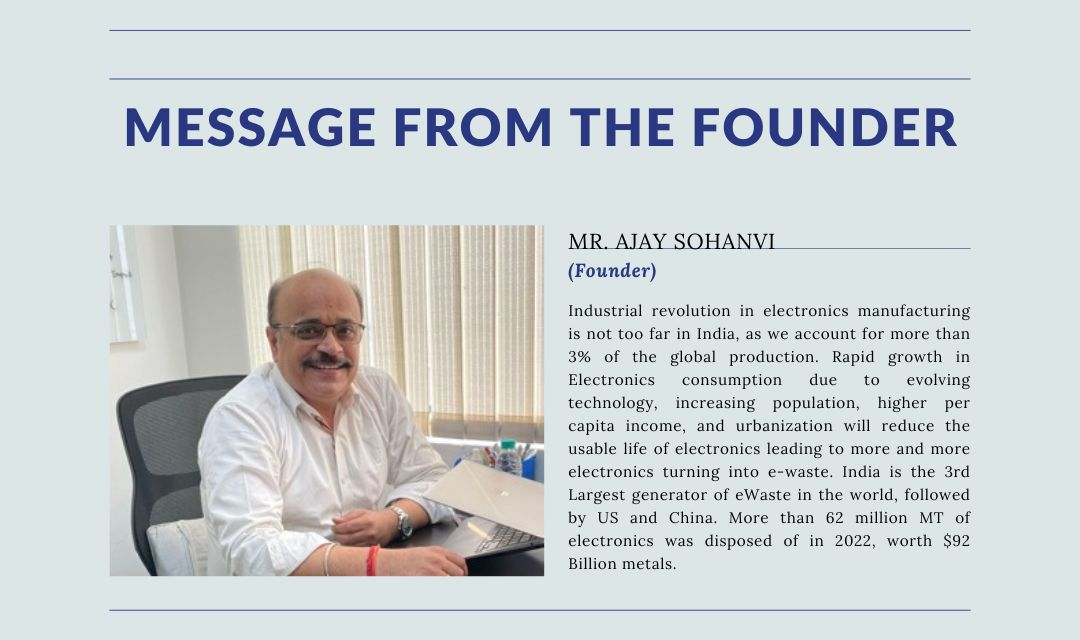
Message from the Founder
Message from the Founder Mr. Ajay Sohanvi Industrial revolution in electronics manufacturing is not too far in India, as we account for more than 3% of the global production. Rapid growth in Electronics consumption due to evolving technology, increasing population, higher per capita income, and urbanization will reduce the usable life of electronics leading to more and more electronics turning into e-waste. India is the 3rd Largest generator of eWaste in the world, followed by US and China. More than 62 million MT of electronics was disposed of in 2022, worth $92 Billion metals. India recorded 1.6 million MT in 2022 of e-waste, which may be much higher than recorded due to the dominance of the informal sector in e-waste collection and recycling. The formal recycling rate is much lower than projected for e-waste collected and recycled. Kar Parivartan was formed in 2020 influenced by this gap in the circular economy of eWaste in India, leading to an opportunity to bridge the gap and enable the circularity of waste to value in eWaste. The vision behind Kar Parivartan is to shift from a linear economy to a circular economy by enabling the ecosystem of Waste Collectors, Recyclers, and manufacturers. Like e-waste, other waste categories are challenging in the current ecosystem to deliver circularity impacting our Economy, Environment, Social well-being, and Governance framework. Expanding to our capabilities and likewise opportunities, we are forging into Battery, Plastic, Tyre, and Hazardous waste to build the ecosystem connecting recyclers with producers or bulk waste generators outlining our capabilities of supply chain management and reverse logistics. By expanding our scope, we aim to further reduce the waste reaching the landfills and do our part in the movement toward sustainability. Reverse Logistics Reverse logistics refers to the supply chain process of returning electronic products from end consumers back through the supply chain by sourcing them from consumers, retailers or manufacturers. In the context of EPR, Reverse Logistics deals with the management of products that have come to their end-of-life for recycling, and refurbishing. Reverse Logistics a key service offered by PROs to facilitate the movement of waste from the source to recycling centers. Kar Parivartan brings to you a network of logistic partners with customized solutions based on type, category and volume of waste, including the collection, transportation and management of enroute compliances, effectively removing your burden of creating and coordinating a Reverse Logistics network while lowering costs. Recycling Kar Parivartan aims to engage in the best recycling solutions to promote Sustainability and a Circular economy. To achieve our vision, our teams extensively audit the recycling centers for their quality and compliance with the best sustainability practices. We hold our network of recyclers to a high standard to create an environment of trust and ethical work practices. Why Karparivartan Our services encompass all aspects of EPR compliance and recycling that include but are not limited to EPR, Reverse Logistics, Recycling & Refurbishing. These services range from legal compliance to sustainability strategies which can be tailor-made to suit the needs of your organization perfectly. EPR services we offer: EPR Credits Service EPR Compliance Management Kar Parivartan also boasts a trusted network of recyclers for Electronic, Battery, Tyre, Plastic, and Hazardous waste based in 28 states of India. With our plethora of services and a wide network of recyclers, we bring to the table a vast range of waste management solutions. Visit us : www.gcdigital.in/Kp/ Contact us on : 18005721687 Write us at : info@gigconnect.in Carbon Emissions Avoided through Recycling Over 3 years, Kar Parivartan has recycled 29,700 Metric tonnes of waste. For every ton of waste recycled, approximately 1.44 tonnes of CO2 emissions are avoided. For 29,700 metric tonnes of e-waste recycled, Kar Parivartan has avoided the emission of 42,768 metric tonnes of CO2, creating a positive impact on the ecosystem.
Sustainable Solutions: Karparivartan’s Role in E-Waste Management and Awareness
The Green Credit Programme: Draft Policy on A Market-Based Mechanism for Sustainable Development In an era where electronic devices become obsolete at a rapid pace, the need for responsible e-waste management has never been more critical. Karparivartan, a trusted name in the industry, stands as a beacon of sustainable solutions in the world of E-Waste management. Asset Liquidation: Unlocking Value from Disused ElectronicsKarparivartan specializes in asset liquidation, helping organizations maximize their returns on old and unused electronic assets. We understand that what may seem like obsolete equipment to one might hold value for another. By facilitating the sale of surplus electronics, we promote resource efficiency and reduce electronic waste. EPR (Extended Producer Responsibility): Shifting the AccountabilityOur commitment to environmental stewardship goes hand in hand with Extended Producer Responsibility (EPR). We work closely with manufacturers to ensure they take responsibility for the entire lifecycle of their products, from production to disposal.We’re actively reducing the environmental impact of electronics. Reverse Logistics: Efficient Collection and TransportationKarparivartan streamlines the complex process of collecting and transporting e-waste. Our reverse logistics system ensures that e-waste is handled safely and efficiently, reducing the chances of improper disposal. We believe that every step in the e-waste journey should be sustainable. Proactive Education: Spreading E-Waste AwarenessWe understand that addressing the e-waste problem isn’t just about managing it but also creating awareness. Karparivartan engages in proactive educational initiatives to inform individuals and businesses about the hazards of improper e-waste disposal. Our goal is to empower everyone to make responsible choices. Beyond E-Waste: Battery and Plastic Waste EPRKarparivartan extends its expertise beyond electronic waste to include Battery Waste and Plastic Waste EPR. By expanding our services, we continue to contribute to a cleaner, healthier environment. In a world grappling with the consequences of e-waste mismanagement, Karparivartan is leading the charge towards a sustainable future. Our comprehensive services, commitment to EPR, efficient logistics, and educational outreach are all part of our holistic approach to managing electronic, battery, and plastic waste responsibly. Join us in our mission to transform the way we handle e-waste and build a greener, more sustainable world. Contact Karparivartan today and be a part of the change! “Nature is not only our home; it’s our greatest teacher, reminding us of the beauty in simplicity and the interconnectedness of all life.”
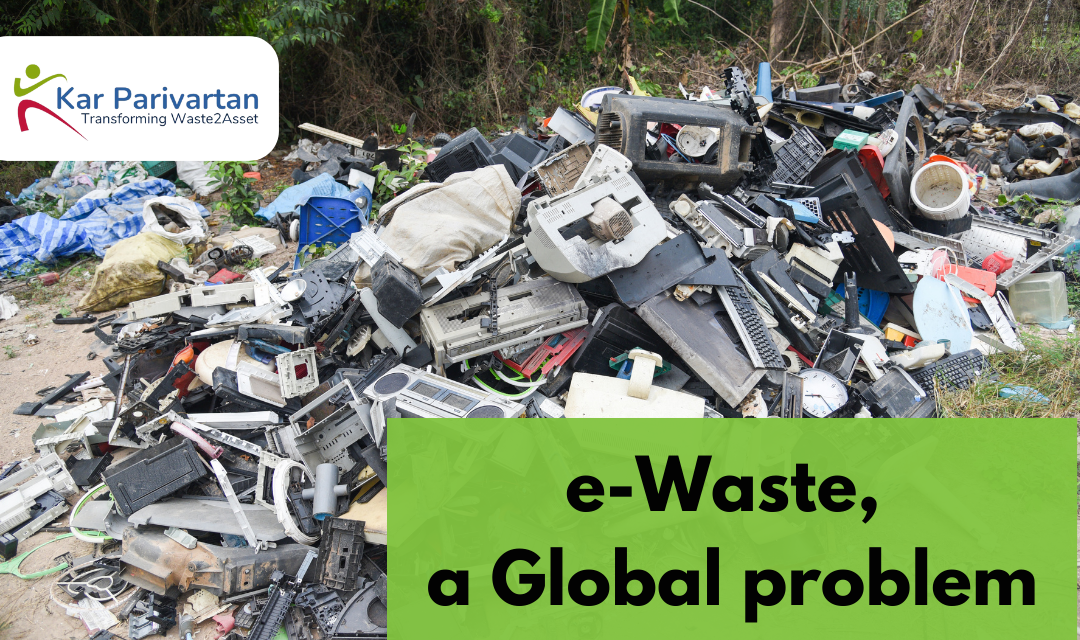
e-Waste, a Global problem
Immersing in Nature’s Symphony e-WASTE When electronic products comes to the end of their life, they become waste. E-waste, or electronic waste, encompasses electrical and electronic equipment that’s outdated, unwanted, or broken. That means everything from smartphones to end-of-life refrigerators. Basically, anything that runs on electricity that you’ve decided to get rid of. Globally, the term associated with eWaste is also known as WEEE (Waste Electrical & Electronic Equipment). E-waste is one of the fastest-growing waste streams on the planet. Globally, we only recycle 10% of our e-waste, and remaining 90% we don’t recycle, it ends up getting landfilled, incinerated, or illegally traded. Global Overview The Global E-waste Monitor 2020 (www.globalewaste.org), a record 53.6 million metric tonnes (Mt) of electronic waste was generated worldwide in 2019, up 21 per cent in just five years, 7.3 kg per capita, it is projected to grow to 74.7 Mt by 2030, almost a doubling of e-waste in just 16 years. This makes e-waste the world’s fastest-growing domestic waste stream, fuelled mainly by higher consumption rates of electric and electronic equipment, short life cycles, and few options for repair. Only 17.4 per cent of 2019’s e-waste was collected and recycled. According to the Global E-waste Monitor 2020, nearly 78 countries adopted the e-waste policy, regulation, and legislation. Even though most developing countries adopted policy, regulation, and legislation to regulate e-waste, they still lack proper systematic e-waste collection and management methods. As per the report, Asia generated the greatest volume of e-waste in 2019 — some 24.9 Mt, followed by the Americas (13.1 Mt) and Europe (12 Mt), while Africa and Oceania generated 2.9 Mt and 0.7 Mt respectively. For perspective, last year’s e-waste weighed substantially more than all the adults in Europe, or as much as 350 cruise ships the size of the Queen Mary 2, enough to form a line 125 km long. 53.6mt global e-waste consists of precious raw materials such as aluminum, copper, iron, gold worth the value of $57 billion USD. Only $10 billion USD value of raw materials (4 Mt) retrieved from properly documented recycled e-waste amounts to only 17.4% (9.3 Mt) of global e-waste. The remaining 82.6% (44.3 Mt) of e-waste is dumped into the environment without proper documentation and recycling management. Therefore, recycling companies play a vital role in processing and managing undocumented e-waste. Proper management of e-waste not only gives enough returns but also protects the environment and health of the people. Statistics show that Asia generated the highest quantity of e-waste. E-Waste management rules in India Dominance of informal sector, health & environment pushed to lead and draft eWaste management rules in India. It is important to know that India is the only country in Southern Asia with e-waste legislation since 2011. The Government has also notified E-waste (Management) Rules, 2016 , to ensure E-waste is managed effectively. A manufacturer, dealer, Refurbisher and Producer Responsibility Organization (PRO) were also brought under the ambit of these Rules. PRO is a professional organization authorized or financed collectively or individually by producers, which can take the responsibility for collection and channelization of e-waste. Furthermore, the applicability of the Rules was expanded to cover components, consumables, parts and spares of EEE in addition to the equipment’s covered under the Rules. Few of the key objectives of these rules include: Extended responsibility to producers to manage a system of E-waste collection and channelization through Extended Producer Responsibility (EPR) Authorization. To promote and encourage establishment of an efficient e-waste collection mechanism Promote environmentally safe & sound recycling by channelizing E-waste to authorized dismantlers and recyclers of E-waste To minimize illegal recycling/recovery operations Reduce Hazardous substances in Electrical and Electronic components Hence, in view of the potential hazards that E-waste could cause to nature, as well as the opportunity to recycle precious metals (thus reducing exploitation of nature), it is of paramount importance that the countries world over (including India) ramp up their infrastructure and streamlines the process for better tracking & recycling of e-waste. In order to successfully handle e-waste, coordination with other stakeholders from industry, government, NGOs, international organizations, and academia is required. Some of the principles to develop effective e-waste management systems are to set a clear legal framework for e-waste collection and recycling, to enable the producers to finance the collection and recycling of e-waste under EPR, to strengthen the monitory and compliance mechanisms, to provide an incentive for recyclers to enhance in systematic and technological advancements. To create awareness among consumers about the environmental benefits of recycling, to create awareness among the workers about the health hazards of working in recycle management centres, and to provide them with frequent medical support. How Covid-19, will impact in future growth of eWaste? Technology investment in beginning of the pandemic will add to growing concern of e-waste. The transition of remote working or work from home spurred on a wave of new device purchases. Organisations invested in new equipment to enable their employees to work from home. Schools, institutions and students invested on technology and devices to facilitate distance learning. In fact, demand of sourcing new technology became one of the top priorities to keep people safe, distanced and protected. Why is e-waste so bad? E-waste contains a various chemicals that are harmful to people and our environment, like: mercury, lead, beryllium, brominated flame retardants, and cadmium, i.e. and when this eWaste is mishandled during disposal, these chemicals end up in our soil, water, and air contaminating are natural resources, health and environment. Some of the key challenges associated with eWaste, if it goes to landfill are: 1. WEEE can cause fire. 2. Cause pollution and raise health problems. 3. Rare elements, are lost with resource recovery. 4. Limitation to Regulatory compliance. What are the reasons of growing eWaste problem? The main reasons for growing eWaste problems are : 1. Awareness : Lack of knowledge and consumer behaviour among consumers on eWaste impact 2. Policy Penetration: While there are efforts in policy formulation, but associated challenges on implementation add to the problem. 3. Gaps in Capacity and Capability: Limitation in industrial infrastructure to recycle eWaste, while there are efforts to enhance