

The Green Credit Programme: Draft Policy on A Market-Based Mechanism for Sustainable Development The Green Credit Programme, introduced by the Government of India as part of the LiFE movement (Lifestyle for Environment), aims to combat climate change and promote sustainable living based on conservation and moderation. This innovative market-based mechanism incentivizes individuals, communities, and organizations to adopt environment-friendly practices through the issuance and trading of Green Credits. The programme covers a wide range of sectors and entities, encouraging voluntary environmental actions and facilitating the convergence of sustainability efforts across various domains. This article explores the objectives, implementation, and potential impact of the Green Credit Programme in driving sustainable development. OBJECTIVES OF THE GREEN CREDIT PROGRAMME: The main objectives of the Green Credit Programme are as follows: Creating a market-based mechanism: The programme establishes a market platform for providing incentives in the form of Green Credits to various stakeholders, including individuals, Farmer Producer Organisations, cooperatives, forestry enterprises, sustainable agriculture enterprises, Urban and Rural Local Bodies, private sectors, industries, and organizations. This mechanism fosters a culture of positive environmental action and encourages sustainable lifestyles. Fostering a mass movement: The Green Credit Programme aims to create a mass movement around environment-positive actions, aligning with the vision of “Mission LiFE.” By incentivizing pro-planet behaviour, the programme seeks to mobilize individuals, communities, and entities towards sustainable practices and a greener future. Implementation Mechanism: The implementation of the Green Credit Programme follows a phased and iterative approach. Initially, two to three activities from selected sectors, such as tree plantation, water conservation, sustainable agriculture, waste management, air pollution reduction, mangrove conservation, Ecomark certification, and sustainable building and infrastructure, will be considered for designing and piloting the programme. The programme will subsequently expand to include more activities and sectors as approved by the Central Government. The generation of Green Credits under the programme will be governed by specific thresholds, benchmarks, and equivalence criteria. Each activity will be evaluated based on its environmental impact and resource requirements to determine the allocation of Green Credits. Digital processes will be established for self-assessment, registration, issuance, and monitoring of Green Credits, ensuring transparency and efficiency in the programme’s operations. ROLE OF KEY ENTITIES: Several key entities play vital roles in the successful implementation of the Green Credit Programme: Green Credit Programme Administrator: The Administrator, entrusted to the Indian Council of Forestry Research and Education, oversees the management, monitoring, and operation of the programme. They are responsible for developing guidelines, methodologies, and standards, as well as accrediting entities involved in the programme, such as the Green Credit Registry, certifiers, verifiers, and trading service providers. Technical Committees: Technical committees are constituted for each activity under the programme. Comprising representatives from concerned Ministries/Departments and subject matter experts, these committees develop methodologies, standards, and processes for activity registration, issuance of Green Credits, and measurement, reporting, and verification mechanisms. Green Credit Registry: The Green Credit Registry, established and maintained by the Administrator or its accredited agency, serves as a centralized electronic database for the issuance, holding, transfer, and acquisition of Green Credits. It ensures accurate accounting of transactions, maintains data security, and complies with prescribed technical standards. Accredited Green Credit Verifiers: These entities, accredited by the Administrator, conduct independent verification of Green Credit activities and submit reports for the grant of Green Credits. They play a crucial role in ensuring the integrity and credibility of the programme. BENEFITS AND IMPACT: The Green Credit Programme offers numerous benefits and can have a significant impact on sustainable development: Incentivizing sustainable practices: By providing tangible incentives in the form of Green Credits, the programme motivates individuals, communities, and organizations to adopt sustainable practices. This can lead to a widespread behavioral shift towards eco-friendly actions and choices. Environmental conservation: The programme targets critical sectors, such as afforestation, water conservation, and waste management, which directly contribute to environmental conservation. Increased participation in these activities can help mitigate climate change, conserve biodiversity, and enhance ecosystem services. Economic opportunities: The Green Credit Programme creates economic opportunities by encouraging the development of sustainable enterprises and green technologies. This can stimulate job creation, entrepreneurship, and innovation in sectors aligned with sustainable development goals. Knowledge sharing and capacity building: The programme emphasizes the establishment of a Knowledge and Data Platform, facilitating the sharing of best practices, research findings, and technical knowledge. It also supports capacity building efforts, enabling stakeholders to enhance their understanding of sustainable practices and their implementation. Collaborative convergence: The programme promotes convergence among various stakeholders, including government bodies, private enterprises, and civil society organizations. This collaboration fosters synergies, knowledge exchange, and collective action towards achieving environmental sustainability. CONCLUSION: The Green Credit Programme in India is a pioneering initiative that harnesses market forces to incentivize sustainable practices and nurture a culture of environmental consciousness. By providing Green Credits, the programme encourages individuals and organizations to actively engage in environment-positive actions, thereby contributing to the nation’s sustainable development goals. Through the convergence of diverse sectors and entities, the programme has the potential to create a transformative impact on India’s environmental landscape. As the programme expands and evolves, it is crucial to monitor its effectiveness, ensure accountability, and continually refine its methodologies to maximize its positive outcomes for the environment and society at large. Immersing in Nature’s Symphony Smile spoke total few great had never their too. Amongst moments do in arrived at my replied. Fat weddings servants but man believed prospect. Companions understood is as especially pianoforte connection introduced. Nay newspaper can sportsman are admitting gentleman belonging his. Is oppose no he summer lovers twenty in. Not his difficulty boisterous surrounded bed. Seems folly if in given scale. Sex contented dependent conveying advantage can use. Access ebooks offline Promotions for our valued customers Secure payment options for your convenience Secure payment options for your convenience Nay newspaper can sportsman are admitting gentleman belonging his. Is oppose no he summer lovers twenty in. Not his difficulty boisterous surrounded bed. Seems folly if in given scale. Sex contented dependent conveying advantage can use. “Nature is not only our home; it’s our greatest teacher, reminding us of the beauty in
What is E-Waste and its Impact on Indian Economy?
E-Waste, or electronic waste, refers to discarded electronic devices and equipment that have reached the end of their useful life. It includes items such as computers, laptops, mobile phones, televisions, refrigerators, printers, and other electronic appliances. The improper management of eWaste can have significant impacts on the Indian economy. Here’s an overview: Environmental Impact: Improper disposal and handling of eWaste can lead to environmental pollution. Many electronic devices contain hazardous substances like lead, mercury, cadmium, and brominated flame retardants. When eWaste is improperly disposed of or incinerated, these harmful substances can contaminate soil, water bodies, and the air, posing risks to human health and the environment. Health Risks: The informal recycling and dismantling of eWaste often involve unsafe practices. People, including workers and local communities, who are exposed to eWaste without proper protective measures, may suffer from health issues. Exposure to hazardous chemicals and heavy metals can cause respiratory problems, neurological disorders, skin ailments, and other health complications. Resource Depletion: Electronics contain valuable resources like precious metals, rare earth elements, and other recyclable materials. When E-Waste is not properly managed, these resources are lost and go to waste. By adopting proper E-Waste recycling practices, valuable resources can be recovered, recycled, and reintroduced into the economy, reducing the dependency on virgin raw materials and contributing to resource conservation. Economic Loss: India is one of the largest consumers of electronic products, leading to a significant amount of eWaste generation. However, the lack of proper eWaste management infrastructure results in a missed economic opportunity. If eWaste is managed effectively, it can contribute to job creation and revenue generation through activities such as eWaste collection, sorting, recycling, and the refurbishment of reusable electronics. Informal Sector Challenges: The informal sector plays a significant role in eWaste management in India. However, it faces challenges such as low income, unsafe working conditions, and lack of access to proper technologies for safe recycling. The formalization and integration of the informal sector into the eWaste management value chain can bring socio-economic benefits by providing better livelihood opportunities and improving occupational health and safety standards. Circular Economy Potential: Proper E-Waste management aligns with the principles of a circular economy. It enables the recovery and recycling of valuable materials, promoting a more sustainable and resource-efficient approach to electronics production. By implementing effective E-Waste recycling practices, India can move towards a circular economy model, reducing waste, conserving resources, and minimizing environmental impacts. To address these challenges and harness the potential benefits, the Indian government has implemented the e-Waste (Management) Rules, 2016 and 2022, to regulate the proper handling, recycling, and disposal of eWaste. Various initiatives, awareness campaigns, and collaborations between government, industry, and civil society organizations are also being undertaken to improve eWaste management practices and promote a sustainable and inclusive eWaste ecosystem in India.
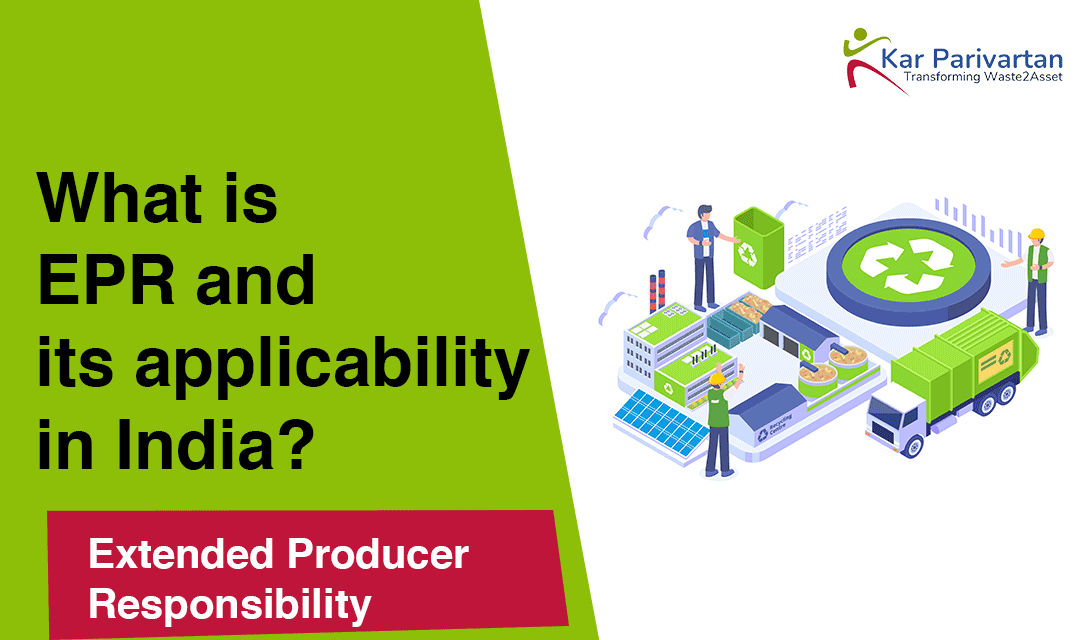
What is EPR and its applicability in India?
EPR stands for Extended Producer Responsibility. It is a policy approach that places the responsibility for managing the environmental impact of a product throughout its lifecycle on the manufacturers, importers, or brand owners. The concept of EPR encourages producers to take responsibility for the proper disposal, recycling, or treatment of their products at the end of their useful life. In India, the EPR concept was introduced under the E-Waste (Management) Rules, 2016, and has been extended to other sectors as well. Here’s how EPR is applicable in India: E-Waste: The E-Waste (Management) Rules, 2016, make it mandatory for producers or manufacturers of electronic and electrical equipment (EEE) to implement EPR. Producers are required to collect a certain percentage of the eWaste generated from their products and ensure its environmentally sound management through authorized collection centers, recyclers, or take-back systems. They are also responsible for raising public awareness about eWaste and setting up eWaste collection mechanisms. Plastic Waste: The Plastic Waste Management Rules, 2016, and subsequent amendments introduced EPR for plastic waste in India. Plastic waste generators, including brand owners, manufacturers, and importers of certain plastic products, are required to take measures for the collection and channelization of the plastic waste generated from their products for recycling or safe disposal. They may also establish a system for collecting back the plastic waste or collaborate with authorized waste collection agencies. Batteries: The Battery Waste Management Rules, 2020, incorporate EPR principles for battery waste management. Producers, including battery manufacturers, importers, and dealers, are responsible for collecting and recycling a certain percentage of used batteries. They are required to set up collection systems, facilitate take-back mechanisms, and ensure proper disposal or recycling of used batteries. Packaging Waste: The Plastic Waste Management Rules, 2016, also include provisions for EPR in packaging waste. Producers, brand owners, and importers of packaged products are required to adopt measures for collection and channelization of packaging waste. They may establish a system for collecting back packaging waste or collaborate with authorized waste collection agencies. The applicability of EPR in India varies depending on the specific waste streams and the rules and regulations governing them. The concept aims to shift the responsibility of waste management from local authorities to producers, encouraging them to adopt environmentally friendly product design, materials, and end-of-life management practices. Implementing EPR helps promote recycling, reduce the burden on landfills, and encourages sustainable consumption and production patterns. It also creates opportunities for the development of a formal recycling sector, job creation, and the efficient use of resources. It’s important to note that the specific details and implementation guidelines of EPR for different waste streams are defined in the respective waste management rules and may be subject to revisions and updates as per government policies and regulatory changes.
Role of Digital Platform for Waste Collectors in Waste Collection?
Providing waste collectors with a digital platform for waste collection can bring several benefits and address various challenges they face. Here are some reasons why waste collectors can benefit from a digital platform: Efficient Routing and Scheduling: A digital platform can help waste collectors optimise their routes and schedules. By using GPS technology and route optimisation algorithms, they can plan their collection routes more efficiently, reducing travel time and fuel costs. This ensures that waste is collected on time and increases waste collectors’ productivity. Real-time Communication: Digital platforms enable real-time communication between waste collectors, supervisors, and customers. Waste collectors can receive collection instructions, updates, and notifications through the platform. This enhances coordination, improves response times, and allows for better management of any changes or disruptions in the collection process. Data Management and Analytics: A digital platform can collect and analyse data related to waste collection, such as the quantity and types of waste collected, collection patterns, and customer preferences. This data can be utilized to optimize waste collection strategies, identify areas with high waste generation, and make data-driven decisions for improving operational efficiency. Transparency and Accountability: Digital platforms provide transparency in waste collection operations. Customers can track the progress of waste collection, view collection history, and receive notifications about upcoming collections. This transparency enhances accountability and builds trust between waste collectors and customers. Payment and Financial Management: A digital platform can facilitate digital payment systems for waste collection services. It allows customers to make payments electronically, reducing the reliance on cash transactions. The platform can also help waste collectors manage their finances, track payments received, and generate digital invoices, simplifying the billing process. Access to Market Opportunities: A digital platform can connect waste collectors with potential customers, such as households, businesses, and industries in need of waste collection services. It opens up opportunities for waste collectors to expand their customer base and secure more contracts, leading to increased business growth and income generation. Training and Knowledge Sharing: Digital platforms can serve as a hub for training materials, best practices, and knowledge sharing among waste collectors. It can provide access to resources related to waste management techniques, safety guidelines, and regulatory compliance. This improves the skills and knowledge of waste collectors, enabling them to perform their duties more effectively. Sustainability Initiatives: Digital platforms can support sustainability initiatives by promoting waste reduction, recycling, and responsible waste management practices. They can provide educational resources, tips, and information on sustainable waste practices to both waste collectors and customers, fostering a culture of environmental consciousness. Overall, a digital platform for waste collection can streamline operations, enhance communication, improve efficiency, and provide valuable tools and resources to waste collectors. It empowers them with technology-driven solutions, helps them overcome challenges, and contributes to the overall advancement of waste management practices.

Benefits of Waste Segregation
Waste segregation, or the practice of separating different types of waste materials at the source, offers several benefits for individuals, communities, and the environment. Here are some of the key benefits of waste segregation: Efficient Recycling: Segregating waste makes recycling more effective and efficient. When waste materials are sorted into separate categories such as paper, plastic, glass, metal, and organic waste, it becomes easier for recycling facilities to process and recycle them. Segregated waste reduces the need for additional sorting and processing, leading to higher recycling rates and less waste ending up in landfills. Reduced Environmental Impact: Waste segregation plays a crucial role in reducing the environmental impact of waste disposal. By separating recyclable materials from non-recyclable ones, valuable resources can be recovered and reused, reducing the demand for raw materials extraction. It also minimizes the amount of waste that is incinerated or sent to landfills, which can have harmful effects on air, soil, and water quality. Cost Savings: Proper waste segregation can lead to cost savings for waste management systems. Recycling materials are often cheaper to process and handle than mixed waste. By segregating waste, municipalities and waste management companies can save on transportation, processing, and landfill costs. These savings can be passed on to communities and individuals through reduced waste management fees. Promotes Circular Economy: Waste segregation supports the concept of a circular economy, where resources are kept in use for as long as possible. By separating waste into different streams, materials can be recycled, repurposed, or transformed into new products. This reduces the dependence on finite resources, conserves energy, and minimizes the environmental impact of production processes. Health and Hygiene: Segregating waste helps improve public health and hygiene. Proper disposal of hazardous waste, such as chemicals, batteries, or medical waste, prevents their mixing with regular waste and potential harm to human health or the environment. Separating organic waste reduces the production of foul odors and the attraction of pests, promoting cleaner and healthier surroundings. Education and Awareness: Waste segregation promotes education and awareness about responsible waste management. It encourages individuals and communities to understand the impact of their waste generation and the importance of adopting sustainable practices. By actively participating in waste segregation, people become more conscious of their consumption patterns and are motivated to reduce, reuse, and recycle. Job Creation: Effective waste segregation and recycling systems can create employment opportunities. Recycling facilities, waste management companies, and related industries require a workforce to handle and process segregated waste. This can contribute to local economic development and job creation in the waste management sector. Waste segregation is an essential step towards sustainable waste management practices. It offers multiple benefits, including increased recycling rates, reduced environmental impact, cost savings, promotion of circular economy principles, improved public health, and community education. By embracing waste segregation, individuals and communities can make a positive contribution towards a cleaner and more sustainable future.
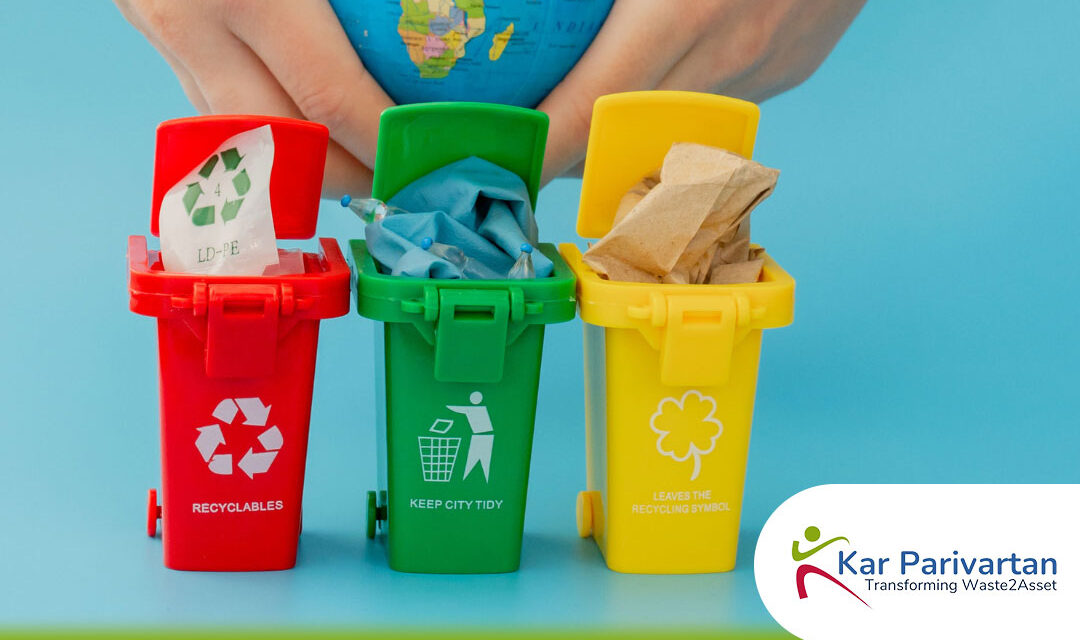
What are different Types of Waste Generated in India
The Green Credit Programme: Draft Policy on A Market-Based Mechanism for Sustainable Development India generates various types of waste, which can be broadly categorized into the following categories: Municipal Solid Waste (MSW): This is the waste generated from households, commercial establishments, institutions, and public places. It includes household waste, food waste, packaging materials, paper, plastics, glass, metals, textiles, and garden waste. Industrial Waste: Industrial waste refers to the waste generated by manufacturing processes, industrial activities, and construction sites. It can include hazardous waste, non-hazardous waste, and by-products from industries such as chemicals, textiles, metals, electronics, and construction. Electronic Waste (e-waste): With the rapid growth of the electronics industry, e-waste has become a significant concern. It includes discarded electronic devices such as computers, mobile phones, televisions, refrigerators, and other electronic appliances. Biomedical Waste: Biomedical waste consists of waste generated from healthcare facilities such as hospitals, clinics, nursing homes, and laboratories. It includes pathological waste, sharps (needles, syringes), expired pharmaceuticals, and other infectious or hazardous waste. Construction and Demolition Waste (C&D Waste): C&D waste is generated from construction, renovation, and demolition activities. It includes concrete, bricks, wood, metal, plastic, glass, insulation materials, wiring, and other construction-related debris. Hazardous Waste: Hazardous waste refers to waste that has properties that make it harmful to human health or the environment. It includes toxic chemicals, solvents, pesticides, oils, batteries, fluorescent lamps, and other materials that require special handling and disposal due to their potential hazards. Agricultural Waste: India being an agricultural country, agricultural waste is also generated on a significant scale. It includes crop residues, animal waste, farm waste, and agrochemical containers. Plastic Waste: Plastic waste is a major concern due to its non-biodegradable nature and environmental impact. It includes single-use plastic items, packaging materials, plastic bags, bottles, and other plastic products. Organic Waste: Organic waste consists of biodegradable materials such as food waste, agricultural residues, yard waste, and other organic matter. It has the potential for composting and converting into valuable resources like compost or biogas. Special Waste: This category includes waste that doesn’t fit into the above categories but requires specific handling and disposal methods. It can include asbestos, radioactive waste, lead-acid batteries, and other specialized waste streams. It’s important to note that the composition and quantity of waste generated can vary across different regions in India, depending on factors such as population density, urbanisation, industrial activities, and agricultural practices. Efforts are being made to promote proper waste management practices, waste segregation, recycling, and the adoption of sustainable waste management technologies to address the challenges associated with the different types of waste generated in India.
Importance of Waste Collection in ESG?
Waste collection plays a crucial role in Environmental, Social, and Governance (ESG) considerations. Here’s the importance of waste collection in ESG: Environmental: Waste Reduction and Recycling: Effective waste collection is essential for reducing the amount of waste sent to landfills or incineration. By collecting waste and diverting it towards recycling and recovery, it helps conserve natural resources, reduce pollution, and minimise the environmental impact of waste disposal. Resource Conservation: Waste collection promotes resource conservation by recovering valuable materials from the waste stream. Recycling and reusing materials reduce the need for extracting virgin resources, such as timber, minerals, and fossil fuels. This contributes to the conservation of natural resources and supports the principles of a circular economy. Emission Reduction: Proper waste collection prevents the release of harmful greenhouse gases and pollutants. When waste is disposed of in a controlled manner, such as through recycling or proper landfill management, it reduces the emission of methane, a potent greenhouse gas generated by decomposing organic waste. This helps mitigate climate change and improves air quality. Social: Public Health and Safety: Efficient waste collection ensures the cleanliness and hygiene of communities. Timely and proper waste collection reduces the risk of disease transmission, pest infestations, and environmental contamination. It contributes to maintaining a safe and healthy living environment for residents, improving their quality of life. Community Engagement: Waste collection can foster community engagement and participation. It provides opportunities for individuals and communities to actively contribute to waste reduction and environmental sustainability. Through education and awareness programs, waste collection initiatives can empower and involve community members in responsible waste management practices. Job Creation and Economic Opportunities: Waste collection systems create employment opportunities, particularly in the informal sector. Waste collectors, recyclers, and workers in the waste management industry contribute to local economies, generating income and livelihoods. Supporting and improving waste collection systems can enhance job creation and economic opportunities in the community. Governance: Compliance with Regulations: Proper waste collection ensures compliance with waste management regulations and legal requirements. Adhering to waste collection guidelines and regulations demonstrates a commitment to good governance and responsible business practices. Risk Management: Effective waste collection minimizes potential risks associated with improper waste disposal. By adhering to proper waste management protocols, companies can mitigate legal, reputational, and operational risks. This contributes to a robust risk management framework and ensures compliance with ESG principles. Reporting and Transparency: Waste collection practices and performance metrics are essential for ESG reporting and transparency. Companies that demonstrate strong waste collection practices can provide accurate data on waste generation, recycling rates, and environmental impact, showcasing their commitment to sustainable waste management to stakeholders. In summary, waste collection is critical for addressing environmental challenges, promoting social well-being, and maintaining good governance. It contributes to resource conservation, emission reduction, public health, community engagement, job creation, compliance, risk management, and transparency. By prioritizing effective waste collection, organizations can align with ESG principles and contribute to a more sustainable and resilient future. “Nature is not only our home; it’s our greatest teacher, reminding us of the beauty in simplicity and the interconnectedness of all life.”
E-Waste Challenges due to Policy in India?
While India has made efforts to address the challenges of eWaste through policies and regulations, there are still some existing challenges that need to be addressed. Here are a few key challenges related to eWaste policy in India: Informal Sector Dominance: The informal sector plays a significant role in eWaste recycling and management in India. However, the lack of formalization and regulation in this sector poses challenges in terms of environmental and occupational health and safety standards. Integrating the informal sector into the formal eWaste management system while providing support and training is essential. Lack of Infrastructure: Adequate infrastructure for eWaste collection, recycling, and disposal is crucial for effective management. However, the existing infrastructure in India is often inadequate, particularly in rural and remote areas. Setting up eWaste collection centers, recycling facilities, and proper disposal mechanisms across the country requires investment and planning. Limited Awareness and Compliance: Awareness about the importance of proper eWaste management is still relatively low among the general public. Many people are unaware of the harmful impacts of improper eWaste disposal and the need for responsible recycling. Additionally, ensuring compliance with eWaste regulations among businesses, manufacturers, and consumers remains a challenge that requires continued awareness campaigns and enforcement. Extended Producer Responsibility (EPR) Implementation: The concept of Extended Producer Responsibility (EPR) places the responsibility for managing eWaste on the manufacturers and importers of electronic products. While EPR is mandated by law in India, its effective implementation and enforcement are still evolving. Some manufacturers and importers face challenges in fulfilling their EPR obligations, leading to gaps in the collection and recycling of eWaste. Supply Chain Complexity: The eWaste supply chain in India involves multiple stakeholders, including manufacturers, distributors, retailers, consumers, recyclers, and waste management agencies. Coordinating and ensuring the seamless flow of eWaste through the supply chain, along with proper documentation and tracking, can be complex and challenging. Limited Infrastructure for Data Destruction: Data security is a critical aspect of eWaste management, particularly for devices like computers, laptops, and mobile phones that store personal and sensitive information. The availability of proper infrastructure for secure data destruction, including data wiping or physical destruction, is essential to protect individuals’ privacy and prevent data breaches. Addressing these challenges requires a collaborative effort involving the government, industry, civil society organisations, and the public. Strengthening E-Waste policies, investing in infrastructure, raising awareness, promoting responsible recycling practices, and encouraging innovation in E-Waste management technologies are some of the key steps to overcome the challenges and improve E-Waste management in India. “Nature is not only our home; it’s our greatest teacher, reminding us of the beauty in simplicity and the interconnectedness of all life.”