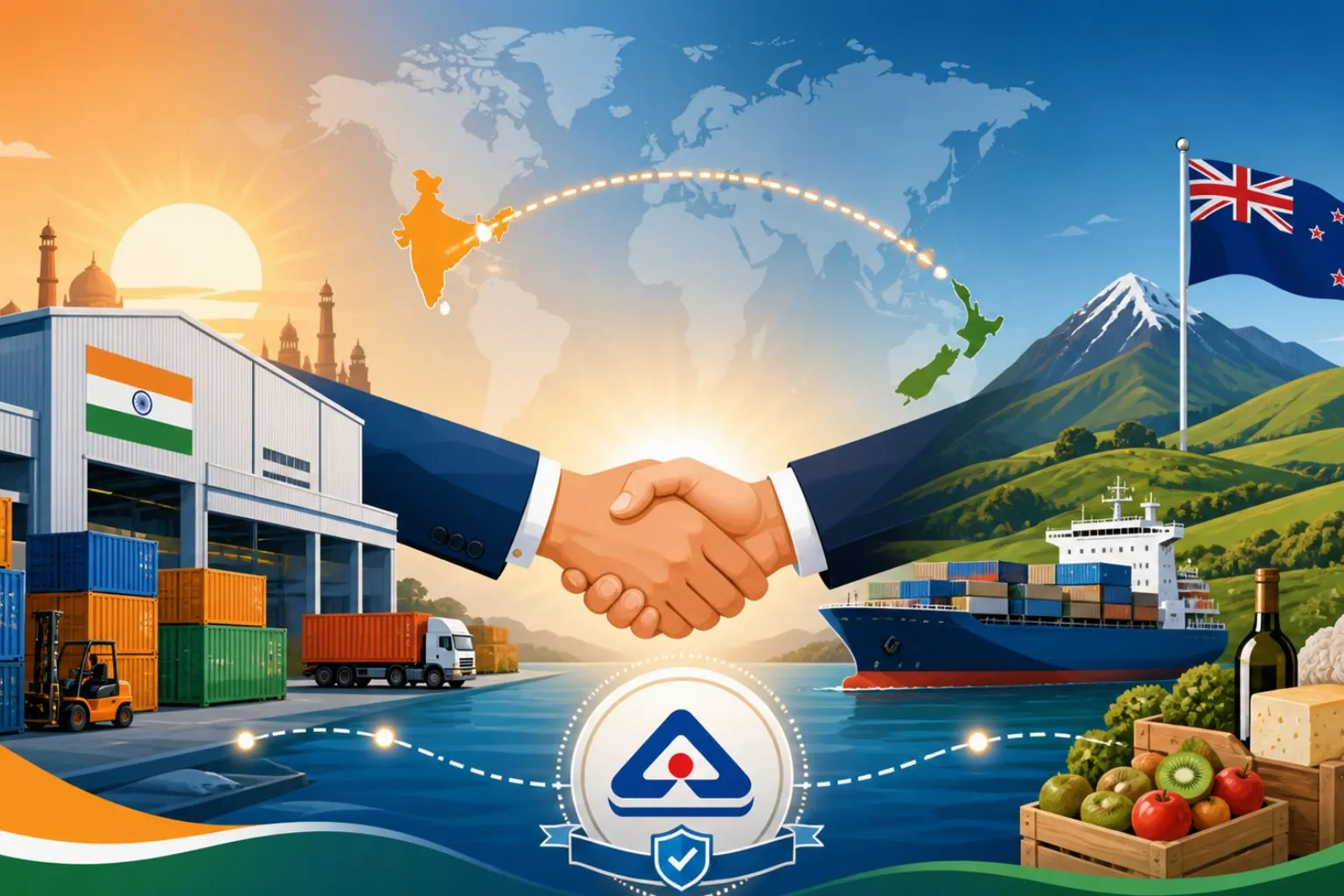
Global trade is entering a new era of strategic partnerships, and one development attracting significant attention is the growing momentum toward a Free Trade Agreement (FTA) between India and New Zealand. This potential agreement represents far more than tariff reductions—it signals stronger economic cooperation, expanded market access, and exciting opportunities for manufacturers and exporters in both countries.
However, as trade barriers reduce, regulatory compliance will remain a critical requirement, particularly for companies planning to enter the Indian market. Among these regulations, BIS certification continues to play a central role.
Growing Trade Momentum Between India and New Zealand
India and New Zealand share complementary economic strengths:
- India is one of the world’s fastest-growing consumer markets
- New Zealand is known for high-quality manufacturing, innovation, and strong quality standards
The proposed FTA aims to deepen trade relations by improving market access and reducing trade friction between the two nations.
Key Objectives of the Proposed FTA
The agreement is expected to:
• Reduce or eliminate tariffs on a wide range of goods
• Simplify cross-border trade procedures
• Encourage foreign investment and business expansion
• Strengthen long-term economic cooperation
For New Zealand manufacturers, India represents a large and rapidly growing consumer base. For Indian industries, the agreement brings opportunities for technology exchange, innovation, and diversified imports.
But despite these benefits, regulatory compliance will not be relaxed.
Opportunities for New Zealand Manufacturers Entering India
If the FTA is finalized, we can expect a significant increase in New Zealand companies exploring India as a growth market.
Why India Is Attractive for Global Manufacturers
India offers:
- A population of 1.4+ billion consumers
- Rapid urbanization and infrastructure growth
- Expanding middle class and rising purchasing power
- Government initiatives supporting manufacturing and imports
- Increasing demand for high-quality and certified products
Industries likely to benefit include:
- Electrical and electronic products
- Consumer appliances
- Construction materials
- Food-grade metals and packaging
- Industrial equipment
- Sustainable and eco-friendly products
While reduced tariffs make market entry easier, regulatory approvals remain mandatory before products can be sold.
This is where many global companies face challenges.
Why Regulatory Compliance Remains Essential Under an FTA
A common misconception about FTAs is that they remove all barriers to trade. In reality, FTAs primarily focus on tariff reductions and trade facilitation—not regulatory exemptions.
Every country maintains product safety, quality, and standardization regulations to protect consumers and ensure fair market practices.
In India, one of the most important regulatory frameworks is governed by the Bureau of Indian Standards (BIS).
Understanding BIS Certification
BIS certification ensures that products meet Indian safety, quality, and performance standards before entering the market.
For many product categories, BIS certification is mandatory, not optional.
Types of BIS Certifications
There are two major schemes:
ISI Certification (Scheme-I)
Required for products like steel, cement, household items, and industrial products.
CRS Registration (Scheme-II)
Mandatory for electronics and IT products.
Without BIS certification, notified products cannot be manufactured, imported, or sold in India.
This requirement remains unchanged even under a Free Trade Agreement.
Why BIS Certification Will Still Apply After the FTA
Even if tariffs drop to zero, regulatory standards will remain intact for three key reasons:
1. Consumer Safety
BIS ensures products meet Indian safety and quality benchmarks.
2. Market Standardization
Uniform standards create fair competition and maintain product reliability.
3. Legal Compliance
Selling non-certified notified products can result in:
- Import rejections
- Financial penalties
- Product recalls
- Brand reputation damage
Therefore, companies planning to enter India must treat BIS certification as a market entry requirement, not a post-launch activity.
Challenges Faced by Foreign Manufacturers
Many global brands underestimate the complexity of BIS certification. Common challenges include:
Documentation Complexity
Extensive technical documents, factory details, and testing reports are required.
Testing Requirements
Products must be tested in BIS-approved laboratories in India.
Factory Audits
Manufacturing facilities must meet BIS standards and may be inspected.
Regulatory Coordination
Communication with authorities, labs, and consultants can be time-consuming.
Timelines
Certification can take several months without expert guidance.
These challenges often delay product launches and increase costs.
The Strategic Importance of Early Compliance Planning
Companies planning India entry should begin BIS compliance well before market launch.
Benefits of Early Planning
- Faster market entry
- Reduced risk of shipment delays
- Improved distributor confidence
- Stronger brand credibility
- Smooth regulatory approvals
With the FTA likely to increase competition, companies that prepare early will gain a significant first-mover advantage.
How Compliance Partners Help Global Brands
Navigating Indian regulatory frameworks requires local expertise and ongoing coordination. This is where compliance partners play a critical role.
A reliable compliance partner helps businesses:
• Understand applicable BIS schemes
• Prepare documentation and technical files
• Coordinate with BIS-approved laboratories
• Manage communication with authorities
• Support audits and inspections
• Ensure timely approvals and renewals
Working with the right partner transforms compliance from a barrier into a strategic enabler for growth.
Supporting Global Businesses in Navigating Indian Compliance
At Kar Parivartan, we work with domestic and international companies to simplify regulatory compliance and ensure smooth entry into the Indian market.
As trade relations evolve, we see a growing opportunity to support New Zealand manufacturers and global brands in achieving seamless BIS certification and operating confidently in India.
The proposed India–New Zealand Free Trade Agreement represents a powerful step toward stronger global collaboration and economic growth.
For businesses, the message is clear:
Tariffs may reduce, but compliance remains essential.
Companies that combine market opportunity with regulatory readiness will gain the greatest advantage in the years ahead.
If your organization is planning to expand into India, now is the ideal time to begin your compliance journey and prepare for the opportunities that lie ahead.
The future of global trade is not just about access—it’s about access with compliance, confidence, and credibility.
FAQs
Is BIS certification still required if the India–New Zealand FTA is implemented?
Yes. Even if tariffs are reduced or eliminated under the FTA, BIS certification remains mandatory for products covered under BIS regulations before they can be sold in India. The FTA supports trade, but regulatory compliance requirements do not change.
Which New Zealand products are most likely to require BIS certification?
Several product categories already fall under mandatory BIS certification, including:
- Electronics and IT products
- Electrical appliances
- Steel and metal products
- Chemicals and polymers
- Household and consumer goods
Businesses must check whether their products fall under ISI or CRS schemes before exporting to India.
Who can apply for BIS certification — importer or manufacturer?
BIS licenses are issued only to the manufacturer, not the importer or distributor. However, Indian importers can support the process by coordinating documentation and appointing an Authorized Indian Representative (AIR) for foreign manufacturers.
How long does BIS certification take for foreign manufacturers?
The typical timeline ranges from 4-5 months, depending on:
- Product category
- Testing requirements
- Documentation readiness
- BIS application review and factory audit scheduling
Planning early is highly recommended to avoid market entry delays.
What happens if a product is sold in India without BIS certification?
Selling notified products without BIS certification can lead to:
- Import rejection at customs
- Product recalls
- Financial penalties
- Legal action and market access restrictions
Ensuring compliance before entering the market is essential.
How can businesses prepare now for the India–New Zealand trade opportunity?
Businesses should:
- Identify whether their products fall under BIS requirements
- Start documentation and product testing early
- Plan certification timelines before market entry
- Work with a compliance partner to streamline the process
Early preparation ensures faster market access when trade opportunities expand.