

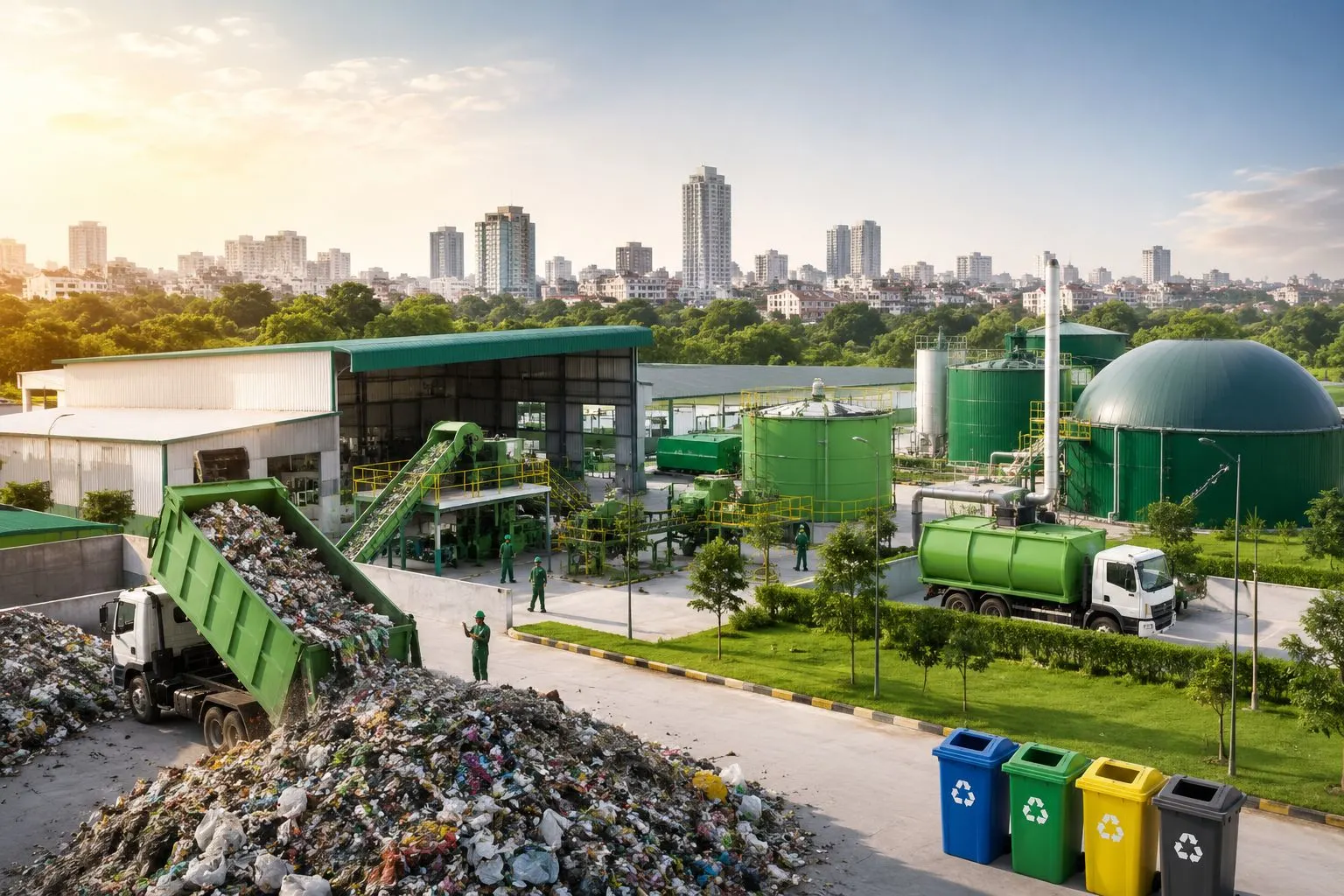
Delhi is preparing for one of its largest municipal solid waste (MSW) infrastructure expansions, with the Municipal Corporation of Delhi (MCD) planning to add 13,550 tonnes per day (TPD) of new waste processing capacity between 2026 and 2028. The initiative marks a significant shift from landfill-dependent disposal towards resource recovery, renewable energy generation, and scientific waste management.
While this development is an important environmental milestone, it is equally significant from a business perspective. The expansion is expected to create opportunities for waste management companies, technology providers, EPC contractors, recyclers, biogas developers, consultants, equipment manufacturers, and sustainability service providers.
Why Delhi Needs This Expansion
Delhi currently generates nearly 14,000 tonnes of municipal solid waste every day, whereas the existing processing infrastructure can scientifically process only around 7,841 TPD. The remaining waste continues to place enormous pressure on the city’s landfill sites at Ghazipur, Bhalswa, and Okhla.
Under the proposed roadmap, Delhi’s total processing capacity is expected to exceed 21,000 TPD, enabling the city to process fresh waste while supporting the remediation of legacy landfill waste through biomining and scientific disposal.
Key Projects Planned
The proposed expansion includes multiple large-scale infrastructure projects:
- New 3,000 TPD Waste-to-Energy (WTE) plant at Narela-Bawana
- New 2,000 TPD Waste-to-Energy plant at Ghazipur
- Expansion of the Okhla Waste-to-Energy facility
- Expansion of the Tehkhand Waste-to-Energy facility
- New Compressed Biogas (CBG) plants at Okhla and Ghazipur
- Five additional waste-processing facilities across Bhalswa, Shinghola, Okhla, Bawana and Ghazipur with a combined capacity of 5,900 TPD.
Together, these projects represent one of India’s largest urban waste-processing investments.
Business Opportunities Emerging from the Expansion
1. Waste Processing Infrastructure
The expansion will require significant investment in:
- Material Recovery Facilities (MRFs)
- Mechanical Biological Treatment (MBT)
- Refuse Derived Fuel (RDF) systems
- Composting facilities
- Automated waste segregation systems
- Transfer stations
- Biomining equipment
Companies involved in EPC execution, civil construction, environmental engineering and plant operations are expected to benefit substantially.
2. Compressed Biogas (CBG) Projects
CBG is rapidly emerging as one of India’s most promising circular economy sectors.
Organic municipal waste can be converted into:
- Renewable compressed biogas
- Bio-CNG for transportation
- Organic manure
- Carbon credits
The planned CBG facilities align with the Government of India’s SATAT initiative and increasing demand for renewable fuels. They also create long-term opportunities for technology suppliers, digester manufacturers, gas purification companies and plant operators.
3. Waste-to-Energy Expansion
Expansion of WTE capacity will increase demand for:
- RDF preparation
- Boiler technology
- Air pollution control systems
- Flue gas treatment
- Continuous Emission Monitoring Systems (CEMS)
- Plant operation and maintenance services
Environmental compliance and emissions monitoring will remain critical for these facilities.
4. Digital Waste Management Solutions
As waste volumes increase, municipalities will require:
- GPS-based waste tracking
- Smart collection systems
- IoT-enabled bins
- Waste analytics dashboards
- AI-based segregation technologies
- Carbon accounting platforms
Digital compliance solutions are becoming an essential part of modern urban waste management.
Why Source Segregation Still Matters
Despite the planned infrastructure expansion, experts consistently emphasize that infrastructure alone cannot solve Delhi’s waste challenge.
Waste-to-Energy facilities are designed primarily for dry, high-calorific, non-recyclable waste, while wet biodegradable waste is better suited for composting and anaerobic digestion. Processing mixed waste reduces operational efficiency, increases maintenance costs and limits resource recovery.
Improving segregation at source remains essential for:
- Higher recycling rates
- Better quality RDF
- Increased biogas production
- Lower operational costs
- Reduced landfill dependency
Growing Demand for Environmental Compliance Services
The expansion also signals increasing demand for professional environmental services, including:
- Solid Waste Management consultancy
- Waste audits
- DPR preparation
- Environmental Impact Assessment (EIA)
- Technology selection
- Regulatory compliance
- Carbon footprint assessment
- Circular economy strategy
- ESG reporting
- Project management and monitoring
As urban local bodies continue expanding scientific waste management infrastructure, specialised consulting support will become increasingly important.
Looking Ahead
Delhi’s proposed waste-processing expansion is more than an infrastructure project—it reflects the broader transformation of India’s waste management sector towards a circular economy. By expanding waste-to-energy facilities, investing in compressed biogas production and strengthening scientific processing capacity, the city is laying the foundation for improved resource recovery and reduced landfill dependence.
For businesses operating in the environmental sector, this represents a growing market for technology, engineering, operations, consulting and compliance services. Organisations that invest in innovative waste-processing solutions, digital technologies and sustainable infrastructure today will be well positioned to participate in India’s rapidly evolving solid waste management ecosystem.


