
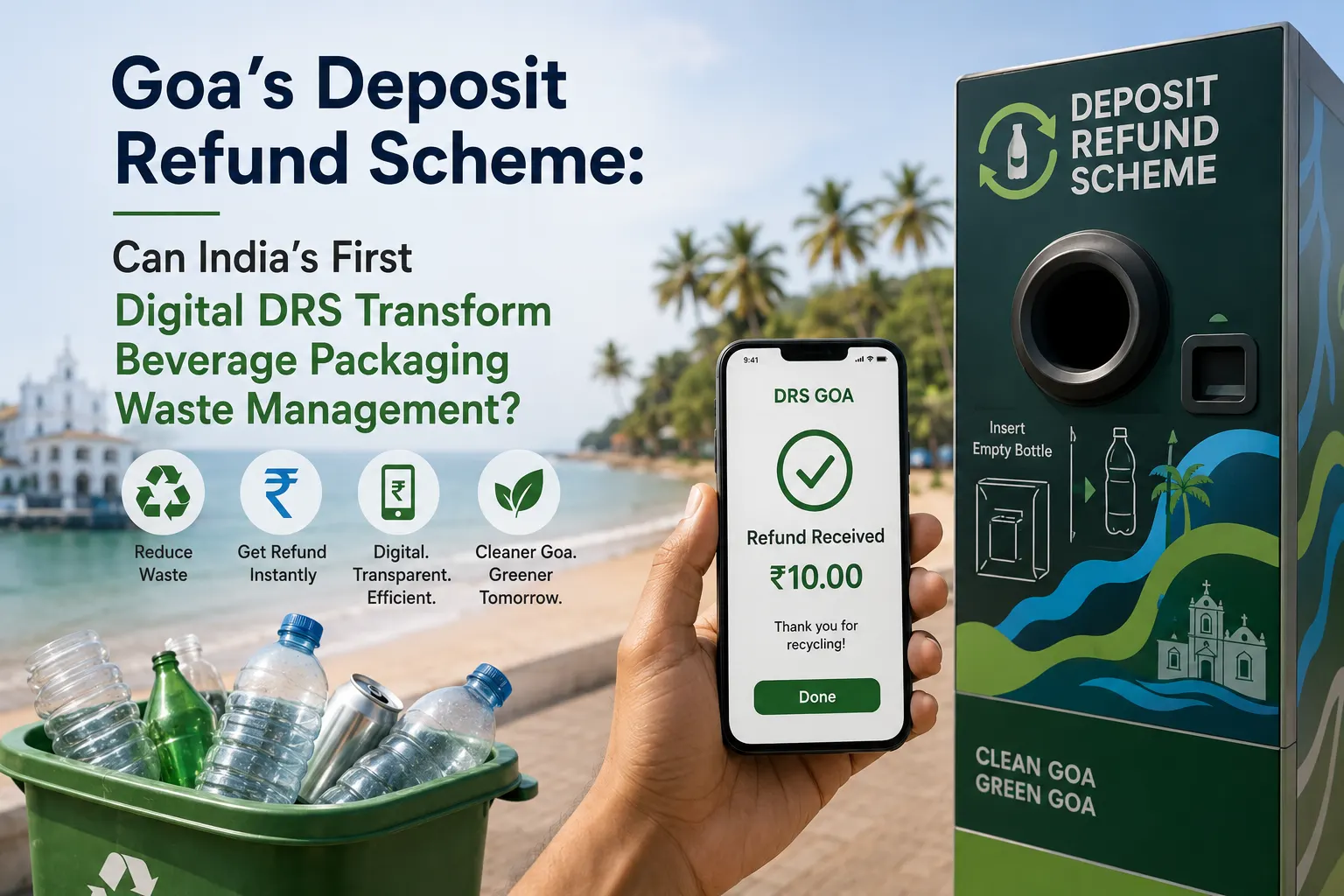
Goa is preparing to introduce India’s first digitally enabled Deposit Refund Scheme (DRS) for beverage packaging, marking a significant step toward strengthening the country’s circular economy and Extended Producer Responsibility (EPR) framework. By combining digital traceability, reverse vending infrastructure, and the integration of informal waste workers, the initiative aims to improve collection efficiency while ensuring greater transparency in packaging waste management.
What is the Deposit Refund Scheme (DRS)?
A Deposit Refund Scheme is a system in which consumers pay a small refundable deposit when purchasing beverages packaged in recyclable containers such as PET bottles, glass bottles, aluminium cans, and selected multilayer packaging. Once the empty container is returned through an authorised collection point or Reverse Vending Machine (RVM), the deposit is refunded instantly.
Unlike conventional collection systems, Goa’s DRS relies on digital technology to track every eligible package from production to recycling, creating a transparent and accountable recovery mechanism.
Key Features of Goa’s DRS
1. Digital QR Code-Based Traceability
Every eligible beverage container will carry a unique QR code that enables end-to-end tracking throughout its lifecycle. Consumers can scan the code while returning the package, allowing instant verification and digital refund processing. The system also provides manufacturers with auditable records that support their EPR compliance while reducing the possibility of fraud or duplicate claims.
2. Hybrid Collection Network
Goa plans to establish a comprehensive collection network consisting of approximately 350 Reverse Vending Machines (RVMs) across the state, with at least one machine in every panchayat and additional machines in urban and tourist locations. The scheme will also include manual collection centres equipped with handheld devices, making participation easier for consumers, retailers, hotels, restaurants, and bulk waste generators.
3. UPI-Based Instant Refunds
Instead of cash refunds, consumers will receive deposits directly into their UPI-linked bank accounts. This digital payment mechanism simplifies transactions, eliminates cash handling for retailers, and enhances user convenience.
4. Integration of the Informal Sector
One of the most notable aspects of Goa’s DRS is the inclusion of waste pickers, scrap dealers, and kabaadi networks. Since deposits can be claimed by anyone returning eligible packaging, informal waste workers can earn a fixed deposit amount per container, often exceeding the market value of recyclable scrap. The scheme also proposes registration of waste pickers through Aadhaar-linked identities and bank accounts, promoting formal participation in the recycling ecosystem.
Strengthening India’s EPR Framework
Goa’s DRS is designed to complement India’s existing Extended Producer Responsibility system by addressing one of its major challenges—material traceability.
Under the current EPR mechanism, producers often purchase epr credits (recycling certificates) without complete physical tracking of the collected material. In addition, plastic waste collected in one state can be used to fulfil EPR obligations for products sold elsewhere, resulting in regional imbalances in waste management.
The DRS introduces digital traceability through QR codes and proposes integration with the CPCB portal, ensuring that packaging sold within Goa is collected and recycled within the same ecosystem. This improves transparency, reduces double counting, and provides manufacturers with reliable compliance records.
Benefits for Recyclers
The recycling industry stands to benefit significantly from cleaner and source-segregated material streams.
Unlike mixed municipal waste collected from landfills, DRS-generated materials are returned directly by consumers, resulting in higher purity and lower contamination levels. This improves recycling efficiency, reduces processing costs, conserves energy, and enables recyclers to manufacture higher-quality recycled materials suitable for circular manufacturing.
Implementation Progress
Goa has already initiated infrastructure development for the scheme. Reverse Vending Machines are under production, collection routes are being finalised, and secondary collection hubs for sorting and baling recyclable materials are being established.
The government is also working with brand owners, bottlers, retailers, local authorities, and waste management agencies to prepare for phased implementation. Beverage manufacturers are updating product labels with serialised QR codes specifically for the Goan market.
Recovery Targets
The scheme has established ambitious collection objectives:
- Minimum 50% return rate by the second year.
- Minimum 90% return rate by the fourth year.
If successfully implemented, Goa could become a national model for digital deposit refund systems, encouraging other states to adopt similar frameworks.
Challenges That Need Attention
While the proposal has received widespread interest, stakeholders have also highlighted several implementation challenges.
1. Goa’s tourism-driven economy means that visitors may purchase beverages in one location but leave the state before returning the containers. Ensuring convenient return infrastructure across tourist destinations will therefore be essential.
2. Concerns have also been raised regarding the financial investment required for Reverse Vending Machines, collection centres, logistics, and system maintenance. Questions remain about how these operational costs will be distributed among producers, retailers, and the government.
3. Some industry representatives also believe that beverage packaging accounts for only a small portion of roadside litter and suggest expanding the scheme to include other waste streams, such as sanitary waste, in future phases.
4. Additionally, while the scheme seeks to formalise waste pickers, there are concerns that centralised collection systems could impact the livelihoods of thousands of informal waste workers if their integration is not managed effectively.
The Road Ahead
Goa’s Deposit Refund Scheme represents one of India’s most ambitious attempts to combine digital technology, circular economy principles, and Extended Producer Responsibility into a single waste management framework. By introducing QR code-based traceability, UPI-enabled refunds, Reverse Vending Machines, and formal participation of waste pickers, the state is laying the foundation for a transparent and accountable recycling ecosystem.
Although infrastructure readiness, stakeholder participation, and public awareness will ultimately determine its success, the initiative has the potential to redefine beverage packaging waste management in India. If implemented effectively, Goa’s DRS could become a benchmark for other states seeking to improve recycling rates, strengthen EPR compliance, reduce litter, and accelerate India’s transition towards a resource-efficient circular economy.


