

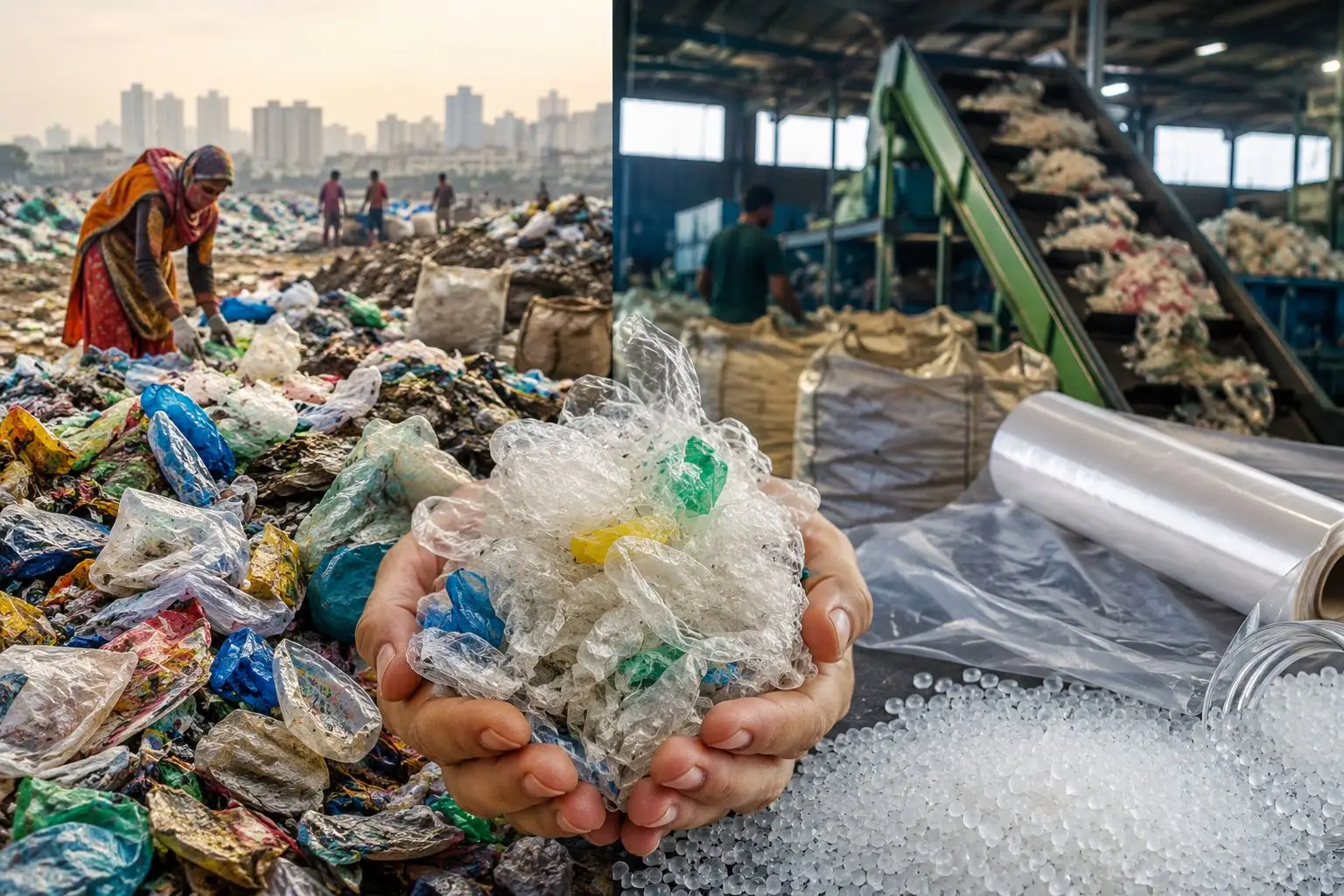
Plastic recycling is often presented as a straightforward sustainability solution. But when it comes to LDPE-based flexible plastics, the reality is far more complicated.
From courier bags and shrink wraps to multilayer packaging and plastic films, Low-Density Polyethylene (LDPE) has become an essential part of modern packaging systems. Yet it remains one of the most difficult plastics to recover and recycle effectively.
At the same time, India’s Extended Producer Responsibility (EPR) regulations are increasing pressure on brands to ensure proper collection and recycling of flexible plastics.
This has created one of the biggest contradictions in the circular economy:
The plastic category with the highest recycling challenges is now one of the most important materials in EPR compliance.

Understanding LDPE: The Plastic We Use Every Day
LDPE (Low-Density Polyethylene) is a lightweight and flexible plastic widely used because of its:
- Durability
- Moisture resistance
- Low manufacturing cost
- High flexibility
Common applications include:
- Carry bags
- Stretch films
- Bubble wraps
- Industrial liners
- Flexible packaging
- Agricultural films
- E-commerce packaging


Under India’s Plastic Waste Management framework, most flexible LDPE packaging falls under Category II plastics, which carry significant EPR obligations for producers and brand owners. As a result, businesses dealing with LDPE-based packaging are increasingly required to obtain EPR registration for plastic waste to ensure regulatory compliance and responsible waste management.
The Ground Reality of LDPE Recycling Economics
On paper, recycling flexible plastics sounds profitable.
But actual market economics tell a very different story.
Approximate Indian Market Rates
| Material Type | Market Value |
| Clean LDPE Scrap | ₹40–80/kg |
| Dirty / Mixed LDPE Scrap | ₹15–30/kg |
| Recycled LDPE Granules | ₹70–120/kg |
The biggest issue?
Cleaning and processing flexible plastics is often more expensive than the value of the waste itself.
Unlike rigid plastics, LDPE films are extremely lightweight and occupy large volume, making transportation inefficient and expensive.
Why Flexible Plastic Recycling is So Difficult
1. Poor Source Segregation
Flexible plastics are usually mixed with:
- Food waste
- Dust and soil
- Multilayer packaging
- Organic contaminants
By the time the material reaches recyclers, recovery efficiency has already decreased significantly.
2. Low Scrap Density = High Logistics Cost
LDPE occupies huge space but carries relatively low weight.
This creates:
- Higher transportation cost
- Lower storage efficiency
- Reduced profitability for recyclers and aggregators
For many small recyclers, logistics becomes the biggest operational burden.
3. Contamination Reduces Recycling Value
Clean LDPE has decent market demand.
But contaminated flexible plastics require:
- Washing
- Drying
- Sorting
- Agglomeration
- Pelletization
Every additional processing stage increases cost while reducing polymer quality.
4. Quality Loss During Recycling
Repeated mechanical recycling often leads to:
- Reduced strength
- Color inconsistency
- Odor issues
- Lower durability
This limits the use of recycled LDPE in high-performance applications unless advanced recycling systems are used.
The Rising EPR Pressure on Flexible Plastics
India’s EPR regulations have transformed plastic waste management.
Brands are now legally responsible for collecting and processing the plastic packaging they introduce into the market under the framework of an EPR Licence.
And flexible plastics have become one of the toughest compliance areas because:
- Collection systems are weak
- Recycling infrastructure is limited
- Traceability is difficult
- Flexible packaging consumption is extremely high
At the same time, companies are facing:
- EPR targets
- Recycled content mandates
- ESG expectations
- Sustainability reporting requirements
This has made recycled flexible plastic one of the most strategically important materials in India’s circular economy ecosystem.
The Informal Sector Still Drives Recovery
India’s recycling ecosystem depends heavily on:
- Waste pickers
- Scrap dealers
- Aggregators
- Small-scale recyclers
These stakeholders recover enormous quantities of flexible plastic waste every day.
However, challenges still remain:
- Limited formal integration
- Worker safety concerns
- Price instability
- Lack of traceability systems
- Inconsistent material quality
Without strengthening this ecosystem, large-scale LDPE recovery remains difficult.
Why Recycled LDPE Matters More Than Ever
Despite all the challenges, demand for recycled LDPE is steadily increasing.
Industries are now actively looking for recycled polymers because of:
- Sustainability commitments
- Circular economy goals
- Rising virgin polymer prices
- Mandatory recycled content requirements
Recycled LDPE is commonly used in:
- Garbage bags
- Industrial packaging
- Plastic sheets
- Pipes
- Furniture products
- Construction materials
This shift is gradually transforming flexible plastic waste into a valuable secondary resource.
The Future of LDPE Recycling in India
The solution is not just recycling more plastic. The real solution involves improving the entire ecosystem.
What Needs to Improve?
Better Packaging Design
Mono-material packaging is easier to recycle than complex multilayer plastics.
Stronger Collection Infrastructure
Source segregation and decentralized collection systems are essential.
Advanced Recycling Technologies
Improved sorting and washing technologies can significantly improve recyclate quality.
Verified EPR Traceability
Digital tracking systems are becoming increasingly important for compliance.
Stronger Market Demand
Recycling becomes sustainable only when industries actively purchase recycled materials.
Our Role at Kar Parivartan
At Kar Parivartan, we believe flexible plastic waste should not end up as an unmanaged environmental burden. We provide a streamlined and compliance-focused approach to Plastic Waste EPR, helping businesses meet regulatory obligations efficiently while reducing operational complexity.
- End-to-end Plastic Waste EPR support
- Regulatory guidance and documentation assistance
- Verified recycler networks
- Transparent compliance processes
- Single-window EPR management solutions
FAQs
What is LDPE plastic?
LDPE (Low-Density Polyethylene) is a soft, lightweight, and flexible plastic commonly used in carry bags, packaging films, shrink wraps, liners, and e-commerce packaging.
Why is LDPE difficult to recycle?
LDPE is difficult to recycle because it is lightweight, easily contaminated, and often mixed with food waste or multilayer packaging. Its low density also makes transportation and collection expensive.
Is LDPE recyclable in India?
Yes, LDPE is recyclable in India, but recycling efficiency depends heavily on segregation quality, contamination levels, and collection infrastructure.
What is the difference between clean and dirty LDPE scrap?
Clean LDPE scrap contains minimal contamination and has higher recycling value. Dirty LDPE scrap is mixed with dust, food residue, adhesives, or other plastics, making processing more expensive and reducing its market price.
What are recycled LDPE granules used for?
Recycled LDPE granules are commonly used in:
- Garbage bags
- Industrial packaging
- Pipes
- Plastic sheets
- Construction products
- Furniture applications
What is Category II plastic under EPR?
Under India’s Plastic Waste Management Rules, Category II refers to flexible plastic packaging, including single-layer and multilayer flexible plastics that carry EPR obligations for producers and brand owners.
Why is flexible plastic important in EPR compliance?
Flexible plastics make up a major portion of packaging waste in India. Since they are difficult to collect and recycle, brands face significant pressure to meet EPR targets for this category.
How does contamination affect LDPE recycling?
Contamination increases washing, sorting, and processing costs. It also reduces the quality of recycled material, making it less suitable for high-value applications.
What role does the informal sector play in LDPE recycling?
Waste pickers, scrap dealers, and aggregators are essential to India’s recycling ecosystem. They help recover large volumes of flexible plastic waste from households, markets, and commercial areas.
How can companies improve LDPE recycling outcomes?
Companies can improve recycling outcomes by:
- Using recyclable packaging designs
- Supporting source segregation
- Partnering with authorized recyclers
- Investing in traceable EPR systems
- Increasing the use of recycled content in packaging and products


