

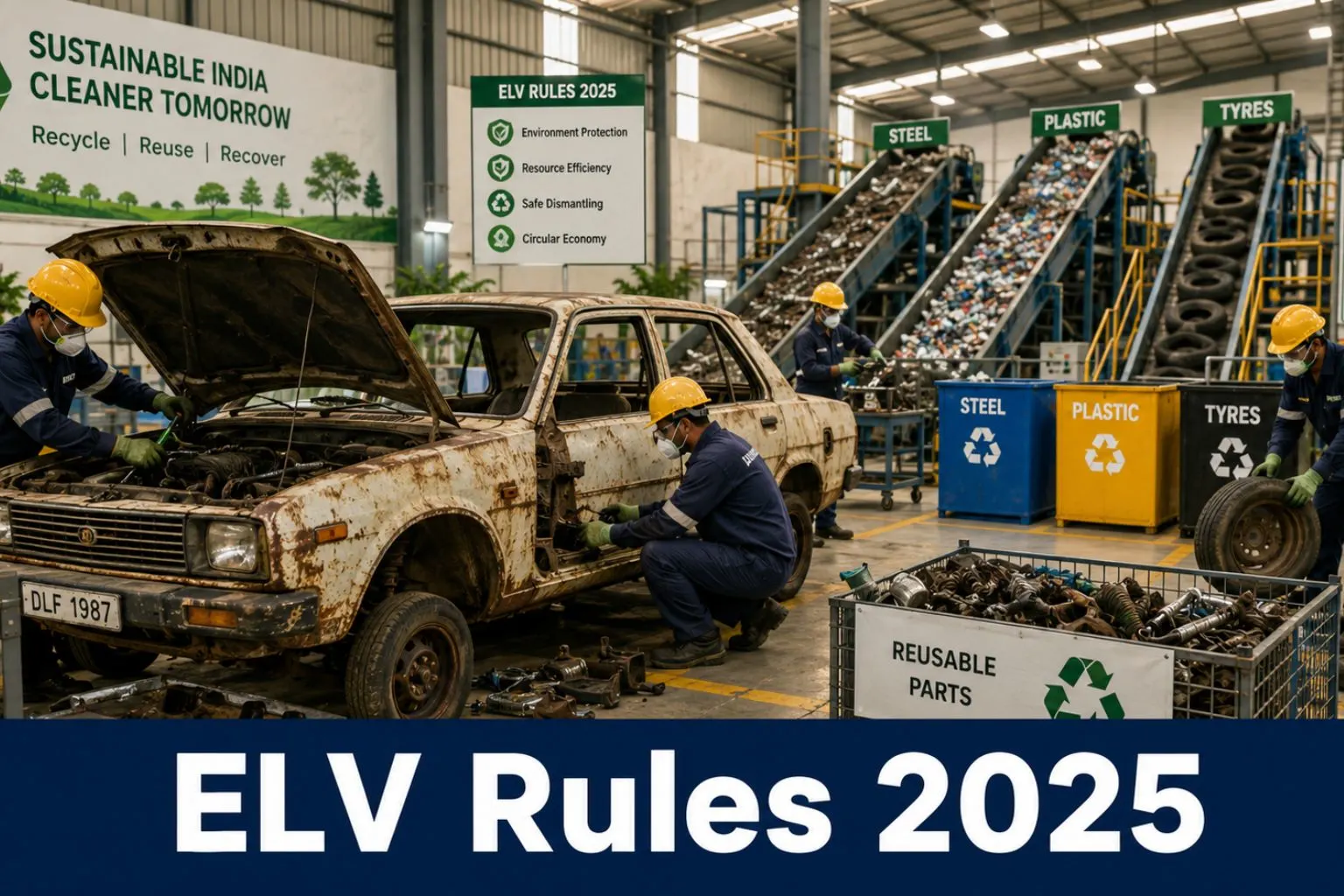
India is moving steadily toward a circular economy, and one of the most significant steps in this direction is the introduction of the End-of-Life Vehicle (ELV) Rules, 2025, notified by the Ministry of Environment, Forest and Climate Change (MoEFCC).
These rules establish a structured system for the environmentally sound management, recycling, and disposal of old vehicles, ensuring reduced pollution, improved resource recovery, and formalization of the scrapping industry.
When Did ELV Rules Come Into Force?
The Environment Protection (End-of-Life Vehicles) Rules, 2025:
- Notified on 6th January 2025
- Came into effect from 1st April 2025
These rules replace fragmented practices with a regulated, digital, and accountable system.
Why Were ELV Rules Introduced?
India faces growing challenges from:
- Increasing number of old and polluting vehicles
- Informal and unsafe vehicle dismantling practices
- Loss of valuable materials like steel, plastics, and metals
The ELV Rules aim to:
- Ensure environmentally sound scrapping
- Promote resource recovery and recycling
- Reduce air pollution and hazardous waste leakage
- Introduce Extended Producer Responsibility (EPR) in the automobile sector
Scope of ELV Rules
The rules apply to:
- Producers (vehicle manufacturers/importers)
- Registered vehicle owners & bulk consumers
- Registered Vehicle Scrapping Facilities (RVSFs)
- Collection centres and recyclers
They cover:
- All vehicle types including electric vehicles, e-rickshaws, and battery-operated vehicles
- Exclude agricultural machinery like tractors and harvesters
How the ELV System Works
1. Vehicle Becomes End-of-Life
A vehicle is classified as ELV based on:
- Age
- Fitness failure (via automated testing stations)
2. Mandatory Disposal by Owner
- Vehicle owners must deposit ELVs within 180 days
- Deposit locations:
- Collection centres
- Registered Vehicle Scrapping Facilities (RVSFs)
3. Collection & Transportation
Collection centres:
- Store vehicles safely
- Transfer them to authorized scrapping facilities
4. Scientific Scrapping at RVSF
RVSFs perform:
- Depollution (removal of fluids, batteries, hazardous parts)
- Dismantling & segregation
- Material recovery (steel, plastic, tyres, etc.)
All processes must follow environmentally sound practices
5. Recycling & Resource Recovery
Recovered materials are:
- Sent to authorized recyclers
- Reused in manufacturing
Non-recyclable waste goes to authorized disposal facilities.
6. Generation of EPR Certificates
- Based on steel recovered from ELVs
- Issued through a centralized portal
- Used by producers to meet compliance targets
7. Compliance by Producers
Producers must:
- Meet scrapping targets based on past vehicle sales
- Purchase EPR certificates or manage collection systems
- File annual returns
8. Digital Monitoring via Central Portal
A centralized portal ensures:
- Registration
- Certificate tracking
- Data transparency
- Compliance reporting
EPR Targets Under ELV Rules
The rules introduce progressive targets:
- Initial targets start at 8% of steel recovery
- Gradually increase to:
- 18% in mid-term
- Up to 60–70% in long-term
Targets are based on:
- Vehicle type (transport vs non-transport)
- Year of introduction in market
Roles & Responsibilities
Producers
- Fulfil EPR obligations
- Encourage vehicle return (buyback/deposit schemes)
- Ensure use of recycled materials
Vehicle Owners / Bulk Consumers
- Deposit ELVs within timeline
- File annual returns (for bulk users)
RVSFs (Scrapping Facilities)
- Perform safe dismantling and recycling
- Maintain records and submit quarterly reports
- Generate EPR certificates
Regulators (CPCB & State Boards)
- Manage centralized portal
- Monitor compliance
- Enforce penalties
Environmental Compensation & Penalties
Non-compliance leads to:
- Environmental compensation charges
- Possible suspension/cancellation of registration
However, partial refunds are allowed if compliance is achieved later:
- 75% refund within 1 year
- 60% within 2 years
- 40% within 3 years
Key Benefits of ELV Rules
- Reduction in vehicular pollution
- Formalization of scrapping industry
- Increased recycling efficiency
- Creation of circular economy in automobile sector
- Improved traceability and accountability
The ELV Rules, 2025 mark a major shift in India’s environmental governance by integrating EPR, digital tracking, and formal recycling systems into the automobile sector.
By ensuring that every vehicle is responsibly scrapped and recycled, these rules not only reduce environmental impact but also unlock significant economic value from waste.


