A simple guide to understand BIS certification in India, its process, and who needs it, along with key benefits for businesses and manufacturers.
Product safety has become an important concern in India. Consumers expect safe and reliable products, and the government also ensures that only standard-quality goods are sold in the market.
As a result, certain products in India cannot be manufactured, sold, or imported without meeting specific quality standards. These rules are checked through a system known as BIS. This is where the BIS certification becomes important for businesses to understand.
BIS certification confirms that a product meets the required Indian standards for safety, quality, and performance. It is not just a formality for some products. It is a legal requirement. Many businesses, especially importers and manufacturers, often try to understand why BIS certification is mandatory and which products fall under it.
In this blog, we will understand BIS certification in India, who needs it, and why it is required for certain products in a simple and clear way.
What Is BIS Certification?
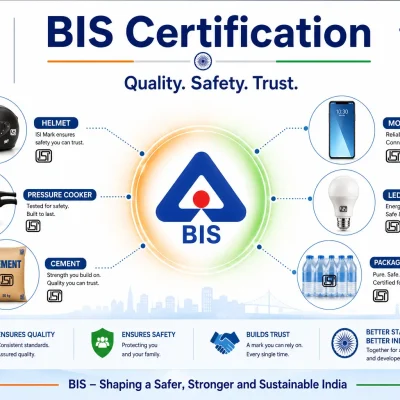
BIS certification is a quality approval issued by the Bureau of Indian Standards, India’s national standards body. It confirms that a product meets the required safety, quality, and performance standards set by the government before it is sold in the Indian market. In simple terms, BIS certification means the product has been tested and approved as safe and reliable for use.
The Bureau of Indian Standards (BIS) is the authority that sets these standards and checks whether products comply with them. If a product meets all requirements, it may bear the BIS mark. This mark helps customers identify that the product is genuine and complies with Indian quality standards.
In many cases, a BIS certification is not optional. It is required by law for specific product categories before they can be sold or imported in India.
Why BIS Certification Is Mandatory for Certain Products
BIS certification is mandatory for certain products to ensure safety, quality, and reliability before they reach consumers. The government has made it compulsory for certain categories to mitigate risks associated with poor-quality or unsafe goods.
- Consumer Safety First
Many products can directly affect health and safety. BIS rules ensure such products are tested properly before sale.
- Standard Quality Control
BIS certification ensures that products follow fixed Indian quality standards. This prevents low-grade or substandard products from entering the market.
- Control on Unsafe Imports
Imported products must meet Indian safety rules. This is why BIS certification for importers becomes important before selling goods in India.
- Legal Requirement for Specific Categories
Not all products require BIS approval, but some categories are subject to mandatory rules. These are referred to as mandatory bis products.
- Market Trust and Accountability
Products with BIS certification are seen as more reliable. It helps build trust between manufacturers and consumers.
Mandatory BIS Products List
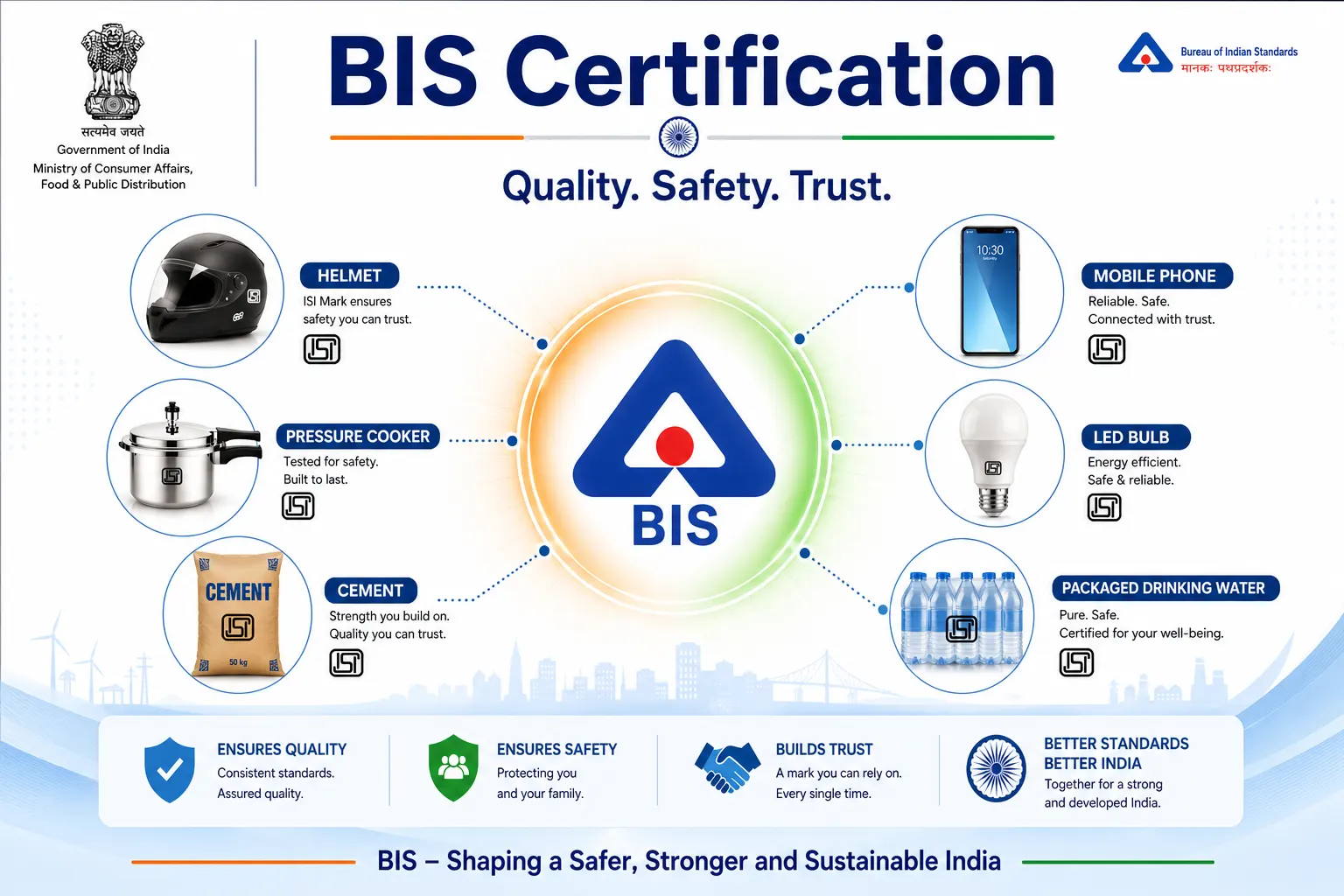
In India, BIS certification is not required for all products. It is mandatory only for specific product categories where safety, quality, and standardisation are very important. These products fall under government regulation because they can directly impact health, infrastructure, or the safety of daily use.
- Electronics and Electrical Appliances
Many electronic products, such as mobile chargers, LED lights, home appliances, and electrical equipment, require BIS certification before they can be sold in India. This is to ensure that they are safe to use and do not cause electrical hazards or performance issues.
- Construction Materials
Products like cement, steel, wires, and other building materials also come under mandatory BIS products. These materials are used in construction, so their quality directly affects the safety and durability of buildings and infrastructure.
- Automotive Components
Certain automobile parts, such as tyres, helmets, batteries, and safety-related components, require BIS approval. This ensures that vehicles meet safety standards and reduce risks during usage.
- Gas Cylinders and Pressure Products
Products such as LPG cylinders, pressure cookers, and similar equipment must comply with strict BIS standards. These items are sensitive, and any quality issue can pose serious safety risks.
- Industrial and Metal Products
Some metal products, industrial machinery parts, and engineering goods are also subject to mandatory BIS certification rules, depending on their use and category.
Not every product needs BIS approval, but any product that can affect safety, health, or infrastructure is usually included in the list of mandatory BIS products. This ensures that only tested and approved goods enter the Indian market.
BIS Certification Schemes in India
In India, BIS certification schemes in India are designed based on different product categories and industry needs. Each scheme has a specific purpose depending on the type of product, manufacturing location, and safety requirements.
These schemes ensure that all products meet Indian standards before they are sold or imported.
- ISI Mark Scheme (Product Certification Scheme)
This is one of the most widely used BIS certification schemes in India. It applies mainly to products manufactured in India, such as cement, steel products, household electrical goods, and other safety-related items.
Under this scheme, products undergo factory inspection and testing before they are allowed to carry the ISI mark. This mark confirms that the product meets Indian safety and quality standards.
- Compulsory Registration Scheme (CRS)
The CRS scheme is mainly used for electronic and IT-related products. It is jointly regulated with the Ministry of Electronics and Information Technology (MeitY)
Products such as mobile phones, laptops, LED lights, batteries, and other electronic goods must be registered under this scheme before they can be sold in India. Testing is done in BIS-approved laboratories to ensure compliance with safety standards.
- Foreign Manufacturers Certification Scheme (FMCS)
This scheme is designed for manufacturers located outside India who want to sell their products in the Indian market. Under FMCS, foreign companies must obtain a BIS licence before exporting products to India.
This ensures that imported goods follow the same quality and safety standards as Indian-made products.
- Certificate of Conformity (CoC) Scheme
The CoC scheme applies to specific product categories where conformity certification is required rather than regular BIS marking. It is used for selected goods for which compliance is verified against defined standards before approval.
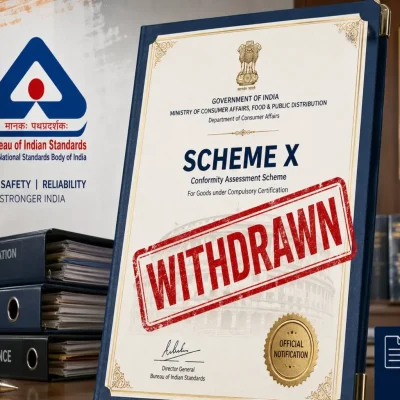
- Scheme-X (Machinery and Electrical Equipment)
Scheme-X applies to certain machinery, industrial equipment, and safety-critical electrical products. These products require strict evaluation because they are used in industrial or high-risk environments where safety is important.
- Hallmarking Scheme
The Hallmarking Scheme applies to precious metal products, such as gold and silver jewellery. It certifies the purity of the metal and ensures that consumers receive genuine quality products.
This scheme is mandatory for specific categories of jewellery items in India.
Each BIS certification scheme in India is designed for a specific product type. Whether it is electronics, machinery, metals, or jewellery, the goal remains the same: ensuring safety, quality, and trust in the Indian market.
BIS Certification Process
The process of obtaining BIS certification in India follows a clear, step-by-step procedure. It ensures that every product meets the required Indian standards before it is approved for sale or manufacturing.
Step 1: Identify Applicable Standard
The first step is to identify the correct Indian Standard (IS) for the product. Each product category under BIS certification has a specific standard that defines safety and quality requirements.
Step 2: Ensure Product and Factory Compliance
Before applying, the manufacturer must check that the product and factory meet BIS standards. This includes maintaining proper quality control systems and manufacturing processes.
Step 3: Application Submission
The applicant must submit the BIS certification application through the official BIS portal. This includes product details, factory information, required supporting documents, and applicable fees.
Step 4: Factory Inspection
After the application is reviewed, BIS officials may visit the manufacturing unit. This inspection is done to verify production processes, equipment, and quality control systems.
Step 5: Product Testing in BIS-Approved Labs
Product samples are tested in BIS-recognised laboratories. These tests confirm whether the product meets the required safety and performance standards.
Step 6: Grant of License
If the product successfully passes all checks, BIS issues the certification. After approval, the product may bear the BIS mark and be legally sold in India.
Step 7: Ongoing Compliance and Monitoring
BIS certification in India is not a one-time approval. Manufacturers must follow the standards, and BIS may do regular checks to ensure they comply.
Benefits of BIS Certification
BIS certification in India is required by law for some products and also offers many benefits for businesses. It ensures that products meet defined safety and quality standards before reaching the market.
- Legal Compliance
One of the key benefits of BIS certification is that it ensures compliance with Indian law. Products in mandatory categories must be certified before they can be made, sold, or imported. This helps businesses operate without legal issues or restrictions.
- Consumer Trust and Confidence
Products that carry the BIS mark are seen as safe and reliable. Customers are more likely to trust products that have been tested and approved under BIS certification in India, as it assures quality and compliance with standards.
- Improved Product Quality and Credibility
BIS certification encourages manufacturers to maintain consistent quality in production. This improves the overall credibility of the product in both domestic and international markets.
- Easier Market Access
For many regulated products, BIS approval is required to enter the Indian market. Having proper certification helps businesses avoid delays and ensures smoother market access.
- Protection from Penalties and Restrictions
Without BIS certification, products in mandatory BIS product categories may face bans, penalties, or restrictions. Certification helps businesses stay compliant and avoid such risks.
BIS Certification in India: What Businesses Should Know
In India, BIS certification is required for many products that are imported, made, or sold. It makes sure products meet safety, quality, and performance standards before they reach consumers. For businesses, it’s not only about following rules but also about gaining trust and staying accepted in the market.
Understanding the basics of BIS certification, identifying mandatory BIS products, and following the correct BIS certification process help businesses avoid delays, penalties, and compliance issues. At the same time, it creates a strong foundation for delivering safe and reliable products to customers.
In this space, Kar Parivartan supports businesses by simplifying the entire compliance journey for BIS certification schemes in India. They help clarify product requirements, documentation, and the certification process, making it easier for companies to achieve compliance smoothly.