This blog explains what EPR registration is, who needs it, and how it works in India, in a simple, clear way.
Waste management rules in India are becoming stricter for businesses. Companies today are expected to take greater responsibility for the waste associated with their products. This includes products they manufacture, import, or sell in the market. Because of this shift, compliance with environmental rules has become an important part of business operations.
Many companies are now required to follow structured systems that ensure proper waste collection and recycling after product use. This is where the concept of EPR comes into the picture.
EPR registration in India is now an important part of this compliance system, especially for businesses working in packaging, electronics, batteries, and similar sectors. However, many businesses still find it confusing to understand what it actually means and who needs it.
This blog explains what EPR registration in India is, who it applies to, and how the system works, in a simple, clear way.
What Is EPR Registration?
EPR registration stands for Extended Producer Responsibility registration.
It is a system established under Indian environmental regulations in which companies are held responsible for the waste generated by their products after consumers use them. In simple words, if a company sells a product, it is also responsible for what happens to that product after it becomes waste.
This responsibility includes the collection, recycling, and proper disposal of waste in accordance with approved procedures. In India, this system is monitored through the government authority known as CPCB (Central Pollution Control Board). Because of this, many people also refer to it as CPCB EPR registration.
The main purpose of EPR is to:
- Reduce plastic and product waste in the environment
- Improve recycling systems in the country
- Ensure companies take responsibility beyond just selling products
It is not just a registration or approval. It is a structured compliance system that connects businesses with recycling and waste management processes.
Today, EPR registration in India is mandatory for several industries, depending on the types of products they handle.
How EPR Works in India (Basic Process Flow)
EPR operates as a structured system in which businesses follow clear steps to manage the waste associated with their products. The process is monitored by the government through the CPCB framework.
Here is how it works in simple terms:
Step 1: Registration with CPCB
Businesses first need to complete CPCB EPR registration. This is the official entry into the compliance system.
Step 2: Identify Waste Category
Each company must define the type of waste linked to its products, such as:
- Plastic packaging waste
- Electronic waste
- Battery waste
- Tyre waste
This depends on the business type and product category.
Step 3: Set Collection and Recycling Targets
Once registered, companies are given targets. These targets define how much waste they need to collect and recycle every year.
Step 4: Arrange the Recycling System
Companies then work with:
- Recyclers
- Waste processors
- Authorized partners
This helps ensure that waste is handled properly and in accordance with approved procedures.
Step 5: Submit Compliance Reports
Businesses must regularly report their progress to CPCB. These reports show how much waste has been collected and recycled.
Who Needs EPR Registration in India?
EPR registration in India is not required for every business. It applies only to companies that deal with products which eventually become waste.
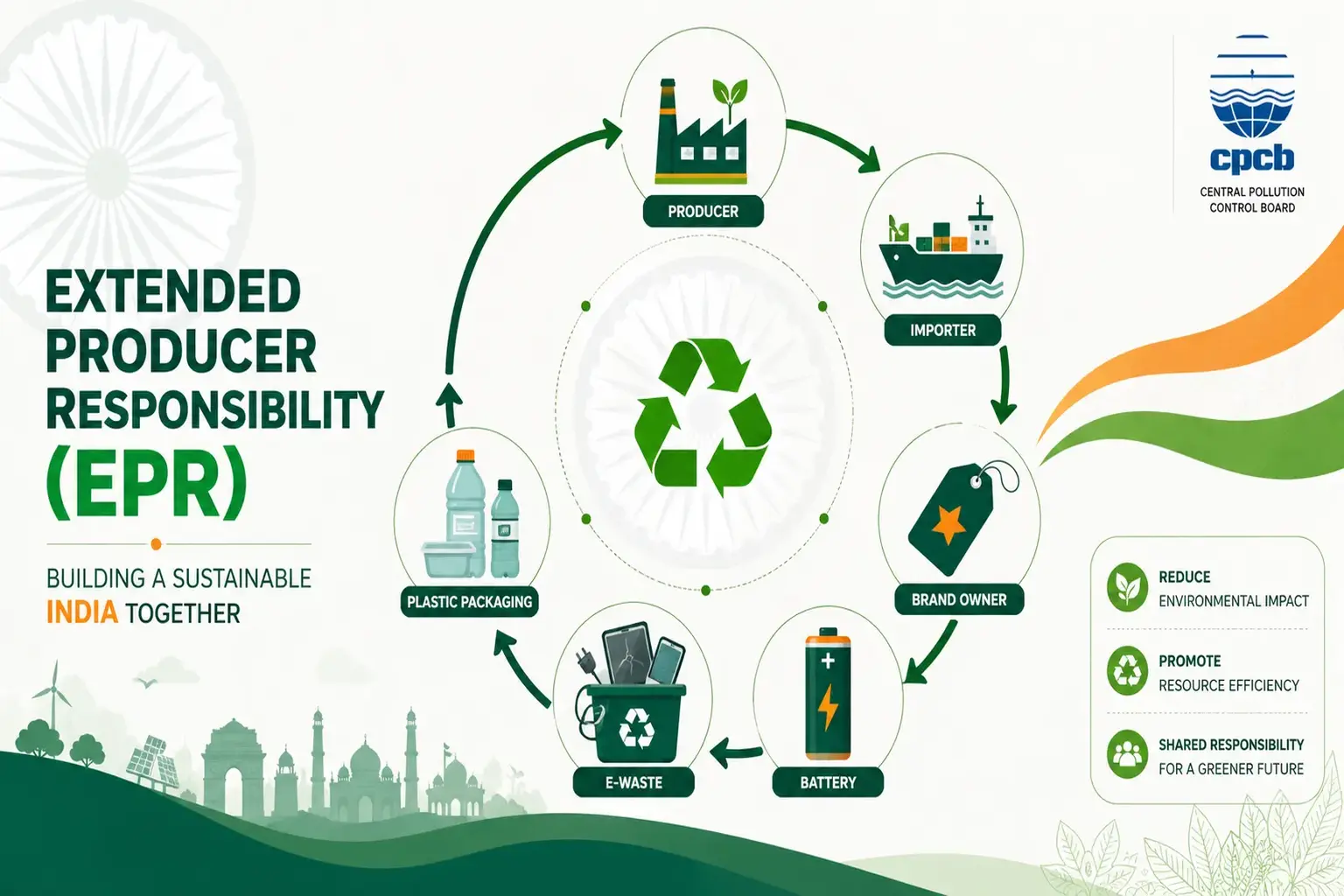
The responsibility mainly lies with three types of businesses.
- Producers
Producers are companies that manufacture goods in India. They are responsible because they introduce products into the market. This includes packaging as well.
If a product generates waste after use, the producer must take responsibility under the EPR registration rules in India.
- Importers
Importers are businesses that bring products into India from other countries. Once these products are sold and used, they also create waste in the country.
Because of this, importers must follow EPR registration for importers requirements. They are responsible for ensuring the proper collection and recycling of generated waste.
- Brand Owners
Brand owners are companies that sell products under their own brand name. Even if they do not manufacture the product themselves, they are still responsible.
This is an important part of EPR registration for brand owners’ compliance. The responsibility stays with the brand whose name is on the product.
Types of EPR Registration in India
EPR registration in India is divided into different categories based on the type of product and waste generated. Each category has its own rules and compliance requirements.
- Plastic Waste EPR
This applies to companies that use plastic in their products or packaging. It includes manufacturers, importers, and brand owners who sell packaged goods. They are responsible for collecting and recycling plastic waste after use.
- E-Waste EPR
This category is for companies that sell electrical and electronic products like phones, laptops, appliances, and other gadgets. These products generate electronic waste when discarded.
- Battery Waste EPR
This applies to businesses that manufacture or import batteries. Since batteries contain harmful materials, proper collection and recycling are required under India’s EPR registration rules.
- Tyre Waste EPR
Companies involved in tyre manufacturing or import must manage tyre waste after use. This includes ensuring that used tyres are collected and sent for proper recycling or processing.
- Used Oil and Hazardous Waste EPR
This category covers industries that generate used oil or other hazardous waste. Strict handling and disposal rules apply to ensure environmental safety.
CPCB EPR Registration Explained
CPCB EPR registration is the official process managed by the Central Pollution Control Board (CPCB) in India. It is the main authority responsible for EPR registration in India across different waste categories.
CPCB is a government body responsible for monitoring environmental compliance and ensuring that businesses follow proper waste management rules.
Role of CPCB in EPR Registration
CPCB plays an important role in the entire EPR system. It is responsible for:
- Accepting EPR registration in India applications
- Approving businesses under different waste categories
- Monitoring compliance and performance
- Ensuring companies meet their recycling targets
- Maintaining records through the official portal
CPCB EPR Registration Process (In Simple Terms)
The entire system works through an online portal where businesses complete their registration and compliance activities.
It includes:
- Application submission
- Document verification
- Approval under the relevant EPR category
- Ongoing reporting of waste collection and recycling
Why CPCB Registration Is Important
Without CPCB EPR registration, a business cannot legally operate under EPR rules in India. It is a mandatory step for companies that fall under producer, importer, or brand owner categories.
This system ensures companies comply with environmental regulations and helps reduce waste in the country.
Why EPR Registration Is Important for Businesses
EPR registration in India is not just a legal formality. It plays an important role in how businesses manage their environmental responsibilities after selling their products.
Today, companies are expected to think beyond production and sales. They are also responsible for what happens when their products become waste.
- Legal Compliance and Avoiding Penalties
One of the main reasons for EPR registration in India is legal compliance. Businesses that do not comply with EPR rules may face penalties and restrictions under environmental laws. Proper registration helps companies stay compliant with CPCB guidelines.
- Smooth Business Operations
For many industries, especially importers and manufacturers, CPCB EPR registration is required for smooth operations. It is often linked with approvals, documentation, and business continuity in regulated sectors.
- Environmental Responsibility
EPR ensures that businesses take responsibility for reducing the impact of waste. Through proper collection and recycling systems, companies contribute to cleaner surroundings and better waste management in India.
- Better Brand Responsibility
Companies that follow EPR registration for brand owners’ requirements are seen as more responsible. It shows that the brand is aware of its environmental impact and is taking steps to manage it properly.
- Support for Sustainability Goals
Many organisations today focus on sustainability. EPR supports these goals by ensuring waste is managed in a structured and accountable way after product use.
Key Takeaways on EPR Registration in India
EPR registration in India has become an important part of environmental compliance for businesses today. It covers producers, importers, and brand owners who sell products and manage post-use waste.
The system holds companies responsible for properly collecting, recycling, and disposing of product waste. With clear rules set by CPCB EPR registration, businesses are expected to follow structured processes and meet their defined targets every year.
Understanding what is EPR registration in India and identifying whether it applies to a business is the first step toward compliance. It helps prevent penalties and improves waste management in industries. As rules change, many businesses find the paperwork, registration, and reporting steps complicated and slow.
In such cases, organisations like Kar Parivartan help simplify the process. They provide support in EPR registration in India, compliance management, and CPCB-related documentation. Their approach helps businesses stay aligned with regulatory requirements while managing their environmental responsibilities in a structured way.