

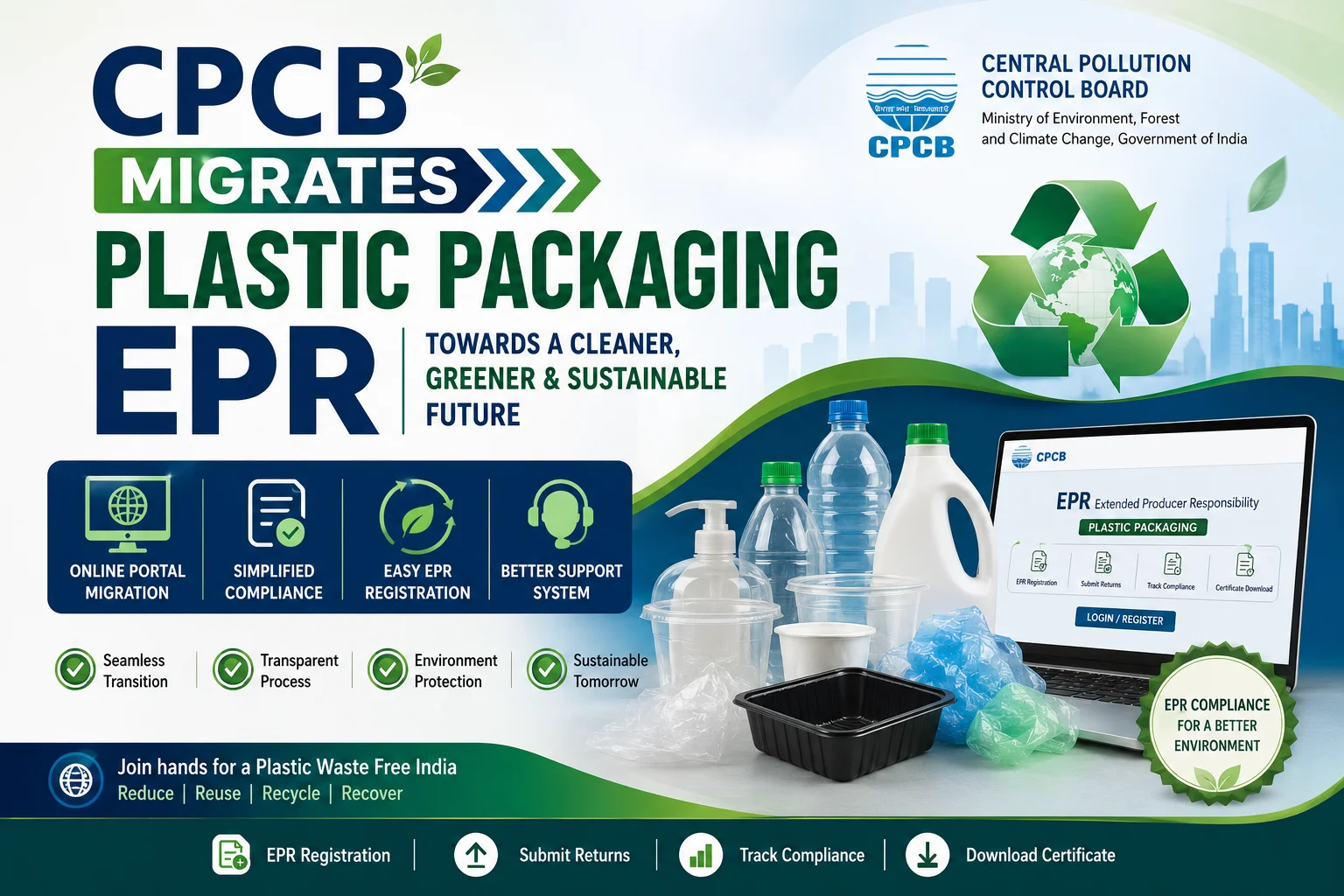
The Central Pollution Control Board (CPCB) has taken another major step towards simplifying Extended Producer Responsibility (EPR) compliance in India by transitioning the existing Plastic Waste EPR Portal to the Common EPR Portal.
The existing Plastic Waste EPR Portal was discontinued from 28 June 2026, with registered user data being migrated to the new system.
For Producers, Importers, Brand Owners (PIBOs), Plastic Waste Processors (PWPs) and other registered stakeholders, the transition changes how Plastic Packaging EPR compliance is accessed and managed digitally.
What Is the Common EPR Portal?
Previously, CPCB operated separate online systems for different EPR waste streams.
The Common EPR Single Sign-On (SSO) Portal provides a unified access point, allowing registered entities to access multiple EPR systems through a Common EPR ID (CEPR ID) and a single login.
The system is designed to simplify access to EPR compliance across major waste streams, including:
- Plastic Packaging
- E-Waste
- Battery Waste
- Waste Tyres
- Used Oil
- Other applicable EPR streams
Instead of maintaining separate login credentials for different EPR systems, stakeholders can access their applicable portals through a common SSO.
Plastic EPR Portal Migration: Key Updates
| Particular | Update |
| Old Plastic EPR Portal | Discontinued from 28 June 2026 |
| New System | Common EPR Portal / SSO |
| Existing User Data | Migrated to the new system |
| Action for Registered Entities | Verify migrated information |
| Data Discrepancy | Report through the portal/CPCB mechanism |
| Portal Authority | Central Pollution Control Board (CPCB) |
The transition is primarily a digital platform migration. It does not, by itself, remove the statutory EPR obligations applicable under the Plastic Waste Management Rules.
Who Is Affected?
The migration is particularly relevant for entities registered under Plastic Packaging EPR, including:
Producers (P) – entities producing plastic packaging as covered under the applicable framework.
Importers (I) – entities importing plastic packaging, plastic-packaged products or other covered materials, as applicable.
Brand Owners (BOs) – businesses selling products under their brand using plastic packaging.
Plastic Waste Processors (PWPs) – registered recyclers and other eligible waste processors involved in processing plastic waste and generating EPR certificates.
Other registered stakeholder categories under the Plastic Waste Management framework should also review their migrated accounts.
What Happens to Existing Registration and Data?
Registered entities are not expected to treat the migration as a fresh start.
Existing information is being transferred to the new system. However, businesses should not assume that every migrated field is automatically correct.
Once access is available, entities should verify important information such as:
- Company and registration details
- GST/PAN and entity information
- Authorised person details
- Plastic packaging categories
- EPR obligations and targets
- Previous-year data
- EPR certificates
- Returns and compliance history
- PWP/recycler information, where applicable
Any discrepancy identified after migration should be reported through the appropriate CPCB portal mechanism.
Common EPR ID and Single Sign-On
One of the major changes is the use of a Common EPR ID (CEPR ID).
Through the Common EPR SSO system, businesses can use a common login to access applicable EPR portals rather than separately managing credentials for every waste stream.
The system includes:
One Common EPR ID → One Login → Access to Multiple EPR Portals
Existing EPR registrations can be linked with the Common EPR account, allowing businesses operating under multiple waste streams to manage access from one place.
EPR Certificate Trading Is Also Becoming More Integrated
CPCB’s wider digital EPR architecture also includes an Extended Producer Responsibility Electronic Trading Platform (EPRETP).
The electronic trading framework is intended to provide a structured mechanism for trading eligible EPR certificates between registered entities.
Under the framework, statutory registrations, certificate generation and compliance records remain connected with the applicable EPR systems, while the electronic trading platform acts as the market-facing layer for eligible certificate transactions.
This is expected to improve:
- Transparency in EPR certificate trading
- Price discovery
- Traceability of transactions
- Digital settlement and transaction records
- Regulatory oversight
Why Is CPCB Moving Towards a Common EPR System?
India’s EPR framework has expanded significantly.
Businesses may now have obligations under multiple waste streams, such as plastic packaging, e-waste, batteries, tyres and used oil.
Managing different credentials and systems for every EPR stream creates additional administrative complexity.
The Common EPR approach can help provide:
Simplified Access
One login for multiple EPR systems.
Better Data Management
Centralised access to registrations and compliance systems.
Improved Traceability
Better linkage between obligated entities, waste processors and EPR certificates.
Greater Transparency
More structured digital records of compliance and certificate transactions.
Ease of Compliance
Businesses covered by multiple EPR frameworks can access relevant systems through a common gateway.
Does Migration Change Plastic EPR Obligations?
No.
Businesses should distinguish between portal migration and regulatory compliance.
PIBOs and other obligated entities must continue complying with applicable requirements under the Plastic Waste Management Rules, 2016, as amended, including requirements relating to:
- EPR registration
- Recycling obligations
- Use of recycled plastic content
- Reuse obligations, where applicable
- End-of-life disposal
- EPR certificate management
- Record maintenance
- Annual return filing
- Other applicable reporting requirements
The Common EPR Portal changes the digital compliance ecosystem—not the underlying responsibility of obligated entities.
What Should Registered Businesses Do?
Businesses registered under Plastic Packaging EPR should take the following steps after migration:
- Access the Common EPR Portal using authorised credentials.
- Link or verify existing Plastic EPR registration, as applicable.
- Check all migrated company and registration information.
- Verify EPR targets, historical data and certificate records.
- Review authorised person contact details.
- Check pending applications, returns or amendments.
- Report any data mismatch through the available CPCB mechanism.
- Maintain internal copies of registrations, returns, certificates and supporting records.
Businesses registered under multiple EPR waste streams should also ensure that all applicable registrations are correctly linked with their Common EPR account.
What Does This Mean for Businesses?
The transition towards a Common EPR Portal represents an important shift in India’s environmental compliance infrastructure.
For companies managing multiple EPR obligations, a unified system can simplify portal access. At the same time, centralisation may also improve data cross-verification, certificate traceability and regulatory monitoring.
Therefore, businesses should treat accurate data management as an important part of EPR compliance.
Stay Compliant with the New Common EPR System
The migration of Plastic Packaging EPR to CPCB’s Common EPR ecosystem is another step towards a more integrated digital EPR framework in India.
Registered entities should carefully verify their migrated information, link applicable registrations and ensure that EPR targets, certificates and compliance records are accurately reflected.
Need assistance with Common EPR Portal migration or Plastic EPR compliance?
Connect with Kar Parivartan for registration, portal management, EPR certificate management, return filing and end-to-end EPR compliance support.
FAQs
What happened to the old Plastic Waste EPR Portal?
The existing Plastic Waste EPR Portal was discontinued as part of CPCB’s transition towards the Common EPR system.
Do existing entities need to verify their data?
Yes. Registered entities should verify their migrated registration and compliance information and report discrepancies through the applicable CPCB mechanism.
What is a Common EPR ID?
The Common EPR system provides a CEPR ID and Single Sign-On mechanism through which stakeholders can access applicable EPR portals using common credentials.
Does the migration remove existing Plastic EPR obligations?
No. The underlying obligations under the Plastic Waste Management Rules continue to apply.
Which EPR streams can be accessed through Common EPR SSO?
CPCB’s current common-access ecosystem includes major EPR streams such as Plastic, E-Waste, Battery Waste, Waste Tyres and Used Oil, among others.
Where can businesses access the Common EPR system?
Businesses should use CPCB’s official Common EPR Portal for SSO access.


