

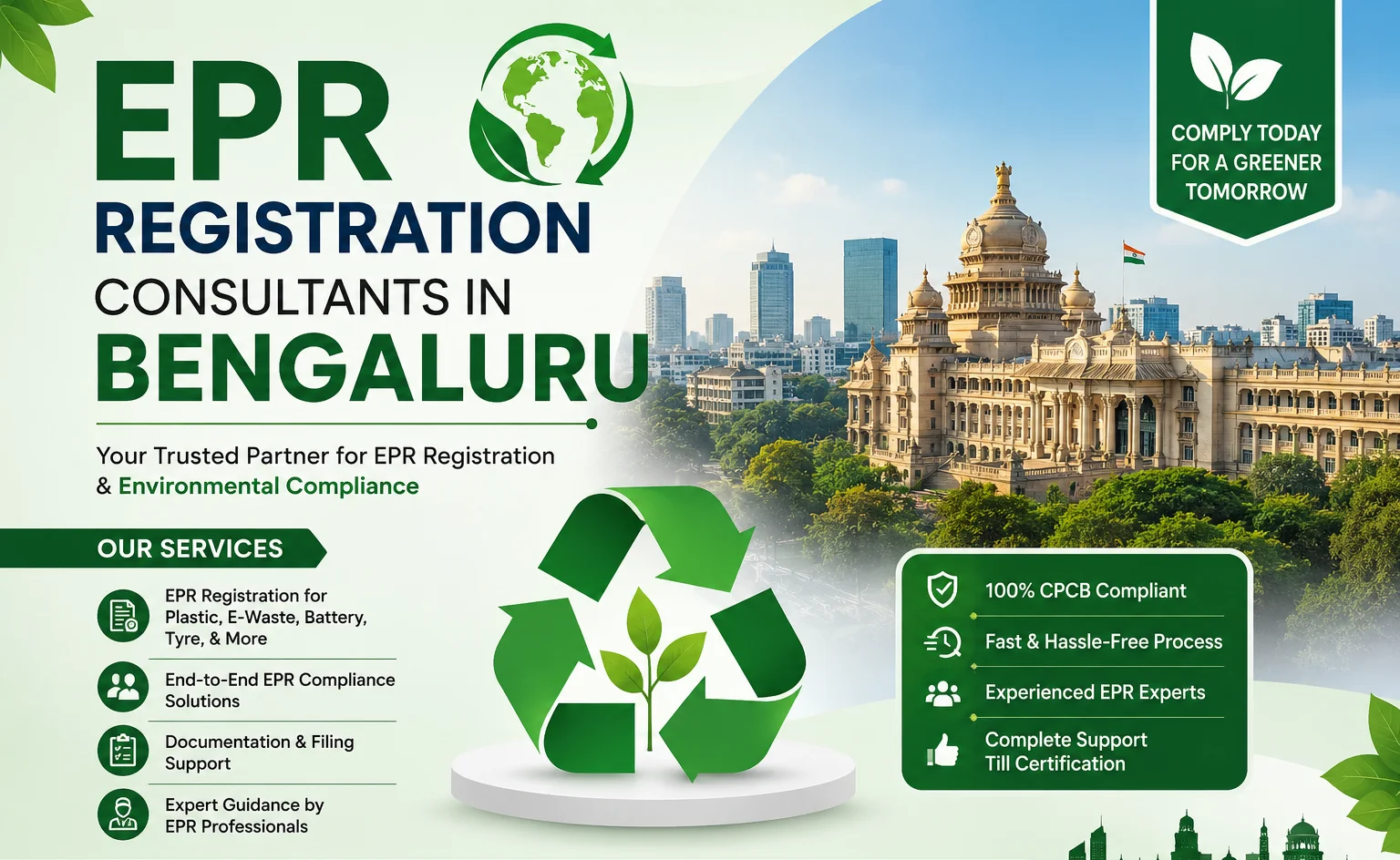
A lot of businesses in Bengaluru think EPR is a one-time thing. Get the certificate, tick the box, move on. We get why — the word “registration” makes it sound like something you finish once and forget.
But that’s not really how it works. The certificate is just the starting point. What actually keeps you compliant is everything that happens after — and that’s the part most businesses don’t plan for.
Let’s talk about what that actually looks like.
Getting Registered Isn’t the Hard Part
Filling the form, uploading documents, waiting for approval — that’s the easy bit, honestly. Once you have your EPR certificate, it feels like the job is done.
It isn’t. That certificate just tells you what you owe — a recycling target, a filing schedule, a renewal date. None of that gets handled on its own.
So What Actually Needs Ongoing Attention?
Hitting Your Target, Not Just Having One
Every registered business gets an annual target — how much plastic, e-waste, batteries, or whatever else needs to be recycled or recovered. That number doesn’t fulfil itself.
You need a working tie-up with a recycler, a PRO, or whoever handles that category for you. And you need it early in the year, not two weeks before the deadline, when everyone’s scrambling for the same certificates and prices are higher.
Filing Your Returns On Time
Most categories need an annual return, usually due by June 30. Some, like tyres, need quarterly filings too.
This isn’t just paperwork. It decides next year’s target. Get it wrong or file late, and you’re not just risking a fine — you’re risking a target that doesn’t even make sense for your actual business.
Watching Your Renewal Dates
Not every certificate lasts forever. E-waste registrations run for five years, and you need to renew well before they expire. Tyre certificates last two years. Plastic packaging keeps going as long as you keep filing returns on schedule.
Miss a renewal, and technically, you’re back to square one — unregistered, even if you were compliant for years before.
Keeping Your Numbers Honest
The production and sales numbers you report need to match what you actually declared elsewhere — your GST filings, for instance. If your business changes — new supplier, new packaging, new product line — your EPR data needs to change with it. Otherwise you end up with numbers that don’t add up, and that’s exactly what draws a CPCB query.
Actually Answering CPCB When They Ask
CPCB does come back with questions sometimes. And there’s usually a short window to respond — about a week, in some cases. If nobody’s watching the portal regularly, that window closes before anyone notices.
Why This Hits Bengaluru Businesses a Bit Harder
Bengaluru’s business mix makes this more work than it looks:
Electronics and hardware companies often carry three obligations at once — e-waste, battery, and plastic packaging — each with its own target and its own calendar.
D2C brands and startups grow fast, and their EPR category often doesn’t keep up with their actual volumes.
Import-heavy hardware businesses have EPR tied to customs, so a lapsed certificate isn’t just a compliance issue — it can hold up a shipment.
And with construction picking up across the city, more developers are crossing the threshold for construction waste obligations without realizing it applies to them yet.
What Goes Wrong When It’s Treated as a One-Time Task
We see the same handful of things happen, over and over:
Targets slip by quietly, and nobody notices until the return is due and there’s nothing to show for it.
Certificates lapse without anyone catching it — especially for e-waste and tyre, where the validity date actually matters.
The data on file stops matching reality, because nobody updated it as the business changed.
And usually, there’s no single person actually owning this. It sits between compliance, procurement, and whoever’s free that week — which means nobody’s really watching it.
What Actually Works
• Someone — internal or outsourced — who owns the whole thing, not just the filing
• Recycler and PRO arrangements set up early, not in a last-minute scramble
• A calendar that tracks each category’s own deadlines, not one generic reminder
• A regular check on whether your registered category still matches your actual business
• Someone watching the portal, so CPCB queries don’t sit unanswered
How Kar Parivartan Helps
We don’t treat EPR as a filing task — because it isn’t one. For businesses in Bengaluru, we handle the whole thing, start to finish:
• Registration across all seven EPR categories — plastic, e-waste, battery, tyre, used oil, ELV, and C&D
• Setting up recycler and PRO tie-ups early, so targets don’t become a scramble
• Filing returns on time, every time
• Tracking renewals so nothing lapses without you knowing
• Reviewing your registration as your business grows, so it never falls out of sync
The Bottom Line
Getting registered isn’t the finish line. It’s where the real work starts. The businesses that stay out of trouble aren’t the ones who registered fastest — they’re the ones who kept managing it, quietly, every year after.
If you’ve got an EPR certificate but no real system behind it, talk to us. We’ll help you build the part that actually keeps you compliant — not just the part that gets you started.


