

The Indian regulatory framework for food products has witnessed a major change with the de-notification of certain food products from mandatory BIS certification. One of the most significant updates is regarding Packaged Drinking Water and Packaged Natural Mineral Water. Previously, manufacturers were required to obtain mandatory India BIS certification for these products. However, the requirement has now been withdrawn, and the products are primarily regulated under the Food Safety and Standards Authority of India (FSSAI). This blog explains the latest update, its impact on manufacturers, and what businesses need to do moving forward with the help of experienced BIS certification consultants in India and compliance experts offering BIS services and EPR consulting services in India. What Was the Earlier Requirement? Earlier, manufacturers of: were required to obtain: This meant companies had to comply with both BIS quality standards and FSSAI food safety regulations before selling products in the Indian market. Many businesses relied on a BIS registration consultant in India to manage the compliance process efficiently. Latest Update: BIS Requirement Withdrawn As per the latest regulatory changes, certain food products have been de-notified from compulsory BIS certification, including: IS Standard Product IS 13428 Packaged Natural Mineral Water IS 14543 Packaged Drinking Water (Other than Packaged Natural Mineral Water) This means obtaining mandatory BIS product certification for these products is no longer compulsory. The update comes under the amendment issued by the Food Safety and Standards Authority of India (FSSAI). Products De-notified from Mandatory BIS Certification Apart from drinking water products, the following products were also de-notified: This change reduces duplicate compliance requirements for food manufacturers and simplifies regulatory procedures previously handled under India BIS certification processes. What Does This Mean for Manufacturers? Manufacturers of packaged drinking water now primarily need to focus on: FSSAI Compliance Businesses must obtain: BIS Certification No Longer Mandatory Manufacturers are no longer required to: However, businesses may still seek guidance from BIS certification consultants in India for understanding broader compliance obligations and related BIS services . Why Was BIS Certification Withdrawn? The government’s objective behind this move is believed to be: Since packaged drinking water is already regulated extensively under food safety laws, the authorities streamlined the regulatory framework. Is BIS Completely Removed? The products have been de-notified from compulsory BIS certification, meaning the mandatory requirement has been withdrawn. However, businesses should still: Companies working with a BIS registration consultant in India can also evaluate whether any voluntary BIS product certification may still benefit their brand positioning. Important Considerations for Manufacturers Even though BIS certification is withdrawn, packaged drinking water manufacturers must still ensure: FSSAI inspections and food safety audits continue to remain important. Businesses may also require EPR consulting services in India for managing packaging-related environmental compliance obligations. Regulatory Notification The amendment was published by the Food Safety and Standards Authority of India (FSSAI) in October 2024 under the Food Safety and Standards (Prohibition and Restrictions on Sales) First Amendment Regulations, 2024. The withdrawal of mandatory BIS certification for packaged drinking water and natural mineral water marks a major regulatory shift in India’s food compliance sector. Now, manufacturers primarily need to comply with FSSAI regulations instead of maintaining dual compliance under both BIS and FSSAI. For businesses, this can help: However, maintaining food safety and product quality remains critical, as FSSAI regulations continue to apply strictly to packaged drinking water products in India. Businesses can still benefit from professional BIS services, expert guidance from BIS certification consultants in India, and EPR consulting services in India to ensure complete regulatory compliance across operations.
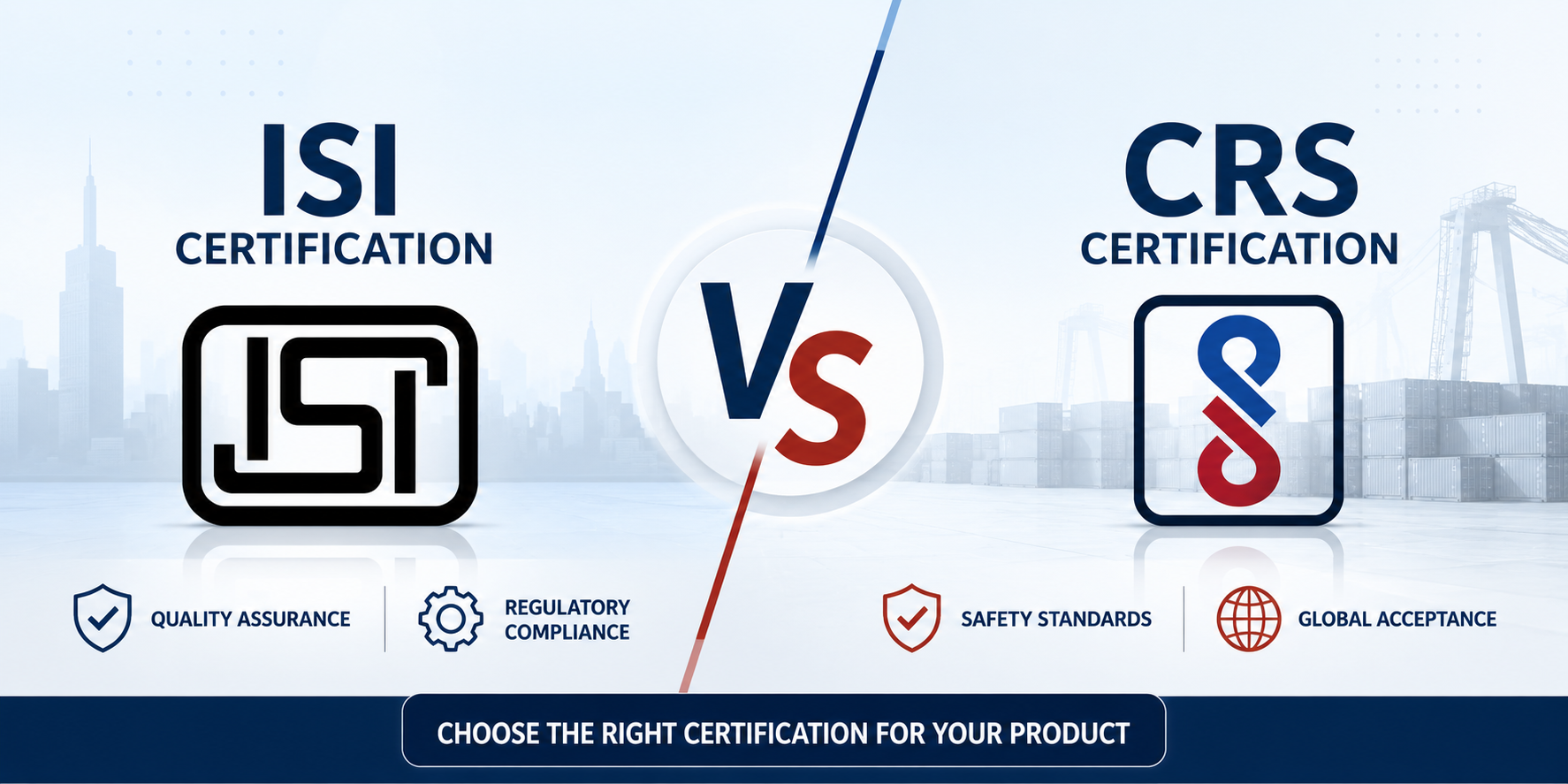
ISI vs CRS Certification: Understanding the Key Differences in BIS Schemes
In India, the Bureau of Indian Standards (BIS) regulates product quality and safety through different certification schemes. Two of the most common schemes are the ISI Mark Scheme and the CRS (Compulsory Registration Scheme). Many manufacturers, importers, and brand owners often get confused between these two certifications because both are managed by BIS, but they apply to different product categories and follow different compliance processes. Businesses seeking india bis certification must clearly understand which scheme applies to their products to avoid compliance issues and delays. This blog explains the major differences between ISI and CRS certification in a simple and practical way. What is ISI Certification? The ISI Mark is one of the oldest and most recognized quality certification marks in India. ISI stands for Indian Standards Institute, which was later replaced by BIS. Products certified under this scheme carry the ISI mark, indicating that they comply with the relevant Indian Standard (IS). ISI certification is mainly applicable to products that impact consumer safety, health, and quality. Many businesses work with bis certification consultants in India to streamline the certification process and ensure proper compliance documentation. Examples of Products Under ISI Scheme Under the ISI scheme, BIS conducts: This process is an important part of bis product certification for manufacturers operating in regulated sectors. What is CRS Certification? The Compulsory Registration Scheme (CRS) was introduced by BIS in collaboration with the Ministry of Electronics and Information Technology (MeitY). This scheme mainly covers electronics and IT products. Under CRS, manufacturers are required to get their products tested from BIS-recognized laboratories and register the products with BIS before selling them in the Indian market. Many companies rely on a bis registration consultant in India to manage product testing, documentation, and registration procedures efficiently. Examples of Products Under CRS Scheme Unlike ISI certification, CRS generally does not involve a factory inspection before grant of registration. Major Differences Between ISI and CRS Scheme Basis ISI Certification CRS Certification Governing Authority BIS BIS Full Form Indian Standards Institute Mark Compulsory Registration Scheme Applicable Products General consumer and industrial products Electronics & IT products Certification Type License-based certification Registration-based certification Factory Inspection Mandatory Usually not required before registration Product Testing Mandatory Mandatory Mark Used on Product ISI Mark Standard Mark with R-number Applicable Standards Indian Standards (IS) Indian Standards for Electronics/IT Manufacturer Eligibility Indian & Foreign Manufacturers Indian & Foreign Manufacturers Surveillance by BIS Regular surveillance inspections Market surveillance/testing Processing Timeline Usually longer Comparatively faster ISI Mark Structure Products approved under ISI certification carry: This mark indicates that the product continuously complies with BIS quality requirements and applicable regulatory standards. CRS Marking Requirements Products under CRS carry: Example format: R-XXXXXXXX This marking is mandatory before products are sold in India. Which Scheme Requires Factory Inspection? This is one of the biggest differences between the two schemes. ISI Scheme CRS Scheme Companies often use professional bis services to prepare for inspections, testing, and documentation under both schemes. Testing Requirements in Both Schemes Both ISI and CRS require product testing from BIS-recognized laboratories. However: ISI Scheme CRS Scheme Validity of Certification ISI License CRS Registration Importance of BIS Certification Both ISI and CRS certifications are mandatory for products covered under respective Quality Control Orders (QCOs). Selling non-compliant products in India may lead to: For manufacturers and importers, BIS certification helps in: Many companies dealing with electronics, batteries, and packaging compliance also consult an epr consultant alongside BIS experts to ensure complete regulatory compliance in India. Although both ISI and CRS are BIS certification schemes, they differ significantly in terms of product categories, approval process, inspection requirements, and marking systems. ISI Certification focuses more on product quality and manufacturing control through inspections and surveillance. CRS Certification mainly applies to electronics and IT products with a simpler registration process based on product testing. Understanding the correct BIS scheme for your product is essential to avoid delays and compliance issues in the Indian market. Businesses looking for india bis certification often seek support from experienced bis certification consultants in India or a reliable bis registration consultant in India to simplify the approval process and ensure smooth compliance. If your product falls under mandatory BIS compliance, it is always advisable to consult experts offering bis product certification, bis services, and regulatory guidance to ensure smooth approval and timely certification.
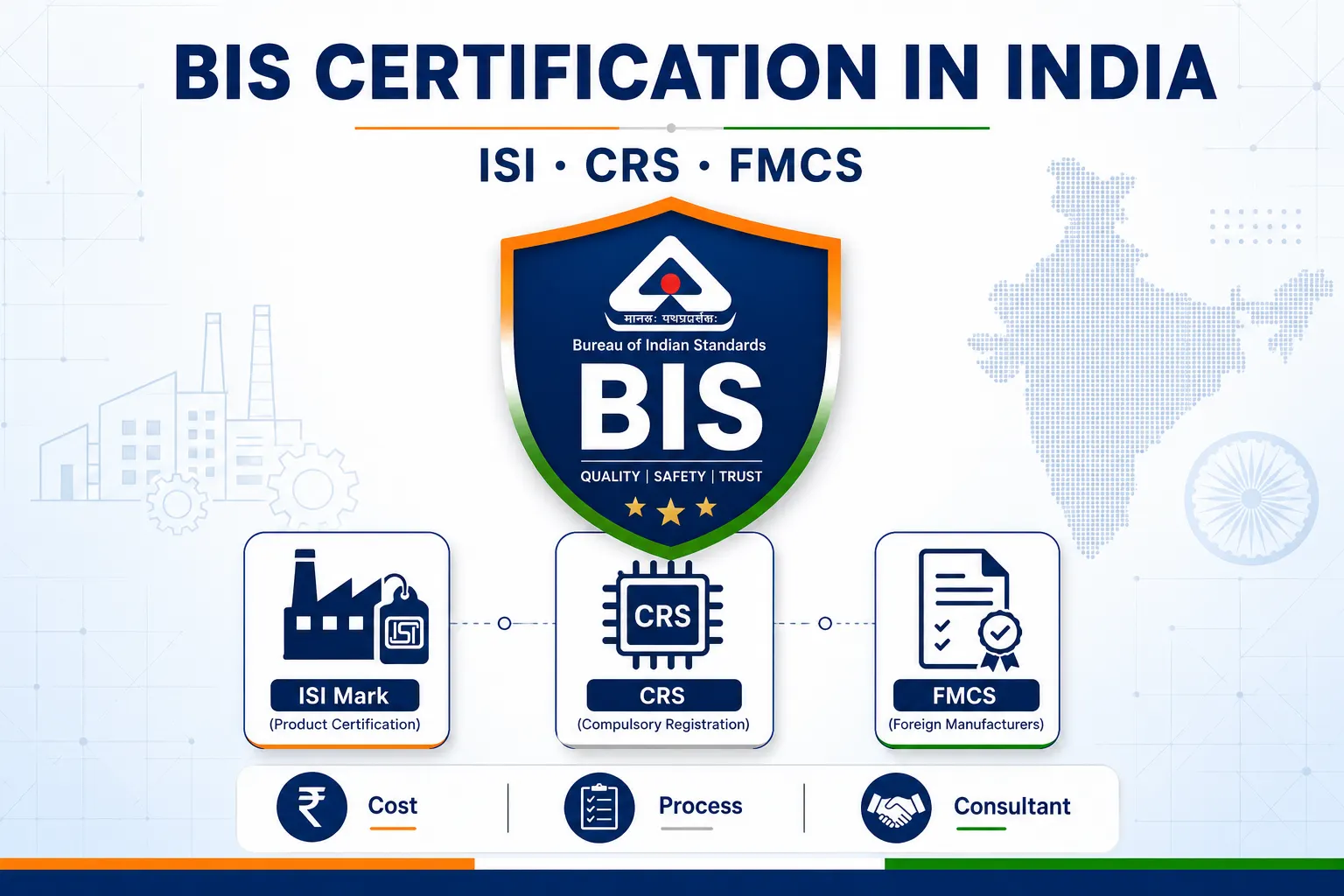
BIS Certification in India: Types (ISI, CRS, FMCS), Process, Cost & How to Choose a Consultant
This blog explains BIS certification in India, its different types, process, costs, and how businesses can choose the right compliance support. In India, many products need official approval before they can be sold or imported. This is where the Indian BIS certification plays an important role. It is mandatory for several product categories to ensure safety, quality, and compliance with standards. Manufacturers, importers, and foreign brands dealing with regulated products must complete BIS product certification before entering the Indian market. However, many businesses find the process confusing due to different certification types and requirements, which often leads to delays or errors. This blog explains BIS certification in simple terms, including its types, process, cost, and how expert support can make it easier. What is BIS Certification? BIS certification is an approval given by the Bureau of Indian Standards to ensure that a product meets required safety and quality standards in India. In simple terms, it confirms that a product is safe to use and follows Indian regulations before it is sold in the market. This certification is primarily required for manufacturers, importers, and foreign brands that deal with regulated products, such as electronics, appliances, and industrial goods. Without BIS approval, many products cannot be legally sold or imported in India. Types of BIS Certification in India BIS certification is not the same for all products. It is divided into different types based on where the product is made and what category it belongs to. ISI certification is mainly for products manufactured within India. It is one of the most common BIS approvals. Under this scheme, products are tested to ensure they meet Indian safety and quality standards before reaching the market. Manufacturers must follow specific guidelines, and the product is marked with the ISI symbol after approval. It is commonly used for products like household appliances, cement, steel, and other industrial goods. CRS is mainly applicable to electronics and IT products. Under this scheme, products must be tested in BIS-approved laboratories before being sold in India. Unlike ISI, it is based more on product testing and self-declaration by the manufacturer or importer. Once approved, the product is listed under BIS registration and can be legally sold in the Indian market. FMCS is designed for foreign manufacturers who want to sell their products in India. During this process, the BIS officers may visit the manufacturing unit in that country to verify whether it conforms to Indian standards. An authorised Indian representative is needed for managing compliance in India. This certification is required before exporting regulated products into the Indian market. Each BIS certification type is designed for a different product category, but all ensure one thing: safe, standard-compliant products in India. Who Needs BIS Certification? Not every product needs approval, but many regulated categories must have the BIS certification in India before they can be sold or imported. This applies to a wide range of businesses, especially those working with standard-controlled products. Here’s who typically needs it: Any company producing regulated goods must get BIS approval before selling in the market. Imported goods such as electronics, appliances, and industrial items must comply with BIS rules before entering the country. Overseas manufacturers must follow FMCS requirements to access the Indian market. This includes electronics, electrical goods, construction materials, and more. BIS Certification Process in India The process for Indian BIS certification follows a structured approval system designed to check product quality and compliance. Here are the basic steps: The product is tested to ensure it meets required safety and quality standards. Businesses apply through the BIS portal with complete product and company details. Submitted documents are reviewed for accuracy and compliance. In some cases, BIS officials may inspect the manufacturing facility. Once everything is verified, BIS grants approval and the product is certified for sale. The process ensures only tested and approved products enter the Indian market under BIS product certification rules. Documents Required for BIS Certification To apply for Indian BIS certification, businesses need to submit specific documents to support their application and product details. Here are the commonly required documents: Proper documentation is essential for smooth BIS product certification approval without delays or rejections. Cost of BIS Certification in India The cost of an Indian BIS certification varies and depends on several factors. It varies based on product type, certification scheme, and testing requirements. Here are the main cost components: Why BIS Certification Can Be Complex Getting an Indian BIS certification is not always a smooth process. Many businesses face challenges because the system involves multiple steps, strict checks, and technical requirements. Here are some common difficulties companies face: ISI, CRS, and FMCS each follow different rules, making it difficult for businesses to choose the right path. Even small errors in paperwork can delay BIS product certification approval. Testing in BIS-approved labs can take time, especially when demand is high or documentation is incomplete. Choosing the incorrect category often leads to rejection or the need to reapply. Regulations are updated from time to time, and businesses may miss important changes. Why BIS Certification Consultants in India Are Important For a number of firms, managing BIS approval can be cumbersome and complicated. This is the reason why firms resort to engaging with BIS certification consultants in India. The role of a consultant for firms includes: Working with a BIS registration consultant in India also helps businesses avoid common compliance mistakes that can slow down approvals. For companies dealing with multiple products or regulations, expert support makes the entire BIS product certification process more organised and easier to manage. How to Choose the Right BIS Consultant Selection of the appropriate consultant is very important for proper and correct BIS approval. The right expert not only assists with proper documentation but also ensures the entire process is handled properly. Before selecting a consultant, businesses should look for: Businesses working with experienced BIS certification consultants in India often complete approvals faster and with fewer errors. A trusted BIS registration consultant in India can also help companies manage renewals, compliance updates, and long-term regulatory requirements more efficiently. Simplifying BIS Certification for Businesses Understanding Indian BIS Certification will be much simpler if companies understand the distinctions among ISI, CRS, and FMCS certifications. While each form of certification has its own unique process, the objective is essentially the same: to guarantee that products meet quality and safety standards in
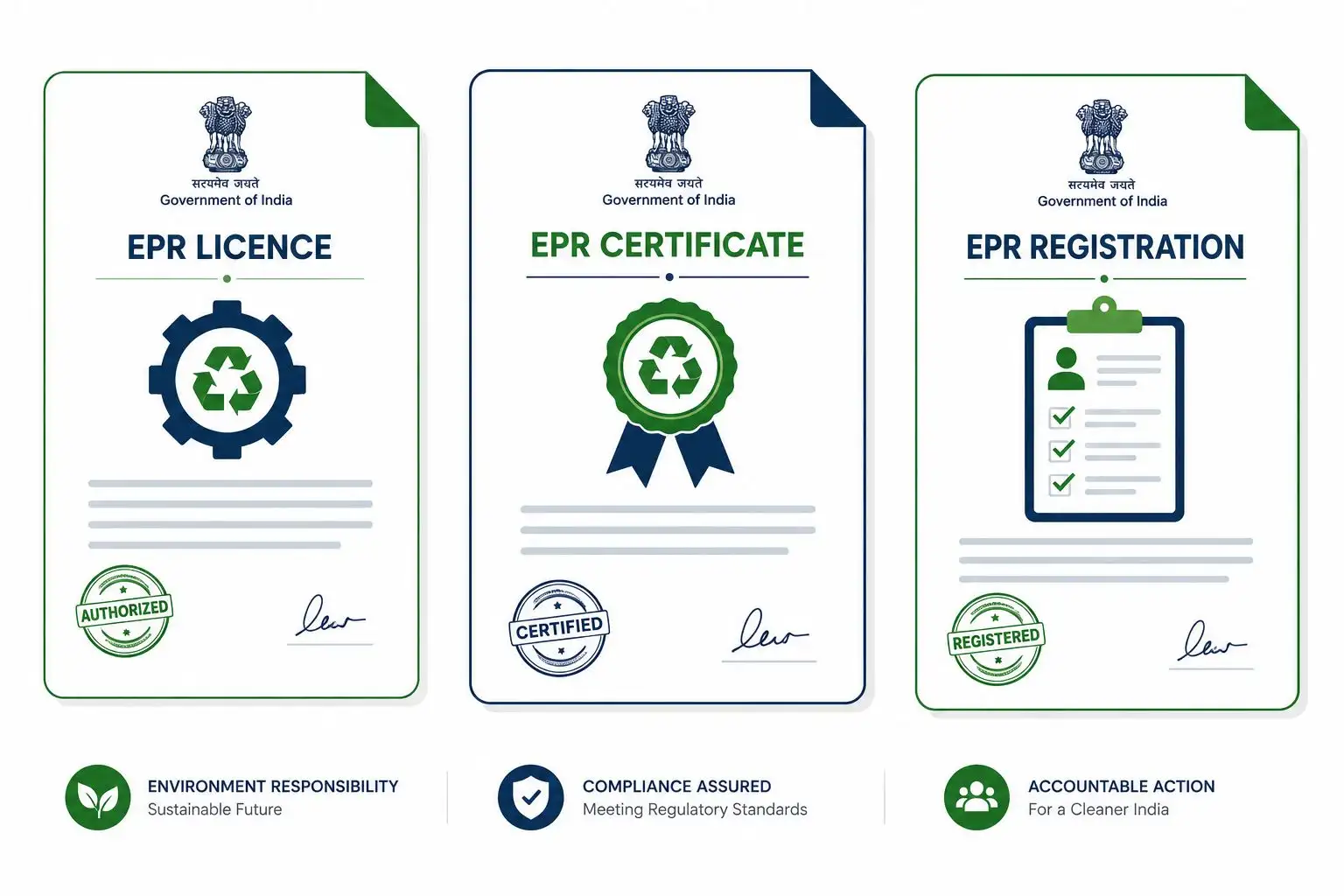
EPR Licence, EPR Certificate, EPR Registration — Are They Different? A Plain-English Guide for Indian Businesses
This blog helps you clearly understand EPR terms and how they differ. EPR rules in India apply to businesses that handle products such as plastics, electronics, batteries, and more. These rules make companies responsible for managing the waste their products create. During compliance, terms such as EPR Licence, EPR Certificate, and EPR Registration Certificate are commonly used. Most businesses treat them as the same, which creates confusion. But these terms are not identical. Mixing them up can lead to a wrong understanding of compliance needs and delays in approvals. Even searches like “CPCB EPR Registration Online” often yield mixed explanations, adding to the confusion. This guide breaks it down in simple terms, so you clearly understand what each one means. What is EPR in Simple Terms? EPR stands for Extended Producer Responsibility. It is a system in which businesses are responsible for the waste generated by the products they make, import, or sell. In simple terms, it means companies must take care of their product waste after customers use it, not just sell the product and move on. This rule mainly applies to importers, manufacturers, and brand owners dealing with products such as plastic packaging, electronics, batteries, and tyres. The government introduced EPR to reduce pollution and improve the country’s waste recycling systems. The Central Pollution Control Board (CPCB) manages and monitors this compliance process. Businesses usually begin their compliance journey with the CPCB EPR registration online, the official starting point of the process. EPR Registration — The First Step Every Business Must Take EPR registration certificate is the first official step for any business entering the EPR compliance system in India. It simply means your business is registered with the Central Pollution Control Board (CPCB) to manage waste responsibility under EPR rules. Without this registration, a company cannot legally operate under EPR guidelines for products such as plastics, electronics, batteries, or tyres. This process is done through the CPCB EPR registration online, where businesses submit basic company and product details for approval. Once approved, the business is officially recognised under the EPR framework. However, it is important to understand that registration alone is not full compliance. Registration does not mean full compliance is complete. It only means your business has officially entered the EPR system. What is an EPR Certificate? An EPR Certificate is a document that confirms your business is officially approved under the EPR system after registration. It shows that your company has been recognised by the Central Pollution Control Board (CPCB) for compliance under EPR rules. This certificate is often required during audits, documentation checks, and while working with vendors or recyclers. In simple terms, it acts as proof that your business is part of the EPR framework. It is important to note that the certificate is a confirmation document, not the start of the process. What is an EPR Licence? The term EPR Licence is widely used in the industry, but it is not always a separate official document issued by CPCB. In most cases, businesses use “licence” to refer to EPR approval or authorisation under the compliance system. It is commonly used interchangeably with registration or authorisation, which creates confusion. In official terms, the CPCB mainly uses “registration” or “authorisation” rather than “licence”. Simply put, “EPR Licence” is a general industry term, not a distinct certificate in its own right. EPR Registration vs EPR Certificate vs EPR Licence — Key Differences To understand these terms better, here is a simple breakdown along with practical details: Term What it means When it is used Key point EPR Registration Initial approval from CPCB to enter EPR system At the start of compliance Mandatory first step for all businesses EPR Certificate Official document confirming approval under EPR After registration is approved Used for audits, records, and verification EPR Licence Common industry term for EPR approval Informal usage in business communication Not a separate CPCB-issued document In simple terms, all three are connected to the same compliance system, but they are used differently in practice. Why Businesses Need EPR Compliance EPR compliance is not optional for many businesses in India. It is a legal requirement that directly impacts how products are sold, imported, and managed after use. Here are the key reasons why it matters: EPR is mandated by the government for businesses dealing with products that generate waste. Without compliance, a company may face legal issues or restrictions on operations. Non-compliance can lead to fines, penalties, or rejection of applications. In some cases, it can also affect business approvals and future registrations. Following EPR rules shows that a business is responsible and environmentally compliant, which builds trust with clients, vendors, and authorities. Businesses importing or manufacturing items such as plastic packaging, electronics, batteries, or tyres must have EPR compliance in place before operations begin. EPR compliance is not just a rule; it is a fundamental requirement for running and growing a regulated, product-based business in India. CPCB EPR Registration Online Process The online CPCB EPR registration process is managed through the Central Pollution Control Board (CPCB) portal. It is the official system where businesses apply for EPR approval. Here is how the process generally works: Businesses provide basic information such as company name, PAN, GST, and business category. The applicant selects the type of waste they generate, such as plastic, e-waste, batteries, or tyres. Required documents, such as product details, authorisation papers, and business registration, are submitted. The application is verified and checked for accuracy by authorities. Once approved, the business receives its EPR registration certificate under the EPR framework. The online process is structured but requires correct documentation to avoid delays or rejection. Common Mistakes Businesses Make in EPR Compliance Many businesses face delays or rejections in EPR applications due to simple but avoidable mistakes. Here are the most common ones: Many assume both are the same, leading to a misunderstanding of the requirements. Choosing the wrong category (plastic, e-waste, etc.) can result in the application being rejected. Missing or incorrect documents can delay the entire approval process. Late applications can affect business operations and compliance timelines. Many businesses try to manage the process without an EPR consultant, leading to errors and delays. Why Work with an EPR Consultant? Managing EPR compliance can feel complicated,
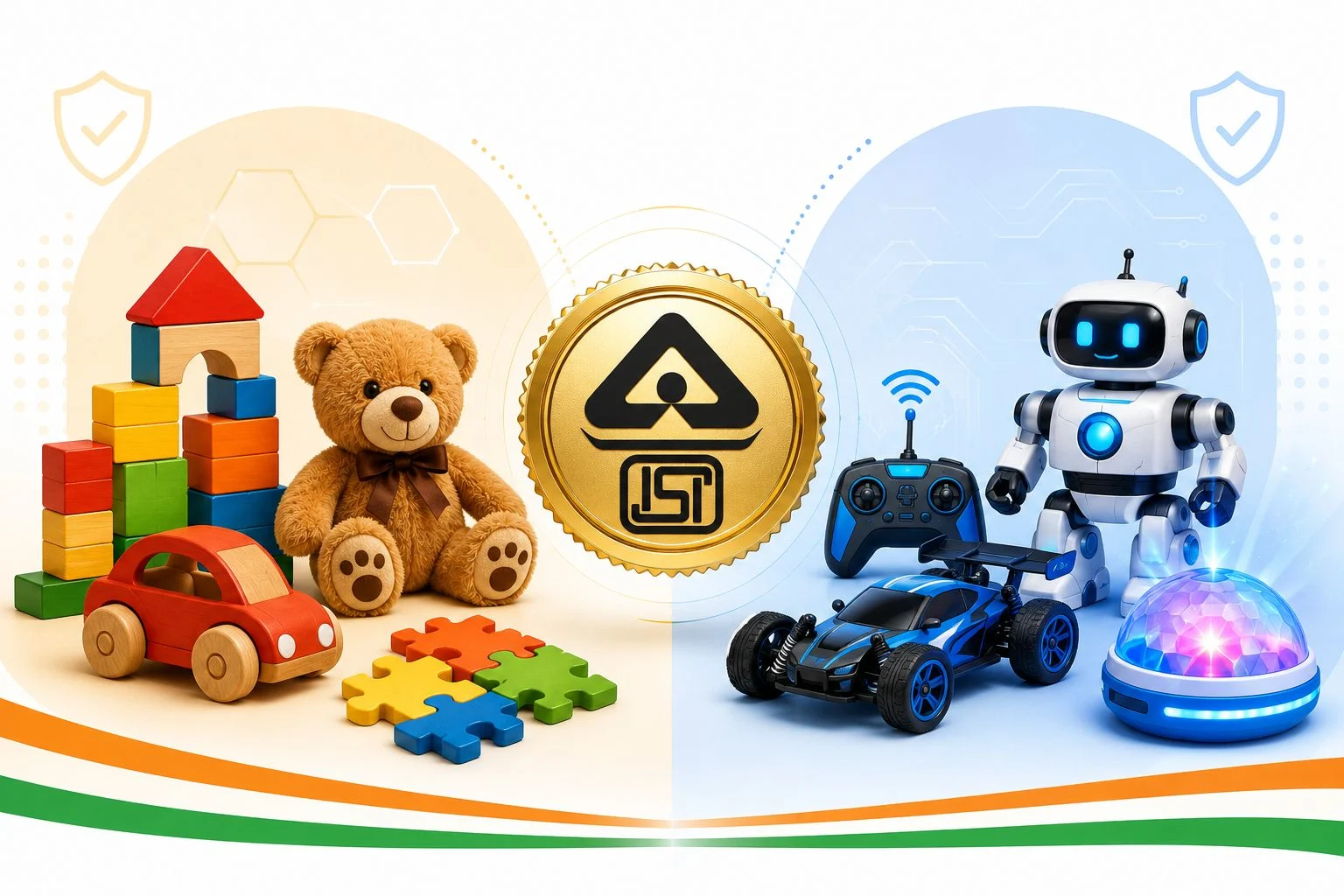
BIS Certification for Toys in India: A Complete Guide for Manufacturers
The Indian toy industry has undergone a significant transformation in recent years, with safety and quality becoming top priorities. To ensure that toys sold in the market meet stringent safety standards, the Bureau of Indian Standards (BIS) has made certification mandatory for toy manufacturers. If you’re a toy manufacturer or planning to enter the market, understanding BIS requirements is essential. Let’s break it down in a simple and practical way. Why BIS Certification is Mandatory for Toys The Indian government introduced mandatory BIS certification to: Under these regulations, no toy can be manufactured, imported, or sold in India without BIS certification. Two Categories of Toys Under BIS BIS divides toys into two main categories: 1. Electronic Toys These include toys that require electricity or batteries to function. Examples: Applicable Standard: Electronic toys must comply with additional safety parameters like: 2. Non-Electronic Toys These are traditional toys that do not use electricity. Examples: Applicable Standard: This category focuses on: Key Requirements for BIS Certification To obtain BIS certification, manufacturers must: Important Points for Manufacturers Benefits of BIS Certification Getting BIS-certified is not just about compliance—it also offers advantages: BIS certification for toys is no longer optional—it is a legal necessity. With toys categorized into Electronic and Non-Electronic, manufacturers must ensure their products meet the respective standards before entering the market. Understanding these requirements early can save time, reduce compliance risks, and help build a safer, more reliable brand in the competitive toy industry.
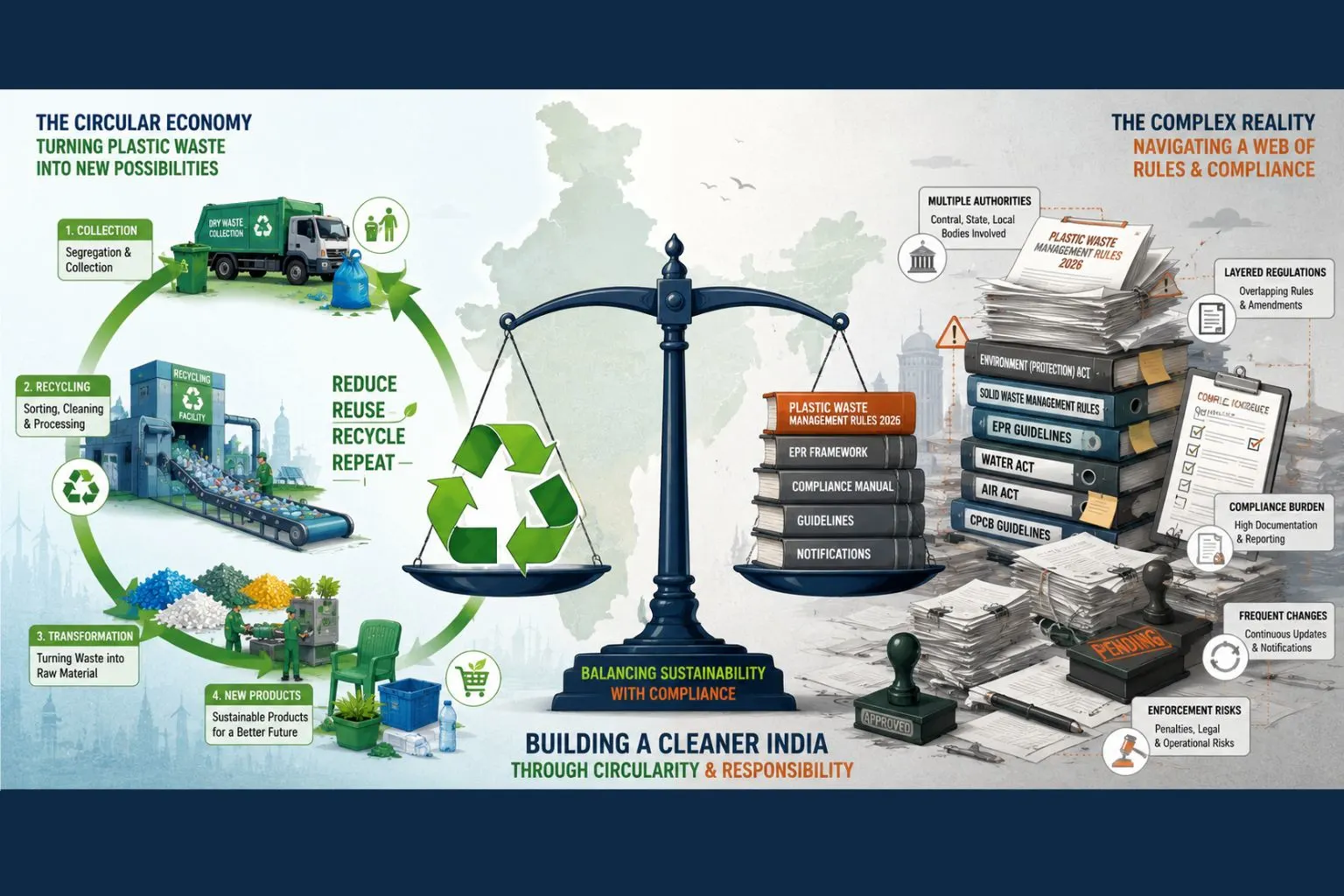
Plastic Waste Management Rule 2026: Strengthening Circularity or Expanding Compliance Complexity?
India’s plastic waste management regime is undergoing an important transition. With the 2026 amendment to the Plastic Waste Management Rules, 2016, the regulatory focus has shifted toward flexibility in compliance while retaining ambitious recycling and reuse targets under Extended Producer Responsibility (EPR). This dual approach, easing penalties while maintaining targets, raises an important question:Is India strengthening compliance, or delaying accountability? 1. Flexibility in Compliance: Relief or Risk? The 2026 amendment allows companies to carry forward unmet EPR targets for up to three years, provided one-third of the deficit is cleared annually. While this reduces immediate compliance pressure, it may also: 2. Rising Targets for Recycled Content The rules retain a phased increase in recycled material usage: Additionally, reuse targets for rigid packaging have been introduced, particularly stringent for large water packaging. This reflects a strong push toward circularity—but supply constraints remain a concern. 3. Certificate-Based Compliance and Credibility Issues The formalization of tradable EPR certificates offers flexibility. However: This highlights a critical gap between reported compliance and actual material recovery. 4. Data Gaps and Self-Reporting Limitations Despite digital monitoring through CPCB portals: While over 20.7 million tonnes of plastic waste have reportedly been recycled since 2022, annual generation (~4.13 million tonnes) indicates that complete coverage is still far from achieved. 5. Expanded Definitions and Wider Accountability The 2026 amendment broadens the regulatory scope: This expansion improves coverage but also increases complexity in implementation. 6. Persistent Structural Challenges These factors continue to affect real-world compliance. India’s Plastic Waste Management Rules 2026 reflect a mature and evolving regulatory framework. The emphasis on flexibility, traceability, and expanded accountability is a step forward. However, the system still faces a fundamental challenge: Bridging the gap between compliance on paper and environmental outcomes on the ground. Without stronger verification, infrastructure scaling, and alignment across stakeholders, there is a risk that compliance may remain transactional rather than transformational. The success of the 2026 framework will depend not on targets—but on execution. FAQs
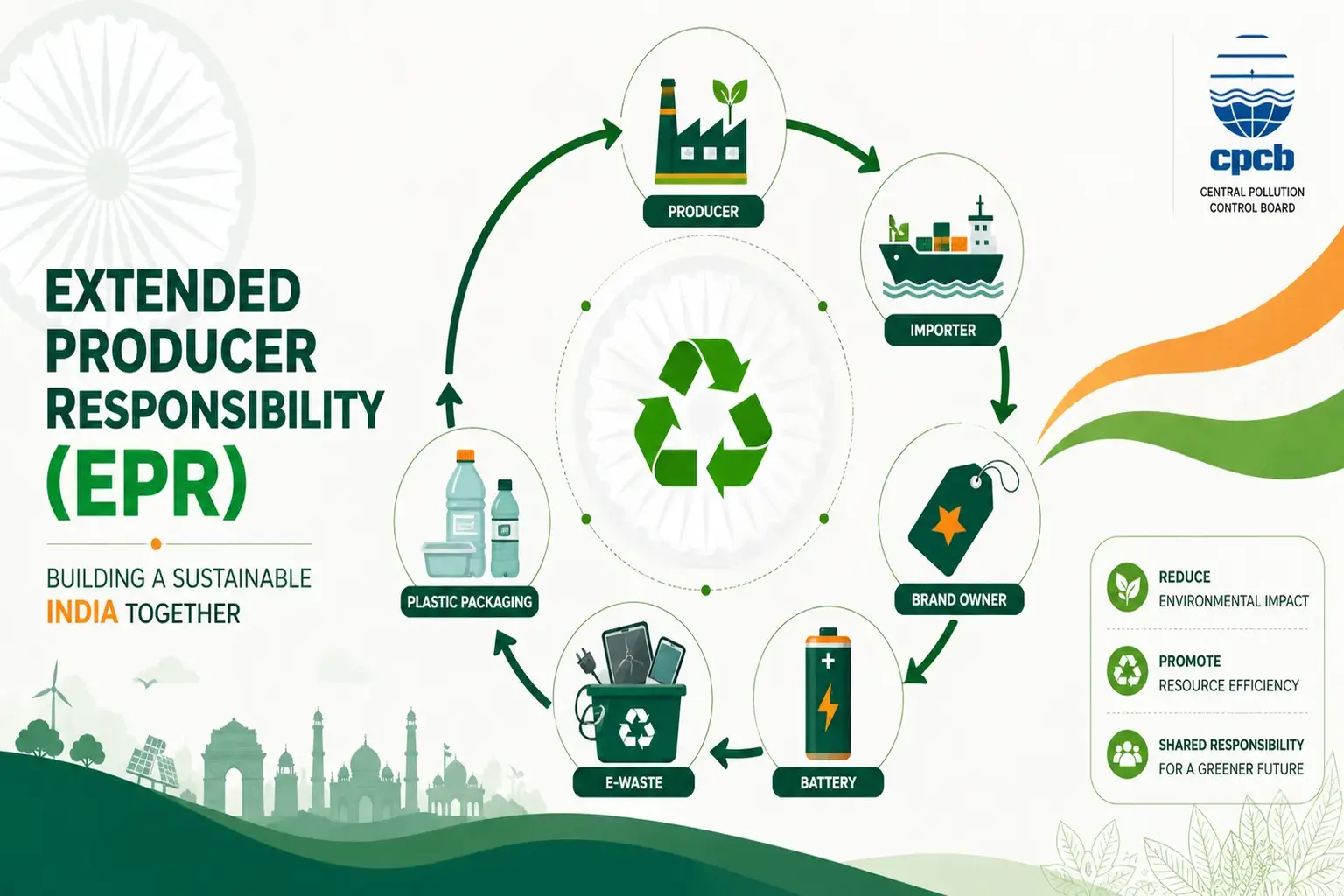
What Is EPR Registration in India and Who Needs It?
This blog explains what EPR registration is, who needs it, and how it works in India, in a simple, clear way. Waste management rules in India are becoming stricter for businesses. Companies today are expected to take greater responsibility for the waste associated with their products. This includes products they manufacture, import, or sell in the market. Because of this shift, compliance with environmental rules has become an important part of business operations. Many companies are now required to follow structured systems that ensure proper waste collection and recycling after product use. This is where the concept of EPR comes into the picture. EPR registration in India is now an important part of this compliance system, especially for businesses working in packaging, electronics, batteries, and similar sectors. However, many businesses still find it confusing to understand what it actually means and who needs it. This blog explains what EPR registration in India is, who it applies to, and how the system works, in a simple, clear way. What Is EPR Registration? EPR registration stands for Extended Producer Responsibility registration. It is a system established under Indian environmental regulations in which companies are held responsible for the waste generated by their products after consumers use them. In simple words, if a company sells a product, it is also responsible for what happens to that product after it becomes waste. This responsibility includes the collection, recycling, and proper disposal of waste in accordance with approved procedures. In India, this system is monitored through the government authority known as CPCB (Central Pollution Control Board). Because of this, many people also refer to it as CPCB EPR registration. The main purpose of EPR is to: It is not just a registration or approval. It is a structured compliance system that connects businesses with recycling and waste management processes. Today, EPR registration in India is mandatory for several industries, depending on the types of products they handle. How EPR Works in India (Basic Process Flow) EPR operates as a structured system in which businesses follow clear steps to manage the waste associated with their products. The process is monitored by the government through the CPCB framework. Here is how it works in simple terms: Step 1: Registration with CPCB Businesses first need to complete CPCB EPR registration. This is the official entry into the compliance system. Step 2: Identify Waste Category Each company must define the type of waste linked to its products, such as: This depends on the business type and product category. Step 3: Set Collection and Recycling Targets Once registered, companies are given targets. These targets define how much waste they need to collect and recycle every year. Step 4: Arrange the Recycling System Companies then work with: This helps ensure that waste is handled properly and in accordance with approved procedures. Step 5: Submit Compliance Reports Businesses must regularly report their progress to CPCB. These reports show how much waste has been collected and recycled. Who Needs EPR Registration in India? EPR registration in India is not required for every business. It applies only to companies that deal with products which eventually become waste. The responsibility mainly lies with three types of businesses. Producers are companies that manufacture goods in India. They are responsible because they introduce products into the market. This includes packaging as well. If a product generates waste after use, the producer must take responsibility under the EPR registration rules in India. Importers are businesses that bring products into India from other countries. Once these products are sold and used, they also create waste in the country. Because of this, importers must follow EPR registration for importers requirements. They are responsible for ensuring the proper collection and recycling of generated waste. Brand owners are companies that sell products under their own brand name. Even if they do not manufacture the product themselves, they are still responsible. This is an important part of EPR registration for brand owners’ compliance. The responsibility stays with the brand whose name is on the product. Types of EPR Registration in India EPR registration in India is divided into different categories based on the type of product and waste generated. Each category has its own rules and compliance requirements. This applies to companies that use plastic in their products or packaging. It includes manufacturers, importers, and brand owners who sell packaged goods. They are responsible for collecting and recycling plastic waste after use. This category is for companies that sell electrical and electronic products like phones, laptops, appliances, and other gadgets. These products generate electronic waste when discarded. This applies to businesses that manufacture or import batteries. Since batteries contain harmful materials, proper collection and recycling are required under India’s EPR registration rules. Companies involved in tyre manufacturing or import must manage tyre waste after use. This includes ensuring that used tyres are collected and sent for proper recycling or processing. This category covers industries that generate used oil or other hazardous waste. Strict handling and disposal rules apply to ensure environmental safety. CPCB EPR Registration Explained CPCB EPR registration is the official process managed by the Central Pollution Control Board (CPCB) in India. It is the main authority responsible for EPR registration in India across different waste categories. CPCB is a government body responsible for monitoring environmental compliance and ensuring that businesses follow proper waste management rules. Role of CPCB in EPR Registration CPCB plays an important role in the entire EPR system. It is responsible for: CPCB EPR Registration Process (In Simple Terms) The entire system works through an online portal where businesses complete their registration and compliance activities. It includes: Why CPCB Registration Is Important Without CPCB EPR registration, a business cannot legally operate under EPR rules in India. It is a mandatory step for companies that fall under producer, importer, or brand owner categories. This system ensures companies comply with environmental regulations and helps reduce waste in the country. Why EPR Registration Is Important for Businesses EPR registration in India is not just a legal formality. It plays an important role in how businesses manage their environmental responsibilities after selling their products. Today, companies are expected to think beyond production and sales. They are also responsible for what happens when their products become waste. One of the main reasons for EPR registration in India is legal compliance. Businesses that
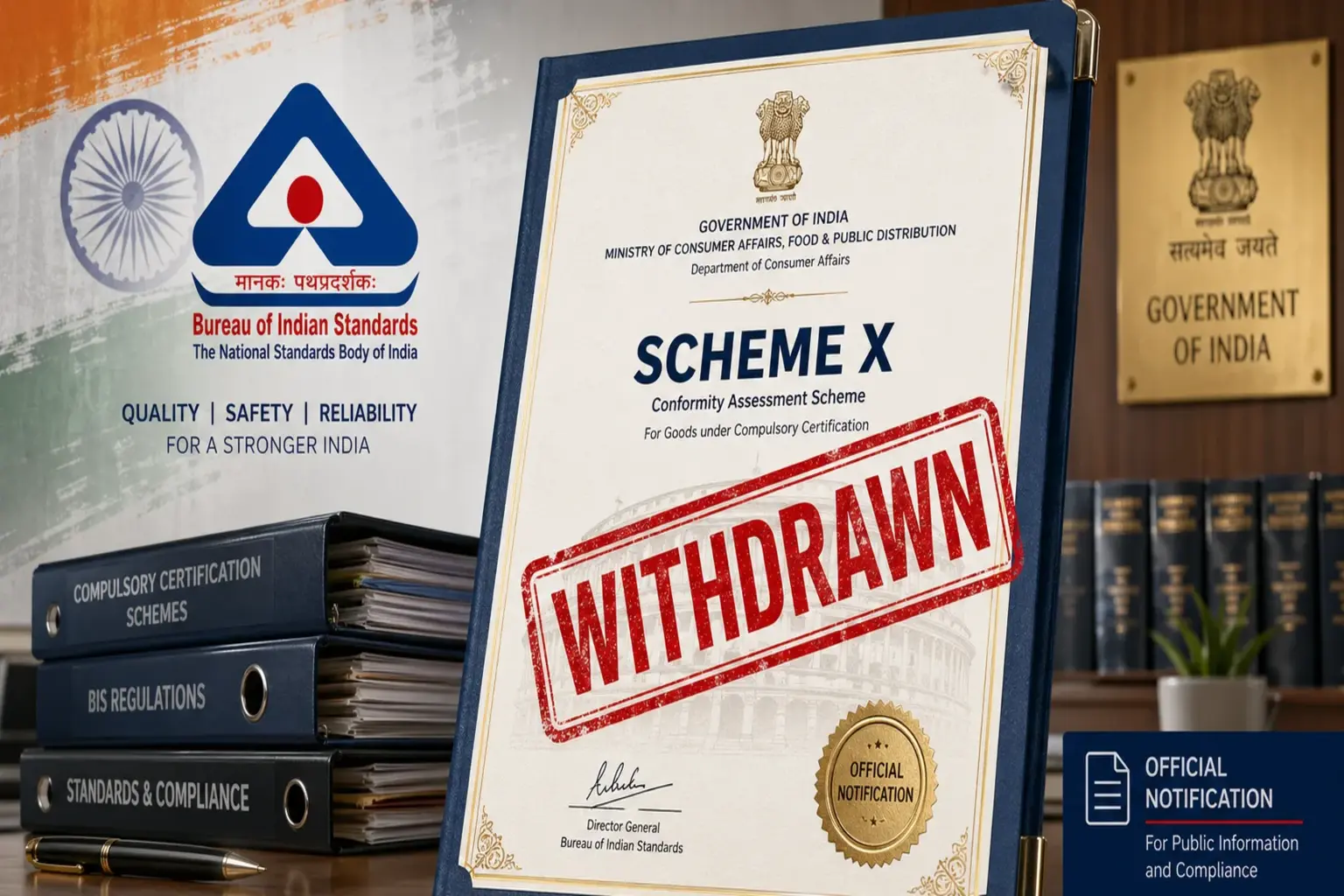
Scheme X – Was It Ever Needed? And Why Has It Been Withdrawn?
If you’ve ever dealt with product certifications in India, you’ve likely come across the multiple compliance pathways under the Bureau of Indian Standards (BIS). For years, one particular pathway often left manufacturers and importers confused — Scheme X. Many businesses asked the same question:Was Scheme X truly necessary, or was it simply another layer of compliance complexity? With its official withdrawal on 16 January 2026, this debate has become more relevant than ever. In this blog, we break down what Scheme X was, why it existed, why it was removed, and most importantly — what businesses must do now. Understanding BIS Certification in India Before diving into Scheme X, it’s important to understand the broader landscape of BIS certification in India. BIS plays a crucial role in ensuring product safety, quality, and compliance before products enter the Indian market. Typically, businesses apply under well-defined schemes such as: However, not every product neatly fits into these predefined frameworks. And that gap is exactly where Scheme X entered the picture. What Was Scheme X? Think of Scheme X as a custom approval route for products that did not fit into the standard BIS certification schemes. It operated under the One Time Registration (OTR) framework and approvals were granted on a case-by-case basis. Unlike traditional certification routes, Scheme X did not follow a rigid template. Instead, BIS evaluated each product individually, depending on its nature, use, and risk level. In simple terms:Scheme X was a bridge mechanism designed to ensure that even uncommon or complex products could legally enter the Indian market. What Products Were Covered Under Scheme X? While many assumed Scheme X applied only to niche products, the reality was very different. The scheme covered a wide range of industrial machinery compliance in India, especially capital goods and heavy equipment that required BIS approval before clearing Indian customs. Common product categories included: This shows that Scheme X was far from niche — it played a major role in enabling BIS approval for machinery imports across multiple industries. What Does This Mean for Businesses Today? The withdrawal of Scheme X does not reduce compliance requirements — it transforms them. Businesses must now align their products with existing BIS certification schemes. What has changed? But one major challenge remains: 👉 Identifying the correct BIS scheme for your product. This step is now more critical than ever. The New Challenge — Choosing the Right Certification Pathway Without Scheme X, businesses must carefully evaluate: A wrong classification can lead to: This makes expert guidance essential for smooth market entry. How Kar Parivartan Can Help Navigating BIS compliance after the withdrawal of Scheme X can feel overwhelming — but you don’t have to do it alone. Kar Parivartan provides end-to-end BIS certification support, including: Ready to Simplify Your BIS Compliance? Get expert support for BIS certification and machinery imports today. 👉 Contact Kar Parivartan for a consultation and ensure smooth, hassle-free compliance.
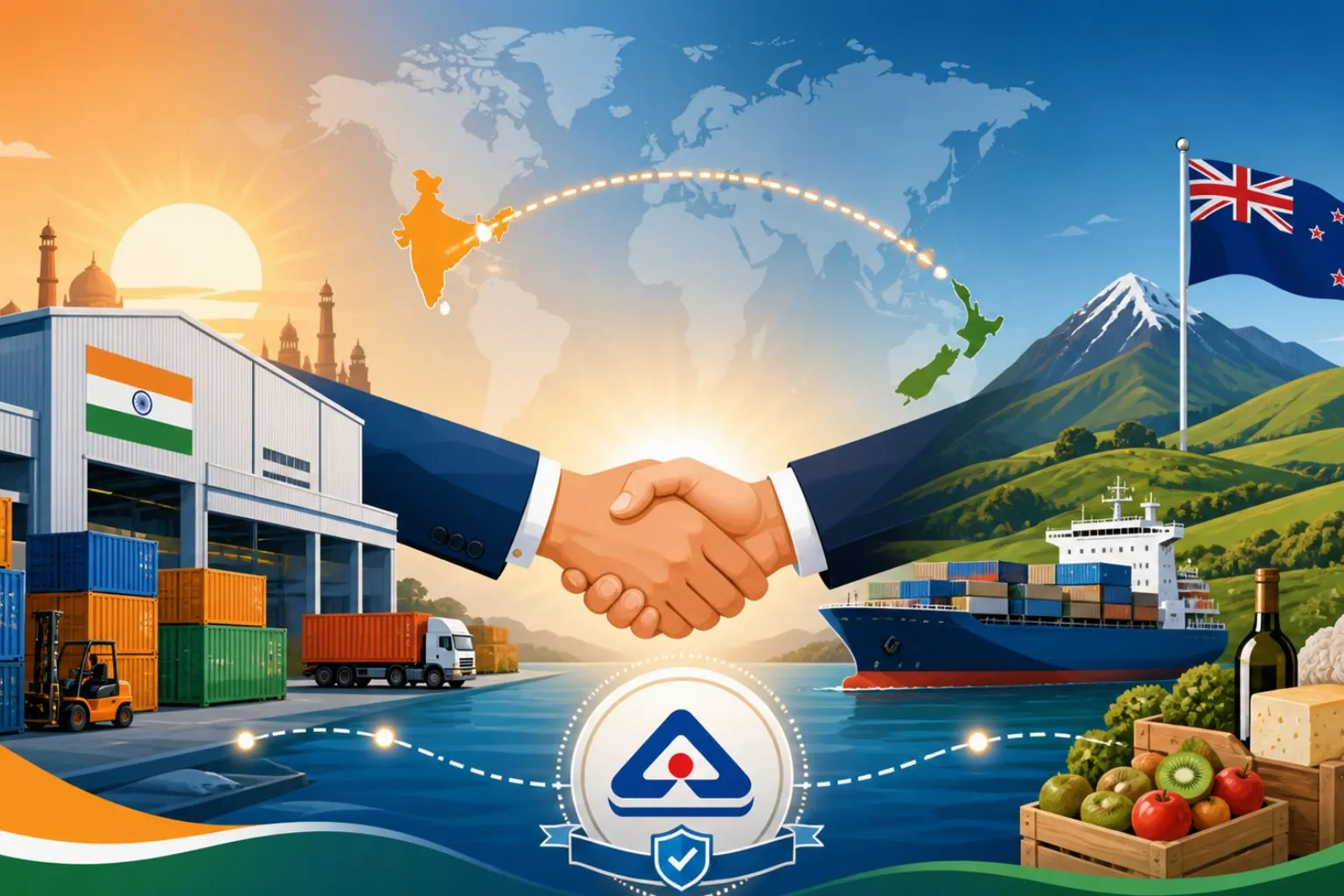
India–New Zealand FTA: What It Means for Businesses and Why BIS Compliance Still Matters
Global trade is entering a new era of strategic partnerships, and one development attracting significant attention is the growing momentum toward a Free Trade Agreement (FTA) between India and New Zealand. This potential agreement represents far more than tariff reductions—it signals stronger economic cooperation, expanded market access, and exciting opportunities for manufacturers and exporters in both countries. However, as trade barriers reduce, regulatory compliance will remain a critical requirement, particularly for companies planning to enter the Indian market. Among these regulations, BIS certification continues to play a central role. Growing Trade Momentum Between India and New Zealand India and New Zealand share complementary economic strengths: The proposed FTA aims to deepen trade relations by improving market access and reducing trade friction between the two nations. Key Objectives of the Proposed FTA The agreement is expected to: • Reduce or eliminate tariffs on a wide range of goods• Simplify cross-border trade procedures• Encourage foreign investment and business expansion• Strengthen long-term economic cooperation For New Zealand manufacturers, India represents a large and rapidly growing consumer base. For Indian industries, the agreement brings opportunities for technology exchange, innovation, and diversified imports. But despite these benefits, regulatory compliance will not be relaxed. Opportunities for New Zealand Manufacturers Entering India If the FTA is finalized, we can expect a significant increase in New Zealand companies exploring India as a growth market. Why India Is Attractive for Global Manufacturers India offers: Industries likely to benefit include: While reduced tariffs make market entry easier, regulatory approvals remain mandatory before products can be sold. This is where many global companies face challenges. Why Regulatory Compliance Remains Essential Under an FTA A common misconception about FTAs is that they remove all barriers to trade. In reality, FTAs primarily focus on tariff reductions and trade facilitation—not regulatory exemptions. Every country maintains product safety, quality, and standardization regulations to protect consumers and ensure fair market practices. In India, one of the most important regulatory frameworks is governed by the Bureau of Indian Standards (BIS). Understanding BIS Certification BIS certification ensures that products meet Indian safety, quality, and performance standards before entering the market. For many product categories, BIS certification is mandatory, not optional. Types of BIS Certifications There are two major schemes: ISI Certification (Scheme-I)Required for products like steel, cement, household items, and industrial products. CRS Registration (Scheme-II)Mandatory for electronics and IT products. Without BIS certification, notified products cannot be manufactured, imported, or sold in India. This requirement remains unchanged even under a Free Trade Agreement. Why BIS Certification Will Still Apply After the FTA Even if tariffs drop to zero, regulatory standards will remain intact for three key reasons: 1. Consumer Safety BIS ensures products meet Indian safety and quality benchmarks. 2. Market Standardization Uniform standards create fair competition and maintain product reliability. 3. Legal Compliance Selling non-certified notified products can result in: Therefore, companies planning to enter India must treat BIS certification as a market entry requirement, not a post-launch activity. Challenges Faced by Foreign Manufacturers Many global brands underestimate the complexity of BIS certification. Common challenges include: Documentation Complexity Extensive technical documents, factory details, and testing reports are required. Testing Requirements Products must be tested in BIS-approved laboratories in India. Factory Audits Manufacturing facilities must meet BIS standards and may be inspected. Regulatory Coordination Communication with authorities, labs, and consultants can be time-consuming. Timelines Certification can take several months without expert guidance. These challenges often delay product launches and increase costs. The Strategic Importance of Early Compliance Planning Companies planning India entry should begin BIS compliance well before market launch. Benefits of Early Planning With the FTA likely to increase competition, companies that prepare early will gain a significant first-mover advantage. How Compliance Partners Help Global Brands Navigating Indian regulatory frameworks requires local expertise and ongoing coordination. This is where compliance partners play a critical role. A reliable compliance partner helps businesses: • Understand applicable BIS schemes• Prepare documentation and technical files• Coordinate with BIS-approved laboratories• Manage communication with authorities• Support audits and inspections• Ensure timely approvals and renewals Working with the right partner transforms compliance from a barrier into a strategic enabler for growth. Supporting Global Businesses in Navigating Indian Compliance At Kar Parivartan, we work with domestic and international companies to simplify regulatory compliance and ensure smooth entry into the Indian market. As trade relations evolve, we see a growing opportunity to support New Zealand manufacturers and global brands in achieving seamless BIS certification and operating confidently in India. The proposed India–New Zealand Free Trade Agreement represents a powerful step toward stronger global collaboration and economic growth. For businesses, the message is clear: Tariffs may reduce, but compliance remains essential. Companies that combine market opportunity with regulatory readiness will gain the greatest advantage in the years ahead. If your organization is planning to expand into India, now is the ideal time to begin your compliance journey and prepare for the opportunities that lie ahead. The future of global trade is not just about access—it’s about access with compliance, confidence, and credibility. FAQs
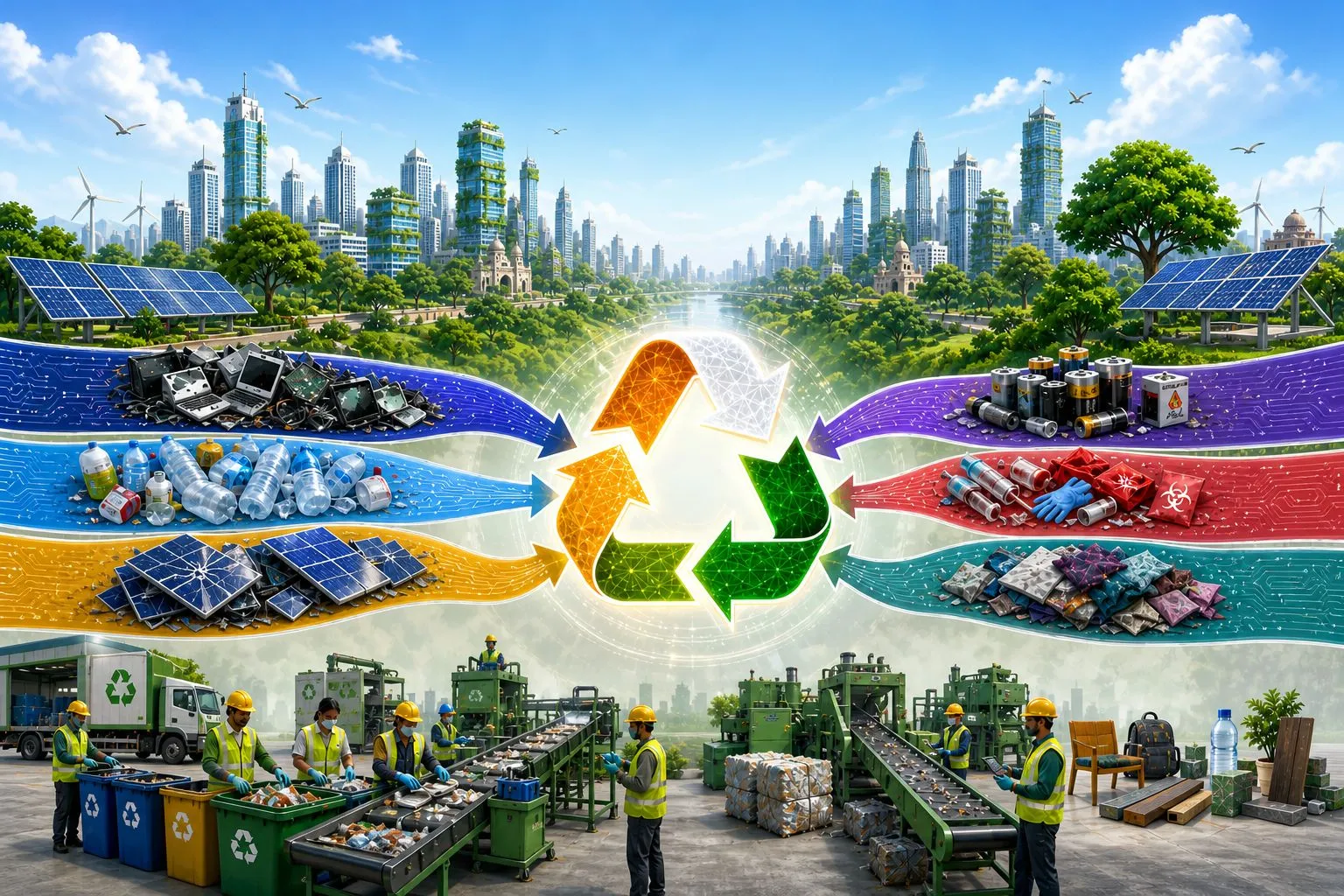
Expanding EPR to New Waste Streams: The Future of Circular Economy in India
India’s transition toward a circular economy is accelerating, and Extended Producer Responsibility (EPR) is at the center of this transformation. Initially introduced for plastics and later expanded to e-waste, batteries, tyres, and used oil, EPR is now evolving to cover multiple new waste streams, reshaping how industries manage environmental responsibility. With regulatory bodies like the Central Pollution Control Board (CPCB) driving compliance frameworks, India is moving toward a more integrated, accountable, and technology-driven waste management ecosystem. What is EPR and Why Does It Matters? Extended Producer Responsibility (EPR) is a policy approach where producers, importers, and brand owners (PIBOs) are made responsible for the entire lifecycle of their products, especially post-consumer waste. This means: EPR shifts the burden from municipalities to producers, ensuring sustainable production and consumption patterns. Existing EPR Waste Streams in India Currently, EPR is implemented across several key sectors: Each category has specific targets, registration requirements, and recycling obligations, monitored via centralized portals. Expansion to New Waste Streams India is now expanding EPR to include additional categories, reflecting global sustainability trends: 1. Textile Waste The textile sector is among the largest contributors to global solid waste, driven by fast fashion, short product lifecycles, and low recycling rates. In India, a significant portion of textile waste ends up in landfills or is informally processed, leading to microfiber pollution, dye contamination, and greenhouse gas emissions. Upcoming EPR regulations are expected to: This shift will push the textile industry toward circular fashion models, including reuse, repair, and recycling ecosystems. 2. Construction & Demolition (C&D) Waste C&D waste is one of the fastest-growing waste streams due to rapid urbanization, infrastructure expansion, and redevelopment activities. It includes concrete, bricks, metals, wood, and debris, much of which remains underutilized despite high recycling potential. Under EPR, the sector may see: This will significantly reduce resource extraction, energy consumption, and landfill burden, while promoting a closed-loop construction economy. 3. Ferrous & Non-Ferrous Metals Metal waste, including iron, steel, aluminum, copper, and other alloys, is highly recyclable with substantial energy savings (e.g., recycling aluminum saves up to 95% energy compared to primary production). However, the sector is currently fragmented and heavily reliant on informal scrap systems. EPR implementation can: This will strengthen India’s resource security while reducing carbon emissions from metal production. 4. Paper & Cardboard Waste With the growth of e-commerce and packaging industries, paper and cardboard waste has increased significantly. Although recycling rates are relatively higher than plastics, inefficiencies remain in collection, segregation, and fiber recovery. EPR expansion is expected to: This will enhance resource efficiency, reduce deforestation pressures, and support a sustainable packaging ecosystem. 5. Hazardous & Chemical Waste Hazardous and chemical waste includes industrial residues, solvents, heavy metals, and toxic by-products that pose serious environmental and public health risks if not managed properly. Under an expanded EPR framework: This will ensure environmental protection, regulatory transparency, and risk minimization. 6. Solid Waste (Integrated Approach) The inclusion of a broader solid waste category under EPR represents a holistic and integrated waste management strategy, aligning with national sustainability goals. This approach may: An integrated EPR model will enable a transition from a linear “take-make-dispose” system to a circular resource economy, maximizing material recovery and minimizing environmental impact. Regulatory Timeline & Enforcement This phased approach allows industries time to adapt infrastructure and systems. Key Challenges for Industry While expansion is necessary, it comes with operational challenges: Opportunities in the Evolving Ecosystem Despite challenges, EPR expansion opens significant opportunities: Businesses that adapt early can gain competitive and regulatory advantages. Way Forward: Building a Circular Future To ensure successful implementation, stakeholders must focus on: India’s EPR evolution is not just a regulatory shift—it is a systemic transformation toward sustainability. The expansion of EPR to new waste streams marks a critical step in India’s environmental journey. By holding producers accountable and promoting resource recovery, the country is aligning with global circular economy goals. For businesses, this is not just compliance—it is an opportunity to lead in sustainability, innovation, and responsible growth. FAQs